by in News

Greece, Serbia, North Macedonia and Bulgaria Advance Vertical Gas Corridor Expansion

Energy ministers and senior officials from Serbia, Greece, North Macedonia and Bulgaria met today in Athens to discuss the development of regional natural gas supply routes and cross-border interconnections. During the meeting, Greek Minister of Environment and Energy Stavros Papastavrou announced that the Vertical Corridor initiative would be extended to include North Macedonia and Serbia.

Greece, Bulgaria and Romania have already achieved significant progress in developing the Vertical Corridor, a strategic gas route designed to facilitate supplies toward Ukraine and Moldova. Key milestones include infrastructure upgrades, the construction of new pipelines such as the Interconnector Greece–Bulgaria (IGB), as well as commercial agreements and dedicated capacity auctions. The same approach is now being applied to the western Balkans through the creation of an additional branch of the corridor.

The Athens meeting focused primarily on two major gas interconnection projects: Greece–North Macedonia and North Macedonia–Serbia. The Greece–North Macedonia pipeline is currently under construction and is expected to be completed this year. Once operational, it will allow natural gas to flow northward from Greek LNG terminals at Revithoussa and Alexandroupolis, as well as from pipeline gas sources, including Azerbaijan.

Serbia Plans EUR 1.2 Billion in Gas Infrastructure Investments

The next segment of the regional gas chain, linking North Macedonia with Serbia, is expected to be completed by the end of 2027, according to Serbian Minister of Mining and Energy Dubravka Đedović Handanović. The project is currently in the spatial planning phase and is designed to connect with the southern Serbian city of Vranje. Its planned annual transport capacity is 1.5 billion cubic meters of natural gas.

Minister Đedović Handanović also stated that Serbia intends to invest approximately EUR 1.2 billion in gas infrastructure, including the modernization and expansion of existing pipeline networks.

North Macedonian Minister of Energy, Mining and Mineral Resources Sanja Božinovska emphasized that the regional interconnection would soon become operational.

“By the end of next year, we will be ready and the interconnection between Greece, North Macedonia and Serbia will be operational,” she said.

She also confirmed that the tender procedure for the pipeline connecting North Macedonia and Serbia was launched yesterday.

Greek Minister Papastavrou highlighted the broader strategic importance of the initiative, stressing Greece’s role in shaping the region’s emerging energy architecture.

“Greece plays a leading role in the new European architecture through projects of strategic importance. Infrastructure, interconnections, market coupling and the Vertical Corridor are initiatives that strengthen security of supply, reinforce geopolitical stability and create new development opportunities across the region. Today, we agreed on the expansion of the Vertical Corridor to North Macedonia and Serbia, as well as on institutionalizing cooperation among the four countries,” he stated.

Bulgaria was represented at the meeting by Deputy Minister of Energy Kiril Temelkov.

Further Regional Meetings Planned

The four officials agreed to continue their cooperation through a series of follow-up meetings. The next session is scheduled for September in Belgrade, with subsequent meetings planned in Skopje and Sofia.

The Athens discussions were also attended by representatives of gas and electricity transmission system operators from all four countries, underscoring the technical and strategic importance of the planned regional energy integration.

by in News

Corridor VIII Emerges as a Strategic Pillar for Balkan Integration and NATO Security

TIRANA — High-level officials and international stakeholders gathered in the Albanian capital this week to chart the future of Pan-European Corridor VIII, a multi-billion euro infrastructure project designed to bridge the Adriatic and Black Seas. Billed as a modern successor to the ancient Roman Via Egnatia, the corridor is increasingly viewed by regional leaders and Western allies not merely as a transport route, but as a critical component of economic sovereignty and Euro-Atlantic security.

ECONOMIC FORUM: “Strategic Connectivity and Regional Economic Growth: The Economic Potential of Corridor VIII”

ECONOMIC FORUM: “Strategic Connectivity and Regional Economic Growth: The Economic Potential of Corridor VIII”

The forum, titled “Strategic Interconnectivity and Regional Economic Growth: The Economic Potential of Corridor VIII,” held on February 18, 2026, served as a platform for Albania and North Macedonia to reaffirm their commitment to the project. The discussions highlighted a shift in the corridor’s narrative, moving from a long-delayed logistical ambition to a certified strategic priority.

A Security Necessity: The NATO Dimension

In a significant development for the region’s geopolitical standing, Albanian Deputy Prime Minister and Minister of Infrastructure and Energy, Belinda Balluku, revealed that Corridor VIII has now received NATO certification. This designation elevates the project from a civilian transport initiative to a vital military and security asset for the alliance’s eastern flank.

“Corridor VIII is no longer just a road for the movement of goods and citizens,” Balluku stated during the forum. She characterized the project as a “safe infrastructure for Euro-Atlantic security,” noting that its completion would allow for the rapid deployment of resources between the Mediterranean and the Black Sea—a necessity brought into sharp focus by shifting security dynamics in Eastern Europe.

The certification ensures that the technical specifications of the roads and railways—connecting the port of Durrës in Albania to Varna and Burgas in Bulgaria—meet the rigorous standards required for military mobility, effectively integrating the Western Balkans into NATO’s logistical architecture.

Economic Integration and the EU Path

While security dominated the high-level briefings, the forum’s primary focus remained the economic transformation of the Balkan interior. For decades, the lack of east-west connectivity has been cited as a major bottleneck for regional trade.

ECONOMIC FORUM: “Strategic Connectivity and Regional Economic Growth: The Economic Potential of Corridor VIII”

ECONOMIC FORUM: “Strategic Connectivity and Regional Economic Growth: The Economic Potential of Corridor VIII”

Delina Ibrahimaj, Albania’s Minister of State for Local Government, described the corridor as a “key instrument for European integration and regional stability.” Ibrahimaj emphasized that the project is now a formal part of the Trans-European Transport Network (TEN-T), a status that unlocks significant funding from the European Union.

“The development of this corridor is synonymous with the development of our economies,” Ibrahimaj noted, arguing that the project will reduce transport costs, attract foreign investment, and foster a more unified regional market. Officials at the forum suggested that by linking the ports of Albania with the industrial hubs of North Macedonia and Bulgaria, the corridor would create a “short-circuit” for trade that currently relies on longer, more congested routes.

Strengthening the Balkan Backbone

Representing North Macedonia, Igor Hoxha echoed the sentiment of regional interdependence. He framed Corridor VIII as the “backbone of regional development,” essential for the landlocked nation’s access to international maritime routes.

The cooperation between Tirana and Skopje has intensified as both nations seek to synchronize their construction timelines. The project involves a complex mix of highway expansion and the modernization of ageing railway tracks, many of which have remained dormant since the end of the Cold War.

Corridor VIII connection.

Corridor VIII connection.

“From the Via Egnatia to Corridor VIII, the plan to connect East and West is finally making its definitive stop in Tirana,” noted reports from the forum, highlighting the historical weight of the project. By reviving this ancient trade artery, the participating nations aim to reverse a history of fragmentation and replace it with a corridor of “peace and prosperity.”

Challenges and the Road Ahead

Despite the diplomatic optimism, the path to completion remains fraught with logistical and financial hurdles. The rugged terrain of the Balkan interior requires extensive tunnelling and bridge construction, driving up costs. Furthermore, the synchronization of three different national bureaucracies—Albania, North Macedonia, and Bulgaria—remains a persistent challenge.

However, the consensus in Tirana was clear: the project has reached a point of no return. With the backing of the European Union’s Western Balkans Investment Framework and the newfound urgency of NATO’s security requirements, Corridor VIII is moving from a blueprint to a reality.

As the forum concluded, the message from the Albanian Ministry of Foreign Affairs was definitive: Corridor VIII is the strategic link that will finally anchor the Western Balkans into the broader European family, transforming the region from a “grey zone” of infrastructure into a modern hub of global connectivity.

by in News

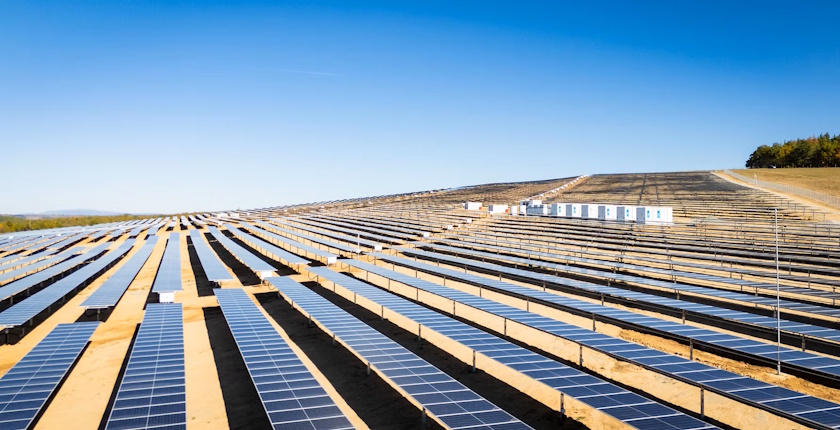
Bulgaria’s Biggest Solar Plan Stalled in Court

Suhindol Solar Park Faces Legal Setback After Local and Environmental Complaints

Environmental organizations and residents in Suhindol, north-central Bulgaria, are pushing back against a planned EUR 450 million hybrid renewable energy project that would combine a 500 MW solar park with 1 GWh of battery storage. Opponents argue the development would significantly reduce available agricultural land in the municipality, while the investor says it is ready to implement environmental safeguards and a community support program.

Court Cancels Approval for Preliminary Works

Following complaints filed by environmental groups, the Administrative Court in Veliko Tarnovo overturned the approval for preliminary works on a hybrid power plant planned across 945 hectares (almost 9.5 square kilometers) near Suhindol.

The project is being led by Wabi-Sabi Alpha, a company linked to Austria-based Green Source Group. The firm had received the go-ahead two weeks earlier from the Regional Inspectorate of Environment and Water (RIEW) in Veliko Tarnovo.

500 MW Solar Park With 1 GWh Batteries

Through its project company, Wabi-Sabi Alpha plans to build a solar facility with 500 MW peak capacity, supported by battery storage designed for 250 MW operating power and 1 GWh capacity, as reported by Kapital.

If completed, it would become Bulgaria’s largest photovoltaic project, though the development is structured into five separate units. These would connect to the national transmission grid through a 400 kV substation.

The company secured municipal land under a 36-year lease, with total investment estimated at EUR 450 million.

Land Use Concerns: Arable Land and Pastures in Focus

Environmentalists, including the Bulgarian Society for the Protection of Birds (BSPB/BDZP), along with local residents, claim the investor began cutting trees and bushes before all procedures were completed.

Critics warn the project could affect:

  • Nearly 11% of the municipality’s arable land

  • Around 40% of its pastures

  • About 6% of Suhindol’s overall territory

While the hybrid power plant would physically cover about 30% of the designated project area—spread across multiple separate plots—opponents stress that the entire zone would be reclassified as industrial land.

Some local voices have also raised concerns about potential impacts on wildlife habitats, protected areas and species, and the proximity of archaeological sites. Opponents argue that the environmental assessment process was treated as a formality rather than a rigorous review.

Investor Offers Community Program and Compensation

Wabi-Sabi Alpha says it is prepared to go beyond the measures required by the environmental authorities. The firm has outlined a community program that includes:

  • Compensation for affected farmers

  • Covering electricity costs for several municipal buildings

  • Paying for street lighting, which it would also replace

  • Sponsorship support for the local football club, among other initiatives

Green Source’s Regional Footprint

Green Source Group is active across multiple markets in Central and Southeastern Europe, including Romania, Croatia, Serbia, Hungary, Slovakia, and the Czech Republic. The company established Wabi-Sabi Alpha together with LSG Group and Core Value Capital.

Wider Resistance to Large Renewable Projects

The dispute in Suhindol comes amid a broader trend in Bulgaria, where citizens and activist groups have campaigned in recent years against several large-scale renewable energy developments, often citing land use, biodiversity, and transparency concerns.

by in News

Bulgaria proposes changes to electricity trading rules to include new market participants

The Energy and Water Regulatory Commission of has proposed its amendments to Bulgaria’s electricity trading rules.

The changes aim to align electricity trading rules with recent updates to the country’s Energy Act and a legal and operational framework for new categories of market participants, according to law firm CMS Bulgaria.

New categories include active customers (active buyers), citizen energy communities, self-consumers (prosumers) of electricity from renewable sources, and renewable energy communities.

The Energy and Water Regulatory Commission (EWRC) held a public consultation event today on its draft changes in electricity trading rules. Representatives of the three distribution system operators (DSOs), the Sofia Municipality and the Bulgarian Association for Electrical Engineering and Electronics (BASEL) participated in the discussion.

These changes are designed to encourage electricity production for self-consumption

These changes are designed to encourage electricity production for self-consumption, minimize distribution losses, and foster more predictable energy pricing, a CMS e-alert reads. Furthermore, the amendments would ensure the Bulgarian rules comply with EU law, specifically directives 2018/2001 and 2019/944 and Regulation 2019/943.

The proposed draft introduces several specific provisions to facilitate the participation of the said new entities, CMS stressed.

It explicitly defines how new participants can join the market and the types of contracts they are permitted to conclude.

The new rules allow for the grouping of different sites for joint electricity production or consumption. They also set technical mandates for commercial metering devices, including remote reading capabilities.

The new rules also define calculation of generated, shared and sold electricity

The authors outlined procedures for registering or deregistering participants and groups with network operators. The update would impose an obligation to maintain a public register of these participants.

The proposed rules define the calculation of generated, shared and sold electricity. The framework guarantees that data is exchanged between suppliers, network operators, and group members, ensuring it is reflected in monthly bills.

Stakeholders were invited to submit their proposals from January 8 until January 22, CMS underscored.

by in News

Bulgaria proposes changes to electricity trading rules to include new market participants

The Energy and Water Regulatory Commission of has proposed its amendments to Bulgaria’s electricity trading rules.

The changes aim to align electricity trading rules with recent updates to the country’s Energy Act and a legal and operational framework for new categories of market participants, according to law firm CMS Bulgaria.

New categories include active customers (active buyers), citizen energy communities, self-consumers (prosumers) of electricity from renewable sources, and renewable energy communities.

The Energy and Water Regulatory Commission (EWRC) held a public consultation event today on its draft changes in electricity trading rules. Representatives of the three distribution system operators (DSOs), the Sofia Municipality and the Bulgarian Association for Electrical Engineering and Electronics (BASEL) participated in the discussion.

These changes are designed to encourage electricity production for self-consumption

These changes are designed to encourage electricity production for self-consumption, minimize distribution losses, and foster more predictable energy pricing, a CMS e-alert reads. Furthermore, the amendments would ensure the Bulgarian rules comply with EU law, specifically directives 2018/2001 and 2019/944 and Regulation 2019/943.

The proposed draft introduces several specific provisions to facilitate the participation of the said new entities, CMS stressed.

It explicitly defines how new participants can join the market and the types of contracts they are permitted to conclude.

The new rules allow for the grouping of different sites for joint electricity production or consumption. They also set technical mandates for commercial metering devices, including remote reading capabilities.

The new rules also define calculation of generated, shared and sold electricity

The authors outlined procedures for registering or deregistering participants and groups with network operators. The update would impose an obligation to maintain a public register of these participants.

The proposed rules define the calculation of generated, shared and sold electricity. The framework guarantees that data is exchanged between suppliers, network operators, and group members, ensuring it is reflected in monthly bills.

Stakeholders were invited to submit their proposals from January 8 until January 22, CMS underscored.

by in News

Synthos Green Energy, Blue Bird Energy join forces to deploy SMRs in Bulgaria

Warsaw-based Synthos Green Energy and Bulgarian firm Blue Bird Energy agreed to cooperate in the installation of small modular reactors.

Synthos Green Energy (SGE) and Blue Bird Energy (BBE) have signed a letter of intent (LOI) to partner on the deployment of small modular reactors in Bulgaria, SGE said.

The two firms plan to establish a joint venture aimed at building a fleet of up to six BWRX-300 SMRs in Bulgaria.

The project will bring Bulgaria zero-emission, affordable baseload electricity to the power industry, support AI and other data centers, and decarbonize district heating. according to the update.

SGE: The BWRX-300 is the most commercially advanced SMR in the market today

SGE claims that the BWRX-300, designed by US company GE Vernova Hitachi Nuclear Energy, is the most commercially advanced SMR in the market today.

A 300 MW facility is currently under construction in Ontario, Canada, the Polish company added and pointed to GE Vernova Hitachi’s 65 years of experience “developing proven nuclear technology.”

The new joint venture in Bulgaria will select and prepare deployment sites, facilitate site and design licensing, manage construction and project development and coordinate project funding.

SGE CEO Rafał Kasprów said partnering with BBE would strengthen his company’s European SMR development platform and help deliver affordable energy that meets the needs of the Bulgarian people.

Kasprów: Bulgaria joins the US, Canada, Poland, Hungary, and others who are in the process of deploying US technology

“With today’s announcement, Bulgaria joins the US, Canada, Poland, Hungary, and others who are in the process of deploying this world-leading US technology,” he added.

Of note, in September, Bulgaria’s Minister of Energy Zhecho Stankov said the country should discuss the possibility of installing SMRs on its territory with companies developing the technology.

According to Kalin Peshov, Chairman of the Board of Directors of Blue Bird Energy, the company is excited to partner with energy frontrunners such as GE Vernova Hitachi (GVH) and SGE.

The 65 years of nuclear experience of GVH and the proven track record of SGE bringing the BWRX-300 technology to Europe would be invaluable in supporting the company’s mission to provide Bulgaria with a secured long-term energy supply, he explained.

Young companies

BBE and SGE were established to secure the deployment of an SMR fleet in Bulgaria, Poland, and Europe, according to their websites.

The main shareholders of BBE are construction firm Glavbolgarstroy Holding (GBS) and copper mining and processing company Asarel-Medet JSC. It was founded four years ago.

SGE was established in 2019 by Michał Sołowow, Polish tycoon and owner of the biggest privately held industry group in Poland, MS Galleon, the website reads.

by in News

Sunotec secures financing for Bulgarian BESS, renewables portfolio

Sunotec has secured financing for a portfolio of seven projects in Bulgaria. The deals were agreed in September.

The portfolio, for 115 MW in peak solar power capacity and 763 MWh of battery storage, significantly expands Sunotec‘s investment presence in its home market, according to the update.

Six projects are for standalone battery energy storage systems (BESS) and one is for a solar power plant with a colocated BESS.

According to the firm, they are either wholly owned or partially, through Solaris Holding AD, a 50/50 joint venture with the main shareholders of Eurohold Bulgaria AD.

The standalone battery energy storage system projects are part of the government’s RESTORE program

The seven projects contribute to decarbonizing Bulgaria’s power sector, enhancing its grid stability and energy independence, Sunotec stressed.

The Bulgarian Ministry of Energy has approved the said standalone BESS projects to receive subsidies under the RESTORE program, the company added.

In the first round of the National Infrastructure for Storage of Electricity from Renewable Sources (RESTORE) program, Bulgaria approved EUR 587 million in subsidies for 82 BESS projects totaling 9.71 GWh.

In late July, Sunotec and Sungrow agreed to install 2.4 GWh of BESS

In late August, the ministry launched the public consultation process for a proposed new round of its subsidy program for BESS.

Viktor Stefanov, Head of IPP at Sunotec, said the seven investments mark a major milestone in its evolution.

The company added that they further strengthen its position, as well as of Solaris Holding, among Bulgaria’s leading investors in photovoltaics and energy storage.

In late July, China-based Sungrow achieved an agreement with Sunotec on installing 2.4 GWh of BESS in Europe. The portfolio includes several large-scale projects across Bulgaria, which will serve energy storage needs.

by in Energy, Events, News

15th South-East European Exhibitions & Conferences on Energy Efficiency & Renewables, Smart Cities and Save the Planet

EE & RES , Smart Cities and Save the Planet  16-18 April, Sofia, Bulgaria will present intelligent solutions for buildings, infrastructure, transport and mobility, public services; sustainable alternatives for energy production, distribution, storage and saving; waste utilization and recycling. The event is organized by Via Expo and is one of the most important B2B initiatives in South-East Europe that brings novelties to the market, meets buyers and suppliers. The synergy of the good business environment during the show and the numerous promotional services will help the exhibitors get the maximum value out of the participation and to achieve their marketing goals: to enter a new market, to launch innovations, to find local distributors and clients from SEE. For 10 years in a row an Austrian Pavilion will be realized. 

Some highlights of the exhibiting companies from Austria, Bulgaria, Czech Republic, Germany, Greece, Italy, Poland, Romania, Switzerland, the Netherlands.

EE & RES 

‘In Sofia we will present M7-A03D – it is among the most efficient gas turbine in its power class and has the industry’s lowest level of NOx emissions.’ announces Mr. Cristian Athanasovici, Business Development Manager at Kawasaki Gas Turbine Europe. Herz will draw attention to its latest developments: the first wood chip boiler Herz firematic Condensation 20/35 and Air-to-Air heat pump with inverter technology. Uniconfort product range comprises biomass boilers, cogeneration installations, remote heating systems.

Smart Cities

iSentinel® will be presented for the first time on the Bulgarian market. It is a smart earthquake protection system. The emphasis of Green Embedded Systems participation will be on the latest company development, which is a novelty on the global market – a 60A direct energy meter for home use, with built-in Wi-Fi and with the size of a standard fuse. Innovambiente is a system to manage municipal waste collection processes, from startup to collection monitoring. It will be presented by the Italian company Innova. Intracom Telecom (smart lighting, parking, metering, eHealth), Comicon (building and home automation), VAiOS (video surveillance, alarm systems, access control), National Cluster for Intelligent Transport and Energy Systems (smart systems in transport) etc. have also joined Smart Cities.

Save the Planet

Lindner-Recyclingtech sees a growing potential in the SE European market and has

already realized various projects there. The focus of its participation will be on innovative shredders for the processing of premium SRF and RDF. EREMA has recently presented the new global innovation Vacunite – the company is a leader producer of plastics recycling machines. New additions to the exhibitor line-up include: Hitachi Zosen Inova (waste-to-energy solutions), ELTE GPS (identification tools and weighing systems), Europlast Kunststoffbehälterindustrie (plastic and recycling containers and logistic pallets), M&M Frut (JCO Tracer system), Kahl (wood pelleting plants), etc.

The Conferences will highlight new trends and good practices that can be successfully implemented in SE Europe. Intelligent Solutions for the Buildings, Environment, Transport & Mobility, Smart Governance, Sustainable Technologies & Funding, Bioenergy, Circular Economy will be among the topics.

If you want to be a part of the SE European  market – register your interest here

Brochure

RE, Smart Cities    Brochure Save the Planet   Post Event Report 2018

For more info – www.viaexpo.com

by in News

Bulgaria, Macedonia agree to step up cooperation in energy, transport

SOFIA (Bulgaria), – EU candidate Macedonia and Bulgaria signed on Tuesday a friendship treaty that paves the way for closer cooperation in energy and transport between the two Balkan neighbours.

The treaty for good neighbourly relations was signed in Skopje, Macedonia by Macedonian prime minister Zoran Zaev and his Bulgarian counterpart, Boyko Borissov, according to a video file posted on the website of Bulgarian public TV broadcaster BNT. The ministers of transport and energy of the two countries signed memorandums of understanding for completion of the construction of a railroad link between Sofia and Skopje as well as for a pipeline connecting the gas transmission systems of EU member Bulgaria and Macedonia, BNT said.

Last week, the Bulgarian government approved the MoU with Macedonia to build a new gas link between the two countries. Under the MoU, Bulgaria and Macedonia will establish a working group that will conduct a feasibility study within 6 months after the document enters into force. Borissov said after the signing ceremony the European Commission has approved Bulgaria’s plans to build a gas distribution centre on its territory, which will allow Macedonia to buy gas directly from the future gas hub Balkan. “The two memorandums are extremely important to you [Macedonia] and to us, because Transport Corridor 8 is the link that brings together the Balkans. This transport corridor allows every Balkan country to trade and do business with the others,” Borissov noted. The railroad between Skopje and Sofia is part of pan-European Transport Corridor 8, one of 10 European transport corridors. It connects the Adriatic coast with the Black Sea coast via Albania, Macedonia and Bulgaria. The treaty has to be ratified by the parliaments of Bulgaria and Macedonia to enter into force.

by in News

Bulgaria seeks to attract Azerbaijani investment in energy sector.

emil_karimov_ambassadorBulgaria intends to attract Azerbaijani investment in its energy sector. The Bulgarian government has delivered a package of energy cooperation projects to Azerbaijan, Emil Karimov said.

The Azerbaijani ambassador to Bulgaria told Trend on August 26 that the Azerbaijani side was offered to participate in the construction of filling stations, to invest in the construction of oil and gas storage facilities, and refineries.

“Currently, the Azerbaijani side is examining these projects and their profitability,” he said.

The ambassador went on to add that the energy cooperation is one of important areas of cooperation between Bulgaria and Azerbaijan.

“Bulgaria is interested in purchasing Azerbaijani gas. The government plans to purchase gas in the volume of one billion cubic meters a year. In the future, these volumes can be increased,” he said.

Currently, the negotiations on the Azerbaijani gas supply through the Greece-Bulgaria Interconnector are underway.

“Bulgaria intends to build a pipeline, which will be connected with the Trans-Adriatic Pipeline) in the future,” he said. “Azerbaijani gas will be delivered to Europe via this pipeline. Thus, Bulgaria will be able to receive gas from Azerbaijan.”

The Greece-Bulgaria Interconnector is a gas pipeline that will allow Bulgaria to receive Azerbaijani gas, mostly from the second stage of development of Azerbaijan’s Shah Deniz gas and condensate field.

The IGB will connect to the Trans-Adriatic pipeline, providing a steady flow of natural gas from Shah Deniz in the Caspian to European markets.

In January 2014, TAP and the Interconnector Greece-Bulgaria Company – which is in charge of the development, financing, and construction of the IGB – signed a memorandum of understanding and cooperation.

The MoU will allow cooperation between the two companies who will work together on finding a possible connection point in the vicinity of Komotini, Greece. This will enable new gas supplies to flow into the Bulgarian gas network and further into South Eastern Europe.

The TAP project is a part of the Southern Gas Corridor that allows Europe to diversify its hydrocarbon supply sources and strengthen energy security.

TAP will transport natural gas from the giant Shah Deniz II field in Azerbaijan to Europe. The approximately 870 km-long pipeline will connect to the Trans-Anatolian Pipeline at the Turkish-Greek border in the city of Kipoi, cross Greece, Albania, and the Adriatic Sea, before coming ashore in Southern Italy.

Azerbaijan and Bulgaria have developed friendly relations after Bulgaria recognized the independence of Azerbaijan in January 1992.

Diplomatic relations between the two countries were established in June 1992 and the Embassy of Bulgaria in Azerbaijan was opened in December 1999.

Bulgaria and Azerbaijan have the potential for a much greater trade turnover than current figures show. In 2014, the Azerbaijan State Statistics Committee reported that trade between the two countries amounted to $124.596 million.

By Aynur Karimova