by in News

Bosnia and Croatia Advance Southern Gas Interconnection to Strengthen Regional Energy Security

Bosnia and Herzegovina and Croatia have formalized an intergovernmental agreement to advance the construction of the Southern Gas Interconnection, a strategic infrastructure project aimed at strengthening energy security and ensuring a more stable gas supply for Bosnia and Herzegovina.

The planned interconnection will provide Bosnia and Herzegovina with an alternative supply route via Croatia, reducing its current dependence on Russian natural gas delivered through Turkey, Bulgaria, and Serbia. By enabling access to new sources, the project is expected to significantly enhance supply resilience.

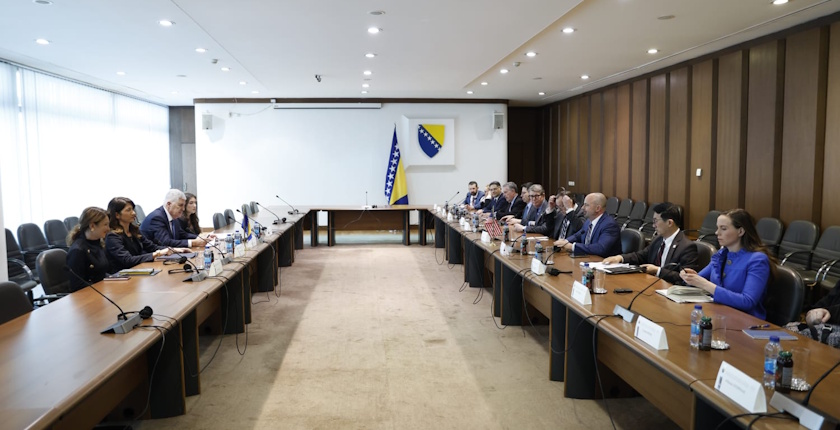
The agreement was signed in Dubrovnik during the Three Seas Initiative summit by Borjana Krišto, Chairwoman of the Council of Ministers of Bosnia and Herzegovina, and Croatian Prime Minister Andrej Plenković.

The pipeline network will span multiple routes, including Split–Zagvozd in Croatia, extending into Bosnia and Herzegovina through Posušje, and continuing across key locations such as Tomislavgrad, Kupres, Bugojno, and Travnik. Additional शाखing routes will connect areas including Mostar, Livno, Jajce, Tuzla, and Čapljina, creating a comprehensive distribution network.

According to the Council of Ministers of Bosnia and Herzegovina, the project will diversify both supply routes and energy sources, contributing to greater energy independence. The pipeline is expected to be supplied with gas from the liquefied natural gas (LNG) terminal on the Croatian island of Krk.

The signing ceremony was attended by US Energy Secretary Chris Wright and Vedran Lakić, Minister of Energy, Mining and Industry of the Federation of Bosnia and Herzegovina. US-based AAFS Infrastructure and Energy has been designated to manage the pipeline within Bosnia and Herzegovina.

Although the project has been under consideration for years, tangible progress accelerated recently. In January, authorities in Bosnia and Herzegovina indicated that AAFS Infrastructure and Energy would receive a 30-year concession. Subsequently, in late February, twelve countries from Central and Eastern Europe and the Balkans, including Bosnia and Herzegovina, reached an agreement with the United States to strengthen cooperation on LNG supply.

The Federation of Bosnia and Herzegovina, the entity through which the pipeline will pass, recently adopted a special legal framework (lex specialis) designating the US firm as the project investor. This decision has drawn criticism from the European Union, which warned of potential consequences.

Borjana Krišto emphasized that Bosnia and Herzegovina occupies a strategic position at the crossroads of energy flows in Southeast Europe. She noted that, beyond being a consumer, the country has the potential to play an active role in developing a more secure and resilient regional energy system. She also highlighted the importance of transatlantic cooperation in accelerating investment and improving market integration.

Prime Minister Andrej Plenković underscored that the agreement reinforces Croatia’s role as a regional energy hub, particularly by enabling the transport of gas from the Krk LNG terminal to Bosnia and Herzegovina. He also pointed to the broader significance of the Three Seas Initiative, which brings together 13 EU member states from Central and Eastern Europe to enhance connectivity between the Baltic, Black, and Adriatic seas, with a focus on infrastructure, transport, and energy integration.

by in News

The Green Backbone: Albania and Western Balkan Partners Unveil Strategic Energy Projects for 2026 EU Funding

The Energy Community has officially opened the public consultation for the 2026 list of Projects of Energy Community Interest (PECI), marking a pivotal moment for the Western Balkans’ energy infrastructure. Running from March 16 to April 17, 2026, the consultation evaluates eight critical projects designed to dismantle cross-border bottlenecks and pave the way for a massive influx of renewable energy.

For Albania and its neighbours, Kosovo, North Macedonia, Montenegro, and Bosnia and Herzegovina the selected projects represent a shift from traditional hydroelectric production to a sophisticated, integrated system of large-scale storage and high-voltage transmission corridors. These projects are now positioned to seek diverse financing, including EU grants, Western Balkans Investment Framework (WBIF) funds, and favourable loans from international financial institutions.

Below is a detailed technical and strategic breakdown of the flagship projects currently in the PECI selection pipeline.

1. Project E12: Moglice Pumped-Storage – The Balkans’ “Giant Battery”

At the heart of Albania’s green transition is the Moglice Extension Pumped-Storage Hydropower Plant (PSH). Developed by Devoll Hydropower Sh.A. (part of the Statkraft Group), this project is set to become one of the largest flexibility assets in the region.

  • Technical Parameters:

    • Maximum Power (Pmax): 1,620 MW (with a dynamic operational range of -1,620 MW to +1,620 MW).

    • Storage Capacity: 30,000 MWh (approx. 30 GWh).

    • Voltage: 400 kV.

    • Efficiency: 77% roundtrip efficiency.

  • Strategic Role: The plant will function as a “green battery,” utilizing the existing Moglice reservoir (380 million m³) and a new upper reservoir (25 million m³). It is designed to store surplus energy during periods of high production and release it during peak demand, providing critical balancing services to Albania and neighboring EU markets like Greece and Italy.

  • Timeline: Currently in the economic feasibility stage, with the earliest commissioning targeted for 2033.

2. Project E04: The 220 kV Balkan Triangle Rehabilitation

To ensure the reliability of the “Balkan Triangle” (Albania, Montenegro, and Bosnia & Herzegovina), the rehabilitation of the aging 220 kV Trebinje–Vau i Dejës corridor has been prioritized. This line is a vital artery that has recently struggled with congestion due to new solar and hydro capacities.

  • Technical Parameters:

    • Voltage: 220 kV.

    • Length: 162.92 km.

    • Transmission Power: Upgraded to carry 1,500 A using specialized high-capacity conductors.

    • Promoters: NOS BiH, Elektroprijenos-Elektroprenos BiH, and CGES (Montenegro).

  • Strategic Role: The project addresses severe climatic challenges and infrastructure depreciation. By replacing OPGW, insulation, and conductors on existing poles without increasing mechanical load, the project will increase Net Transfer Capacity (NTC) and resolve long-standing congestions between BA–ME, ME–AL, and AL–BA.

  • Timeline: Currently in the Detail Design Study phase, with an expected commissioning date of 2030.

3. Project E05 & Regional Corridors: Integrating Wind and Strengthening East-West Links

The expansion of the 400 kV network is a two-pronged strategy: strengthening regional East-West ties and unlocking wind potential in Northeast Albania.

A. The East-West Western Section (Project E05)

Connecting Kosovo and North Macedonia, this 103 km interconnector is a key link in the regional transmission “rings.”

  • Technical Parameters: 400 kV; 1330 MW Pmax.

  • Objective: Connecting the upgraded Prizren (XK) substation to a new substation in Tetovo (MK). This project enhances the security of supply and supports the large-scale integration of Renewable Energy Sources (RES) across the corridor.

  • Timeline: Expected commissioning by 2035.

B. The Albania–Kosovo Interconnection (Strategic Link)

As highlighted by recent strategic filings, Albania is pushing for a new 400 kV interconnection between Fierza (AL) and Prizren (XK).

  • Strategic Role: This link is deemed essential to facilitate the integration of over 1 GW of planned wind energy capacity in Northeast Albania. It will alleviate existing 220 kV grid overloads and significantly boost regional energy trading.

Financing the Future

These PECI projects are governed by the revised EU TEN-E Regulation, which streamlines the path toward final approval in December 2026. Because these projects provide cross-border benefits, they are eligible for a “blended” financing model. This includes state budget allocations, private investment from promoters like Statkraft and KOSTT, and significant support from European Union grants and loans.

As the Western Balkans move away from coal and toward a renewable-heavy mix, these projects—Moglice’s storage, the 220 kV rehabilitation, and the 400 kV corridors—form the essential hardware of a modernized, secure, and decarbonized European energy market.

by in News

North Macedonia Launches First-Ever Tender for 150 Electric Buses Worth EUR 51 Million

The Ministry of Transport of North Macedonia has launched a public tender for the procurement of electric buses for urban transport, marking the country’s first such purchase. The authorities expect the move to curb air pollution, enhance the quality of public transport services, and reduce long-term operating costs.

North Macedonia is joining regional peers Croatia and Bosnia and Herzegovina, which are also advancing electric bus procurement processes. Macedonian officials first announced the initiative in December 2024.

150 Electric Buses and 75 Charging Stations Planned

The ministry has issued a public call for the acquisition of 150 eco-friendly electric buses and 75 charging stations. Under the plan, 100 buses will be allocated to the Skopje, while the remaining 50 will serve other municipalities across the country.

Delivery is structured in three phases. The selected supplier will be required to deliver the first 30 buses and 15 charging stations within six months. An additional 60 buses and 30 stations must be supplied within one year, followed by the final 60 buses and 30 stations within 18 months.

The total value of the procurement is estimated at MKD 3.1 billion (EUR 51 million).

Technical Requirements and Warranty Conditions

According to the tender documentation, each bus must offer a minimum driving range of 325 kilometers on a single charge, in line with the SORT II standard. The required minimum battery capacity is 360 kWh.

The supplier must provide a four-year warranty covering both the buses and their batteries, as well as ensure the availability of spare parts for ten years. Each of the 75 charging stations is required to have a capacity of at least 120 kW per charger.

The deadline for bid submissions is March 30, 2026. The main selection criterion will be price, determined through an electronic auction process.

Strategic Investment in Cleaner and More Efficient Transport

The ministry described the procurement as a clear political commitment to environmental protection and to improving the efficiency of public transport in Skopje and other municipalities.

According to the authorities, the investment sends a strong signal in the fight against air pollution while raising the quality of public transport services. In addition to environmental gains, the ministry emphasized the long-term economic viability of the project, citing lower maintenance and energy costs associated with electric vehicles.

The procurement forms part of a broader strategic plan aimed at transforming the urban transport system and enhancing the overall efficiency of the national transport network.

Regionally, Croatia is in the process of purchasing 206 electric buses for its cities, while Bosnia and Herzegovina is acquiring electric vehicles for Sarajevo.

At the EU level, the shift toward cleaner public transport is accelerating. According to Transport & Environment, 60% of all new city buses registered in the European Union last year were powered by electricity or hydrogen, underlining the pace of decarbonization in the sector.

by in News

Croatia Launches Espoo Convention Procedure Over Gornji Horizonti Hydropower Project in Bosnia and Herzegovina

The Ministry of Environmental Protection and Green Transition has formally initiated proceedings under the Espoo Convention concerning the Gornji Horizonti hydropower subsystem in Republika Srpska, Bosnia and Herzegovina. The large-scale energy project предусматриes the construction of three hydropower plants.

Environment Minister Marija Vučković confirmed that the official procedure was launched in November through the Secretariat of the Espoo Convention, formally known as the UNECE Convention on Environmental Impact Assessment in a Transboundary Context. Both Croatia and Bosnia and Herzegovina are signatories to the convention.

According to Vučković, the ministry issued a written opinion arguing that the project’s development has not complied with provisions related to the participation of potentially affected states in projects with possible cross-border environmental impacts. While Croatia does not have the authority to block such infrastructure investments, it is entitled to be adequately consulted and to receive comprehensive responses to its inquiries.

Longstanding Environmental Concerns

Vučković emphasized that energy infrastructure development in the Trebišnjica river basin has, for decades, produced visible adverse effects in the Neretva river valley. She noted that numerous expert questions raised by Croatian authorities over the past 15 years — ranging from the HPP Dabar project to subsequent initiatives — remain unresolved.

“In the spirit of good-neighborly relations, Croatia will continue to insist on clear and substantiated answers,” the minister stated.

The Prefect of Dubrovnik-Neretva County, Blaž Pezo, warned that the Gornji Horizonti project poses a risk to the natural freshwater flow of the Neretva River. He underscored that Croatia is actively pursuing all available mechanisms to challenge aspects of the project that could negatively affect its territory.

Ministry of Environmental Protection and Green Transition

Parallel Investment to Combat Salinity in Lower Neretva

The issue was discussed in Opuzen during a visit by Vučković and Pezo to the site of a EUR 85.5 million environmental protection project in the Donja Neretva region. The initiative aims to safeguard land and water resources from salinization in the lower Neretva area.

The first phase foresees the construction of a barrier on the Neretva River to prevent seawater intrusion, with works valued at approximately EUR 30 million and an implementation timeline of four years. The second phase includes the development of a freshwater reservoir upstream of the barrier, intended to flush salt from agricultural soils and secure reliable irrigation supplies.

Structure of the Gornji Horizonti Subsystem

The Gornji Horizonti hydropower subsystem involves diverting water from the Gatačko (Gacko) and Nevesinjsko (Nevesinje) plains through the Dabarsko (Dabar) and Fatničko (Fatnica) plains into Bilećko (Bileća) Lake.

The project encompasses three hydropower plants — Dabar, Bileća and Nevesinje — and is being developed by Elektroprivreda Republike Srpske. Construction of the Dabar hydropower plant is currently underway.

by in News

US firm eyes construction of three gas-fired power plants in BiH

A US company is interested in building three gas-fired power plants in Bosnia and Herzegovina, according to Dragan Čović, First Deputy Speaker of the House of Peoples of the Parliamentary Assembly of BiH.

The natural gas power plants would be connected to the planned Southern Gas Interconnection and the liquefied natural gas (LNG) terminal in Krk, Croatia, Dragan Čović explained in an interview with Avaz.

The Southern Gas Interconnection is a project designed to provide BiH with an alternative natural gas supply. The country currently relies on Russian gas delivered via Serbia, while the new pipeline would secure imports from the Croatian LNG terminal. The interconnection has been in development for many years, but construction has yet to begin.

Čović revealed that the power plants would be built in the Mostar area, central Bosnia, and in Tuzla. He expressed the belief that the interconnection is crucial for BiH, arguing it would ensure the country’s long-term energy and political stability.

Čović spoke with Bechtel’s representatives

Because the pipeline passes through areas with a majority Croat population, the project is also of strategic interest to the Croat people in BiH, added Čović, who is also the president of the Croatian Democratic Union of Bosnia and Herzegovina (HDZ BiH).

Čović recently met with representatives of US construction company Bechtel and the United States Trade and Development Agency (USTDA), which provides financing and technical support for international projects. Bechtel is currently being considered as a potential contractor for the pipeline’s construction.

He met with Justin Siberell, Bechtel’s President for Regions and Corporate Relations, and Sam Kwon, the USTDA’s General Counsel.

AAFS Infrastructure and Energy also visited BiH

The guests from the US also met with Acting President of the Republic of Srpska Ana Trišić-Babić and Minister of Energy, Mining and Industry of the Federation of BiH Vedran Lakić. FBiH and the Republic of Srpska are the two entities making up BiH.

Earlier, representatives of US-based AAFS Infrastructure and Energy also visited the country. According to Čović, the company is expected to receive a 30-year concession to manage the gas pipeline through BiH.

He explained that the three proposed power plants were included in the letter of intent that the firm sent to BiH authorities. The US partners’ plans extend far beyond the construction of the pipeline, he added.

A broader geopolitical dimension

Čović expressed the belief that these investments would carry a significant geopolitical dimension, claiming that if the US invests somewhere, that region is protected. This is demonstrated by the policy of President Donald Trump around the world, he added.

Čović dismissed claims that HDZ BiH is hindering the construction of the gas pipeline due to disagreements with Bosniak officials about project details. It is in the strategic interest of the Croat people to implement it, he stressed.

Of note, the Republic of Srpska has also announced plans to build gas-fired power plants and a new gas interconnection with Serbia.

by in News

US firm eyes construction of three gas-fired power plants in BiH

A US company is interested in building three gas-fired power plants in Bosnia and Herzegovina, according to Dragan Čović, First Deputy Speaker of the House of Peoples of the Parliamentary Assembly of BiH.

The natural gas power plants would be connected to the planned Southern Gas Interconnection and the liquefied natural gas (LNG) terminal in Krk, Croatia, Dragan Čović explained in an interview with Avaz.

The Southern Gas Interconnection is a project designed to provide BiH with an alternative natural gas supply. The country currently relies on Russian gas delivered via Serbia, while the new pipeline would secure imports from the Croatian LNG terminal. The interconnection has been in development for many years, but construction has yet to begin.

Čović revealed that the power plants would be built in the Mostar area, central Bosnia, and in Tuzla. He expressed the belief that the interconnection is crucial for BiH, arguing it would ensure the country’s long-term energy and political stability.

Čović spoke with Bechtel’s representatives

Because the pipeline passes through areas with a majority Croat population, the project is also of strategic interest to the Croat people in BiH, added Čović, who is also the president of the Croatian Democratic Union of Bosnia and Herzegovina (HDZ BiH).

Čović recently met with representatives of US construction company Bechtel and the United States Trade and Development Agency (USTDA), which provides financing and technical support for international projects. Bechtel is currently being considered as a potential contractor for the pipeline’s construction.

He met with Justin Siberell, Bechtel’s President for Regions and Corporate Relations, and Sam Kwon, the USTDA’s General Counsel.

AAFS Infrastructure and Energy also visited BiH

The guests from the US also met with Acting President of the Republic of Srpska Ana Trišić-Babić and Minister of Energy, Mining and Industry of the Federation of BiH Vedran Lakić. FBiH and the Republic of Srpska are the two entities making up BiH.

Earlier, representatives of US-based AAFS Infrastructure and Energy also visited the country. According to Čović, the company is expected to receive a 30-year concession to manage the gas pipeline through BiH.

He explained that the three proposed power plants were included in the letter of intent that the firm sent to BiH authorities. The US partners’ plans extend far beyond the construction of the pipeline, he added.

A broader geopolitical dimension

Čović expressed the belief that these investments would carry a significant geopolitical dimension, claiming that if the US invests somewhere, that region is protected. This is demonstrated by the policy of President Donald Trump around the world, he added.

Čović dismissed claims that HDZ BiH is hindering the construction of the gas pipeline due to disagreements with Bosniak officials about project details. It is in the strategic interest of the Croat people to implement it, he stressed.

Of note, the Republic of Srpska has also announced plans to build gas-fired power plants and a new gas interconnection with Serbia.

by in News

Zhongbo group advances in preparation for construction of Leotar wind park

Zhongbo Group has taken another step in preparing for the construction of its Leotar wind farm near Trebinje, in the southeastern part of Bosnia and Herzegovina (BiH). It would be the largest wind power plant in the Western Balkans by capacity and one of the largest in Southeast Europe.

Zhogbo Group has conducted research and preparatory works on the site and obtained approval from electricity transmission company Elektroprenos BiH. In June last year, the Assembly of the City of Trebinje approved the proposition to develop a zoning plan.

The company has now submitted a request to the Ministry of Spatial Planning, Construction, and Ecology of the Republic of Srpska, one of the two entities in BiH, to determine whether an environmental impact assessment (EIA) will be required.

“We are informing the public and interested parties that the project developer Zhogbo Group, Banja Luka, has submitted a request to the ministry for a preliminary environmental impact assessment for the Leotar wind farm project, with an installed capacity of 537.5 MW,” the ministry said.

The deadline for comments is 15 days

The public can review and send suggestions within 15 days from January 12, when the notice was published.

The construction of the Leotar wind farm is planned on Leotar mountain. The facility would consist of 86 wind turbines, each with a capacity of 6.25 MW, which will be placed on sites that depend on the terrain configuration and main wind directions, the accompanying document reads.

The expected annual production of the wind farm is 1.5 TWh per year. The plant’s utilization factor is 32.4%.

Of note, last year the owner of Zhongbo Group, registered in Banja Luka, was Everest Power Pte. Ltd., headquartered in Singapore, according to the business registry. Now, according to the registry, the owner is Zodic Energy PTE LTD, headquartered in Singapore.

The company is expected to obtain a concession for the wind farm

Back in September 2024, the Republic of Srpska signed an agreement on strategic cooperation in the field of renewable energy sources with Zhongbo Group and China Power. Zhongbo Group is expected to be awarded a concession for the Leotar project.

The largest wind farm in the Western Balkans is Čibuk 1 in Serbia, with a capacity of 158 MW. However, it won’t hold that title for long, as Alcazar Energy Partners began the construction of its Štip wind power plant, of 400 MW, in July last year in North Macedonia.

In the wider region of Southeast Europe, the largest is Romania’s Fântânele-Cogealac-Gradina, with 600 MW. In Europe, the top spot is held by Markbygden in Sweden, with a capacity of 2,000 MW.

by in News

Zhongbo group advances in preparation for construction of Leotar wind park

Zhongbo Group has taken another step in preparing for the construction of its Leotar wind farm near Trebinje, in the southeastern part of Bosnia and Herzegovina (BiH). It would be the largest wind power plant in the Western Balkans by capacity and one of the largest in Southeast Europe.

Zhogbo Group has conducted research and preparatory works on the site and obtained approval from electricity transmission company Elektroprenos BiH. In June last year, the Assembly of the City of Trebinje approved the proposition to develop a zoning plan.

The company has now submitted a request to the Ministry of Spatial Planning, Construction, and Ecology of the Republic of Srpska, one of the two entities in BiH, to determine whether an environmental impact assessment (EIA) will be required.

“We are informing the public and interested parties that the project developer Zhogbo Group, Banja Luka, has submitted a request to the ministry for a preliminary environmental impact assessment for the Leotar wind farm project, with an installed capacity of 537.5 MW,” the ministry said.

The deadline for comments is 15 days

The public can review and send suggestions within 15 days from January 12, when the notice was published.

The construction of the Leotar wind farm is planned on Leotar mountain. The facility would consist of 86 wind turbines, each with a capacity of 6.25 MW, which will be placed on sites that depend on the terrain configuration and main wind directions, the accompanying document reads.

The expected annual production of the wind farm is 1.5 TWh per year. The plant’s utilization factor is 32.4%.

Of note, last year the owner of Zhongbo Group, registered in Banja Luka, was Everest Power Pte. Ltd., headquartered in Singapore, according to the business registry. Now, according to the registry, the owner is Zodic Energy PTE LTD, headquartered in Singapore.

The company is expected to obtain a concession for the wind farm

Back in September 2024, the Republic of Srpska signed an agreement on strategic cooperation in the field of renewable energy sources with Zhongbo Group and China Power. Zhongbo Group is expected to be awarded a concession for the Leotar project.

The largest wind farm in the Western Balkans is Čibuk 1 in Serbia, with a capacity of 158 MW. However, it won’t hold that title for long, as Alcazar Energy Partners began the construction of its Štip wind power plant, of 400 MW, in July last year in North Macedonia.

In the wider region of Southeast Europe, the largest is Romania’s Fântânele-Cogealac-Gradina, with 600 MW. In Europe, the top spot is held by Markbygden in Sweden, with a capacity of 2,000 MW.

by in News

EU4CAET project pre-selects 43 ideas for first renewable energy communities in BiH

A total of 43 project ideas from 28 local authorities for establishing the first renewable energy communities in Bosnia and Herzegovina have been pre-selected to receive assistance under the EU for Collective Action for Energy Transition project.

The EU for Collective Action for Energy Transition (EU4CAET) project is jointly financed by the European Union and the German Federal Ministry for Economic Cooperation and Development (BMZ). Under the slogan ‘Together for Energy Transition,’ the EUR 3 million project is implemented by GIZ.

The initiative aims to empower local municipalities, citizens, and private actors to develop sustainable energy solutions that create jobs, improve energy efficiency, and advance climate goals, according to the EU Delegation to Bosnia and Herzegovina.

A total of 51 municipalities submitted 89 project ideas

In the project’s development phase, 51 municipalities submitted a total of 89 project ideas, such as solar power plants, heat pumps, biomass heating systems, public lighting upgrades, and electric vehicle charging stations.

The proposed projects also included kindergartens, youth centers, sports halls, theaters, health centers, and other public facilities. Following the evaluation, 28 local self-governments submitted their first concept notes, and 43 ideas were pre-selected.

“The final selection, based on detailed concept notes, is currently ongoing. The number of final projects will depend on the quality of submitted concepts and available funding under EU4CAET,” the Communication Office of the Delegation of the EU to BiH & EU Special Representative in BiH told Balkan Green Energy News.

The evaluation will begin in January 2026

The deadline for the pre-selected local authorities to submit their detailed concept notes was December 20. The evaluation of the submitted concepts will begin in January 2026.

Selected local authorities will be invited to present and discuss their ideas in more detail, according to the Communication Office.

The strongest concepts will receive assistance for capacity development, business planning, feasibility studies, and the preparation of technical design documentation.

The 28 municipalities pre-selected for further evaluation are as follows: Bijeljina, Bileća, Centar Sarajevo, Doboj, Donji Vakuf, Drvar, Goražde, Ilijaš, Kakanj, Kalesija, Laktaši, Maglaj, Milići, Modriča, Mostar, Novi Grad, Novi Travnik, Novo Sarajevo, Šamac, Sokolac, Srebrenica, Teslić, Travnik, Višegrad, Vogošća, Zenica, Živinice, and Zvornik.

BiH does not yet have renewable energy communities, but one of its two entities – the Republic of Srpska – managed to adopt the necessary regulations for their establishment in May this year, becoming the first in the region to do so.

Hahr: The grant call is planned for February 2026 and 2027

Mareike Hahr, Head of EU4CAET, said the project is now focused on tailored technical assistance to further refine the ideas and prepare high-quality applications for the grant call, planned for February 2026 and 2027.

“What has been particularly encouraging is the remarkable level of interest and readiness shown by local communities from both entities to ‘enter new terrain’—to propose their own project concepts, explore innovative solutions, and actively shape their energy future,” she explained.

by in News

EU4CAET project pre-selects 43 ideas for first renewable energy communities in BiH

A total of 43 project ideas from 28 local authorities for establishing the first renewable energy communities in Bosnia and Herzegovina have been pre-selected to receive assistance under the EU for Collective Action for Energy Transition project.

The EU for Collective Action for Energy Transition (EU4CAET) project is jointly financed by the European Union and the German Federal Ministry for Economic Cooperation and Development (BMZ). Under the slogan ‘Together for Energy Transition,’ the EUR 3 million project is implemented by GIZ.

The initiative aims to empower local municipalities, citizens, and private actors to develop sustainable energy solutions that create jobs, improve energy efficiency, and advance climate goals, according to the EU Delegation to Bosnia and Herzegovina.

A total of 51 municipalities submitted 89 project ideas

In the project’s development phase, 51 municipalities submitted a total of 89 project ideas, such as solar power plants, heat pumps, biomass heating systems, public lighting upgrades, and electric vehicle charging stations.

The proposed projects also included kindergartens, youth centers, sports halls, theaters, health centers, and other public facilities. Following the evaluation, 28 local self-governments submitted their first concept notes, and 43 ideas were pre-selected.

“The final selection, based on detailed concept notes, is currently ongoing. The number of final projects will depend on the quality of submitted concepts and available funding under EU4CAET,” the Communication Office of the Delegation of the EU to BiH & EU Special Representative in BiH told Balkan Green Energy News.

The evaluation will begin in January 2026

The deadline for the pre-selected local authorities to submit their detailed concept notes was December 20. The evaluation of the submitted concepts will begin in January 2026.

Selected local authorities will be invited to present and discuss their ideas in more detail, according to the Communication Office.

The strongest concepts will receive assistance for capacity development, business planning, feasibility studies, and the preparation of technical design documentation.

The 28 municipalities pre-selected for further evaluation are as follows: Bijeljina, Bileća, Centar Sarajevo, Doboj, Donji Vakuf, Drvar, Goražde, Ilijaš, Kakanj, Kalesija, Laktaši, Maglaj, Milići, Modriča, Mostar, Novi Grad, Novi Travnik, Novo Sarajevo, Šamac, Sokolac, Srebrenica, Teslić, Travnik, Višegrad, Vogošća, Zenica, Živinice, and Zvornik.

BiH does not yet have renewable energy communities, but one of its two entities – the Republic of Srpska – managed to adopt the necessary regulations for their establishment in May this year, becoming the first in the region to do so.

Hahr: The grant call is planned for February 2026 and 2027

Mareike Hahr, Head of EU4CAET, said the project is now focused on tailored technical assistance to further refine the ideas and prepare high-quality applications for the grant call, planned for February 2026 and 2027.

“What has been particularly encouraging is the remarkable level of interest and readiness shown by local communities from both entities to ‘enter new terrain’—to propose their own project concepts, explore innovative solutions, and actively shape their energy future,” she explained.

  • 1
  • 2