by in News

Slovenia opens its first highway solar power plant

Slovenia’s road management firm Družba za Avtoceste v Republiki Sloveniji has installed a solar power plant on a noise barrier alongside a highway. It is the first such photovoltaic system in the country.

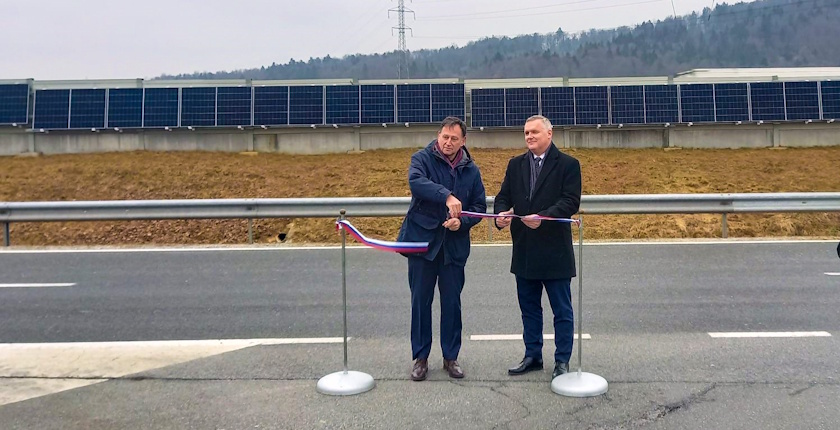
Družba za avtoceste v Republiki Sloveniji (DARS) has officially opened its first photovoltaic plant on a noise barrier at the Šmarje Sap West rest area. It is about ten kilometers from Ljubljana on the motorway connecting the Slovenian capital and Zagreb.

According to DARS, the project is part of a series of activities to achieve the company’s strategic goals in sustainable development, decarbonization, and efficient energy use.

The firm announced the development of such projects in July 2023. A pioneering idea in the region, it was later followed by Bosnia and Herzegovina, Montenegro, and Croatia.

Ribič: An example of thoughtful siting of renewable power plants

The opening ceremony was attended by the Chairman of the Management Board of DARS Andrej Ribič, Minister of the Environment, Climate and Energy Bojan Kumer, representatives of the contractor – Solvera Lynx, and representatives of distribution system operator Elektro Ljubljana.

Andrej Ribič stressed that the project is significant for electricity production but also as an example of thoughtful siting of renewable energy power plants without impacting traffic safety or routine highway maintenance.

The electricity generated by the PV system will be used for DARS’s own consumption, including public lighting and tunnel systems, he explained. This will ensure greater energy independence and more rational management of the energy system, Ribič added.

DARS plans to continue building PV plants

In line with its strategy, DARS aims to gradually reduce energy consumption from the grid and lower CO2 emissions in scopes 1 and 2. By 2030, the goal is to reduce energy consumption and carbon emissions by 30% from the 2024 levels, according to the firm.

Based on its revised strategy, DARS adopted several energy measures in 2024. They included the establishment of an energy department and the implementation of the first phase of solar installations across its five facilities, with a total capacity of 420 kW.

These plants can cover approximately 2% of the company’s annual electricity consumption.

DARS intends to further expand its solar energy projects. The plan includes building bigger plants in degraded areas and more PV systems on buildings and along highway tunnels.

The electricity produced would primarily power lighting and other road systems to ensure the safe and smooth operation of the motorway network, the company added.

Careful site selection for solar plants is crucial

In July 2023, DARS and state-owned hydropower operator Soške Elektrarne Nova Gorica (SENG) announced plans to build solar power plants along highways.

The first one was planned in the Slovenian Littoral and Coastal-Karst area. However, the new solar power plant is not located there.

The two firms later established similar cooperation with the Ministry of Defense and the Municipality of Vipava.

Solar energy use is expanding all over the planet. Experts warn that the optimal siting of PV panels is crucial to avoid occupying large areas of arable land or harming the environment. Therefore, the best solution is to install solar panels in locations that cannot be used for other purposes, such as alongside railways and roads, or on rooftops.
by in News

Slovenia to aid energy-intensive companies with EUR 30 million per year

The Government of Slovenia has adopted a bill on state aid for energy-intensive companies.

Minister of the Environment, Climate and Energy Bojan Kumer said following a government session that the bill on state aid for energy-intensive companies addresses the serious challenges facing this segment of the Slovenian economy.

He added that these companies generate high added value, account for a significant share of Slovenia’s exports, and provide thousands of quality jobs, often in regions which offer no alternative employment opportunities.

According to an analysis from last May, electricity tariffs for Slovenian businesses were among the highest in the European Union.

The law aims to ensure competitiveness for companies exposed to international competition, for which electricity costs are a key factor in business operations.

Around 40 companies should benefit from the state aid

In difficult global economic conditions, support for energy-intensive companies is essential to help them remain competitive in international markets, the minister emphasized.

The subsidies will be limited to electricity consumption over the next three years, including 2026. The ministry expects them to be available to approximately 40 companies in the chemical, steel, and paper industries.

The law defines clear criteria for receiving aid, limits on the amount of support, control mechanisms, and sanctions in case of violations, with the beneficiaries required to allocate at least half of the received aid to sustainable investments, according to the ministry.

The annual electricity consumption threshold is 15 GWh

Funding for the subsidies will come from sources outside the state budget, through companies wholly owned by the government that operate the country’s key electricity generation capacities. The estimated amount of aid is approximately EUR 30 million a year.

The government will send the bill to parliament for consideration under a fast-track procedure, as its implementation will require timely approval from the European Commission.

To qualify for the subsidies, companies will have to meet criteria including annual electricity consumption of more than 15 GWh and a share of electricity costs in the company’s added value of at least 5%, Naš stik reported.

They will also be required to have an established energy management system and to invest at least half of the savings from lower electricity prices in decarbonizing production or improving energy efficiency.

by in News

Slovenia to aid energy-intensive companies with EUR 30 million per year

The Government of Slovenia has adopted a bill on state aid for energy-intensive companies.

Minister of the Environment, Climate and Energy Bojan Kumer said following a government session that the bill on state aid for energy-intensive companies addresses the serious challenges facing this segment of the Slovenian economy.

He added that these companies generate high added value, account for a significant share of Slovenia’s exports, and provide thousands of quality jobs, often in regions which offer no alternative employment opportunities.

According to an analysis from last May, electricity tariffs for Slovenian businesses were among the highest in the European Union.

The law aims to ensure competitiveness for companies exposed to international competition, for which electricity costs are a key factor in business operations.

Around 40 companies should benefit from the state aid

In difficult global economic conditions, support for energy-intensive companies is essential to help them remain competitive in international markets, the minister emphasized.

The subsidies will be limited to electricity consumption over the next three years, including 2026. The ministry expects them to be available to approximately 40 companies in the chemical, steel, and paper industries.

The law defines clear criteria for receiving aid, limits on the amount of support, control mechanisms, and sanctions in case of violations, with the beneficiaries required to allocate at least half of the received aid to sustainable investments, according to the ministry.

The annual electricity consumption threshold is 15 GWh

Funding for the subsidies will come from sources outside the state budget, through companies wholly owned by the government that operate the country’s key electricity generation capacities. The estimated amount of aid is approximately EUR 30 million a year.

The government will send the bill to parliament for consideration under a fast-track procedure, as its implementation will require timely approval from the European Commission.

To qualify for the subsidies, companies will have to meet criteria including annual electricity consumption of more than 15 GWh and a share of electricity costs in the company’s added value of at least 5%, Naš stik reported.

They will also be required to have an established energy management system and to invest at least half of the savings from lower electricity prices in decarbonizing production or improving energy efficiency.

by in News

Slovenia’s Novo Mesto makes important step on path to energy independence

The Municipality of Novo Mesto has made an important step toward becoming the first major local authority in Slovenia to achieve energy independence.

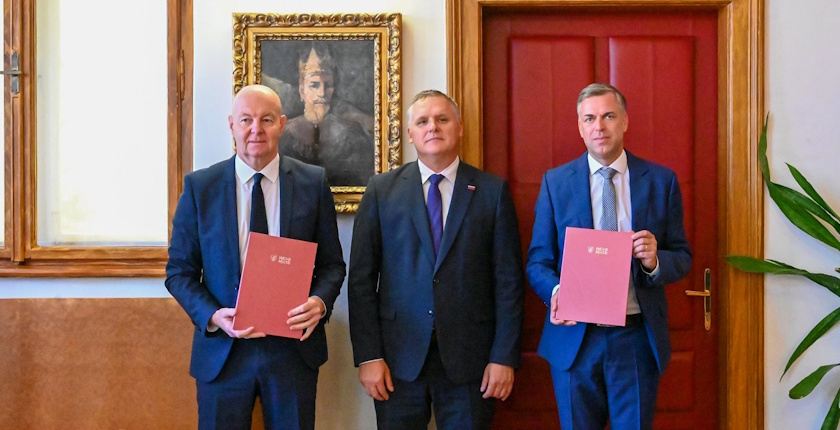
In the presence of Minister of the Environment, Climate and Energy Bojan Kumer, Mayor of Novo Mesto Gregor Macedoni and President of the Management Board of Petrol Sašo Berger signed an agreement on the construction of solar power plants on municipal land and structures.

The Municipality of Novo Mesto estimated that the new photovoltaic units would get it to a nearly 80% energy self-sufficiency.

The Ministry of the Environment, Climate, and Energy supported the project with co-financing of EUR 882,000 from the European Union’s Recovery and Resilience Facility. The total cost of the project is EUR 1.1 million. The municipality secured support from the ministry and Petrol is covering the remainder.

The collaboration will be implemented as a public-private partnership

Within the public-private partnership (PPP), Petrol will build ten new solar power plants and will also operate them.

Mayor Gregor Macedoni explained that the new investment will include the construction of solar power plants at the Portoval sports center, primary schools Stopiče, Otočec, Bršljin, Dragotin Kete, and Brusnice, as well as kindergartens Pedenjped, Ostržek, Ciciban, and Videk.

The municipality also plans to install a community solar power plant on the old CEROD landfill and additional ones on the remaining municipal facilities and parking canopies.

Total production in the municipality would be 2.5 GWh annually

“This year, we have already installed six solar power plants, and together with four facilities from 2010 and planned additional capacities, the total production in our municipality will reach 2.5 GWh per year,” Macedoni stated.

According to the mayor, the goal remains clear – to achieve complete self-sufficiency of the municipality with electricity from renewable sources

Minister Bojan Kumer underlined that the signing demonstrates that the path set by the ministry, more than three years ago, was the right one.

The projects, in his words, are primarily beneficial for the citizens. “Together, we will all be better prepared for future energy challenges,” Kumer stated.

According to him, the municipality has become a good example, and it will continue on the same path.

by in News

Slovenia to subsidize battery storage for businesses with EUR 17 million

Slovenia’s Ministry of the Environment, Climate and Energy, in cooperation with electricity market operator Borzen, has allocated nearly EUR 17 million in grants for businesses planning to install battery storage systems.

The grants are intended for the purchase and installation of battery storage units, hybrid inverters, and electrical installations and equipment. The subsidy can cover up to 45% of eligible investment costs, or a maximum of EUR 225 per kWh of battery storage capacity.

New batteries can be combined with existing energy storage capacities or solar power plants

Eligible applicants are companies, sole proprietors, and cooperatives. Grants can be combined with a solar power plant or existing storage units without restrictions.

The total amount of aid that can be granted to an individual beneficiary may not exceed EUR 300,000 over three years. More information will be available after a public call is announced, the ministry added in a LinkedIn post.

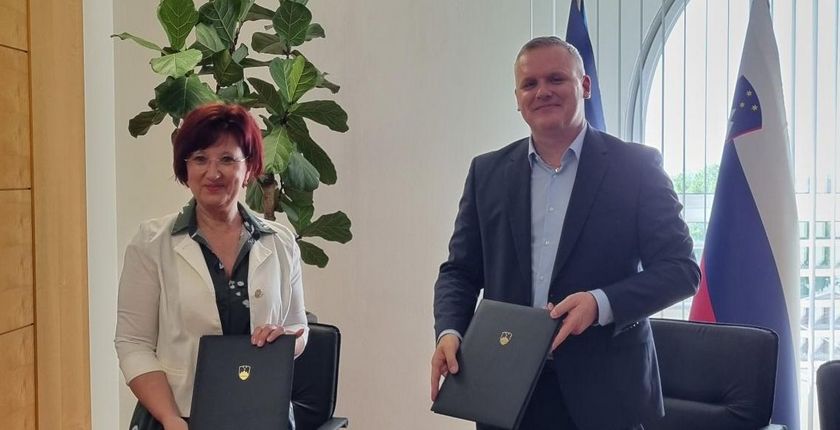
A contract on launching a public call for grants was signed by Minister of the Environment, Climate and Energy Bojan Kumer and Borzen General Manager Mojca Kert.

Slovenia is using EU funds to support new solar and wind projects, including batteries

Slovenia’s Ministry of Cohesion and Regional Development recently approved EUR 63.5 million in European Union funds for co-financing investments in new solar and wind power plants in the period until 2029. The scheme includes the possibility of storing electricity, according to the announcement.

At the same time, the ministry allocated EUR 23.5 million in EU funds for a program to tackle energy poverty in Slovenia in the 2024-2027 period.

by in News

Two thirds of industrial gas consumers in Slovenia eye hydrogen use

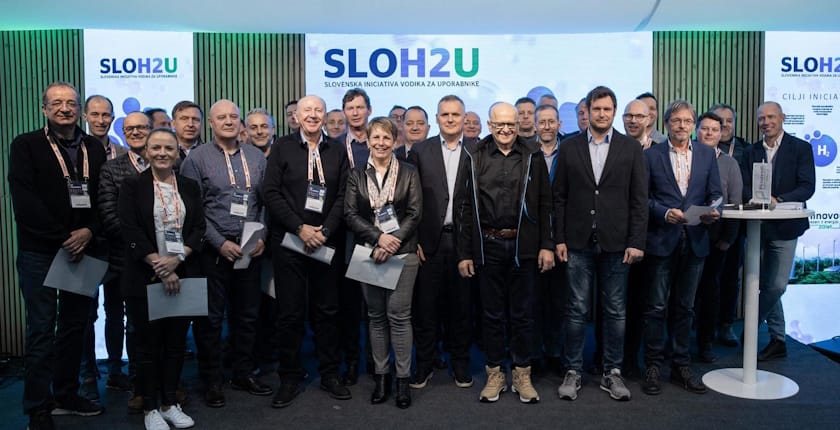
Slovenia’s natural gas transmission system operator Plinovodi and more than 50 industrial companies have signed an agreement on the establishment of the Hydrogen for Users consortium – SloH2U.

The SloH2U consortium represents a systemic response by Slovenian industrial consumers to the need for restructuring the use of hydrogen and renewable gases, according to Plinovodi.

The inclusion of more than two thirds of industrial gas consumers clearly demonstrates that Slovenia is well prepared to meet European decarbonization goals, the company said.

Marjan Eberlinc, the general manager of Plinovodi, underscored that the establishment of the SloH2U consortium is a major Slovenian hydrogen initiative connecting key stakeholders in industry, energy, and government. The aim is to achieve a coordinated, technically feasible, and timely transition to a decarbonized future, he added.

Kumer: We need an industry that is ready to invest, experiment, and collaborate

According to Minister of Environment, Climate, and Energy Bojan Kumer, infrastructure projects alone are not enough for a successful transition to low-carbon energy. “We need an industry that is ready to invest, experiment, and collaborate,” he asserted.

Matija Bitenc, a member of the executive board and deputy general manager of Plinovodi, explained that the platform was established after discussions with the industry about its needs and the technological, financial, geopolitical, and regulatory challenges.

In his words, SloH2U isn’t an ideological declaration, but a concrete foundation for the development of user infrastructure, specific pilot projects, and integration into the European hydrogen ecosystem.

Čas: It is crucial to ensure the transition doesn’t happen too late or that it isn’t too slow

“For the industry, the question is no longer whether, but how to decarbonize processes,” Steklarna Hrastnik CEO Peter Čas stressed.

Collaboration with infrastructure partners like Plinovodi is crucial to ensure the transition doesn’t happen too late or that it isn’t too slow, according to Čas.

In November last year, Slovenia joined the European Union’s Clean Hydrogen Partnership. Six months earlier the country established a consortium of 18 companies, organizations, and municipalities for an ecosystem for hydrogen from low-carbon sources.