by in News

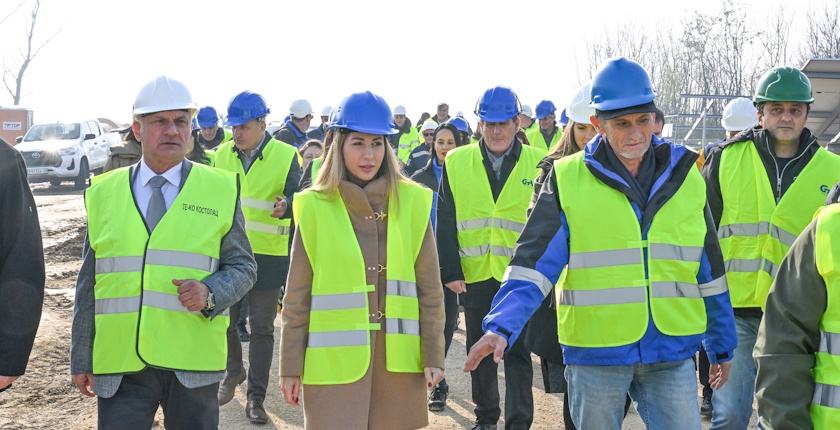
Đedović Handanović: Construction of 1 GW solar project to start in 2026

The start of construction of solar power plants in a project for a total capacity of 1 GW is expected in 2026, Minister of Mining and Energy of Serbia Dubravka Đedović Handanović said.

State-owned power utility Elektroprivreda Srbije (EPS) announced that its shareholders’ assembly adopted the Three-Year Business Plan for the period 2026-2028.

Dubravka Đedović Handanović pointed out that the company had good production and financial results for three consecutive years. According to the adopted three-year business plan, this trend will continue in 2026, she added.

EPS will invest EUR 1 billion in 2026

The minister recalled that in 2025 EPS built its first wind farm – Kostolac, and the Petka solar power plant, with a combined capacity of 76 MW. The company also finished the construction of the desulfurization facility at its coal-fired power plant Nikola Tesla B (TENT B), allowing the reduction of sulfur dioxide (SO2) emissions by 20 to 40 times, she added.

“Investments this year have also been at a high level, 97% in fact, considering that due to the scope and complexity of preparatory activities, the start of materialization of the project for the construction of solar power plants of 1 GW is expected in 2026. The focus of investments of around EUR 1 billion in 2026 will be on maintenance and improvement of the reliability of the power system and, primarily, on increasing the share of renewable energy sources in EPS’s energy mix,” Đedović Handanović stressed.

The company will build new solar power plants as well

The largest portion of the investments, in her words, is planned for new renewable energy plants, such as the construction of solar power plants totaling GW and pumped storage hydropower plant Bistrica, as well as the development of a larger number of solar power plants on land owned by EPS.

Of note, the company is developing the 1 GW solar project, which includes batteries, in collaboration with a consortium comprising Hyundai Engineering and UGT Renewables.

EPS yesterday invited bids for a preliminary feasibility study and conceptual design for a solar power plant on the ash disposal site of TENT A.

The minister revealed that next year’s plan includes an increase in employees’ salaries.

The company will continue its transformation activities, she added. Đedović Handanović welcomed the fact that EPS didn’t take out liquidity loans this year.
by in News

Đedović Handanović: Construction of 1 GW solar project to start in 2026

The start of construction of solar power plants in a project for a total capacity of 1 GW is expected in 2026, Minister of Mining and Energy of Serbia Dubravka Đedović Handanović said.

State-owned power utility Elektroprivreda Srbije (EPS) announced that its shareholders’ assembly adopted the Three-Year Business Plan for the period 2026-2028.

Dubravka Đedović Handanović pointed out that the company had good production and financial results for three consecutive years. According to the adopted three-year business plan, this trend will continue in 2026, she added.

EPS will invest EUR 1 billion in 2026

The minister recalled that in 2025 EPS built its first wind farm – Kostolac, and the Petka solar power plant, with a combined capacity of 76 MW. The company also finished the construction of the desulfurization facility at its coal-fired power plant Nikola Tesla B (TENT B), allowing the reduction of sulfur dioxide (SO2) emissions by 20 to 40 times, she added.

“Investments this year have also been at a high level, 97% in fact, considering that due to the scope and complexity of preparatory activities, the start of materialization of the project for the construction of solar power plants of 1 GW is expected in 2026. The focus of investments of around EUR 1 billion in 2026 will be on maintenance and improvement of the reliability of the power system and, primarily, on increasing the share of renewable energy sources in EPS’s energy mix,” Đedović Handanović stressed.

The company will build new solar power plants as well

The largest portion of the investments, in her words, is planned for new renewable energy plants, such as the construction of solar power plants totaling GW and pumped storage hydropower plant Bistrica, as well as the development of a larger number of solar power plants on land owned by EPS.

Of note, the company is developing the 1 GW solar project, which includes batteries, in collaboration with a consortium comprising Hyundai Engineering and UGT Renewables.

EPS yesterday invited bids for a preliminary feasibility study and conceptual design for a solar power plant on the ash disposal site of TENT A.

The minister revealed that next year’s plan includes an increase in employees’ salaries.

The company will continue its transformation activities, she added. Đedović Handanović welcomed the fact that EPS didn’t take out liquidity loans this year.
by in News

Serbia’s EPS mulls using heat pumps at its hydropower plants

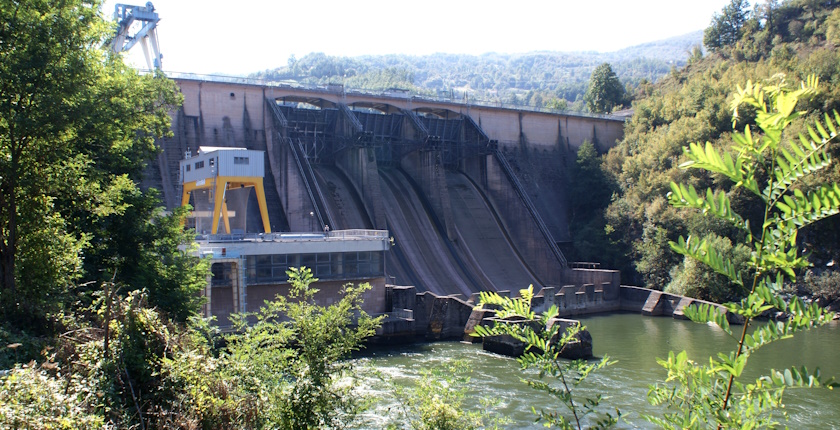
State-owned power utility Elektroprivreda Srbije intends to commission a study of the potential use of heat pumps at four hydropower plants in southwestern Serbia. The call lasts until February 10.

As technology advances, energy companies are increasingly turning to solutions based on renewable sources as well as combining them with existing systems that also don’t pollute, while emitting little to no greenhouse gases. Serbian state-owned Elektroprivreda Srbije (EPS) is heading in the same direction. It launched a tender for technical documentation – a study on the possibilities of deploying heat pumps in the structures of Limske hidroelektrane. It is a business unit operating four hydropower plants.

The aim is to improve the efficiency of the utilization of energy. Bids are accepted until February 10. Notably, the types of possible heat pumps isn’t determined.

With an estimated budget of RSD 3.8 million (EUR 32.400), the contractor will have 150 days to deliver the service.

Limske hidroelektrane, based in the town of Nova Varoš, has hydropower plants in the Lim river basin in southwestern Serbia. It is part of EPS’s branch Drinsko-limske hidroelektrane.

The contractor must propose a solution and calculate the energy efficiency and climate gains

The call is for a total of 2,450 square meters covered by climatization systems. The management building accounts for 1,300 square meters, and the rest is in the hydroelectric plants: Uvac, Kokin Brod, Bistrica and Potpeć, a machinery workshop and storage room.

EPS said the study needs to include an analysis of the current heat consumption, with an overview of available solutions for the use of alternative or renewable sources of heat or the improvement of existing systems. The goal is to increase energy efficiency and promote the utilization of renewable energy sources, the call reads.

The contractor would suggest a solution and outline the drop in greenhouse gas emissions. The task involves calculating the investment return period and delivering the list of regulations.

by in News

Serbia’s EPS plans to build 500 MW of wind farms with strategic partner

State-owned power utility Elektroprivreda Srbije (EPS) and the Government of Serbia plan to develop a 500 MW wind farm project with a strategic partner, according to Aleksandar Latinović, Head of Ancillary Services at EPS. He also noted that a 1,000 MW solar power project is expected to be online by 2029.

The Energy Infrastructure Development Plan and Energy Efficiency Measures for the period through 2028 envisage the construction of wind farms with a capacity of up to 500 MW.

The project could be similar to the 1,000 MW solar power project with 200 MW battery energy storage systems (BESS) that Serbia is implementing with strategic partners Hyundai Engineering and UGT Renewables (UGTR).

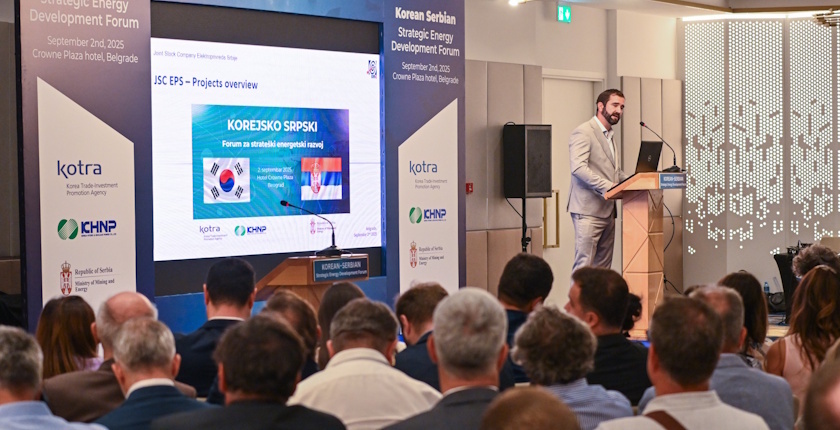
During the presentation of EPS’s development projects at the Korea-Serbia Strategic Energy Development Forum, held in Belgrade, Aleksandar Latinović recalled that the recently built Kostolac B3 power plant, as well as the pumped storage hydropower plant Bistrica, will provide energy to balance the system.

Tenders for two solar power plants are expected next year

Increasing the balancing reserve, in his words, is crucial for integrating new renewable energy sources into the power system. He particularly highlighted the Bistrica project, noting that it will have the same energy storage capacity as all currently existing BESSs in Europe. According to Latinović, the plant is expected to be operational by 2031 or 2032.

Latinović also recalled that EPS recently inaugurated Petka, its first solar power plant on a coal tailings dump. Though a small project, it is significant because EPS owns several thousand hectares of similar tailings and ash dumps.

The solar power plants Kolubara A (78 MW) and Morava (42 MW) are in the development phase, with tenders expected to be announced next year. Meanwhile, the Klenovnik project (110 MW) is undergoing a review of its preliminary feasibility study.

The 1 GW solar project is expected to be connected to the grid by 2029

Regarding wind energy, the 66 MW Kostolac wind farm is scheduled to begin trial operations next month.

For other wind farm projects, EPS and the Serbian government plan a 500 MW project with a strategic partner, he noted, stressing that EPS is willing to acquire already developed, construction-ready projects.

Latinović recalled that the preparation of a spatial plan for the 1 GW solar power project is underway. Strategic partners have already begun preparing investment and technical documentation, and a grid connection agreement with transmission system operator Elektromreža Srbije (EMS) has been signed.

A shortage of balancing energy could be an issue

According to the project timeline, this project will be operational and connected to the grid within four years, Latinović noted.

He stressed that integrating new renewable energy sources into the power system could lead to a shortage of balancing reserves. It is also possible, in his words, that there will be an excess of electricity when a significant amount of renewable energy is produced.

For this reason, EPS has initiated a study to analyze the use of hydrogen and heat storage.

The main focus of this study will be optimizing surplus electricity from intermittent renewable energy sources, increasing the system’s balancing reserve, replacing fuel oil in coal power plants with hydrogen-based fuel, and substituting gas and coal in heat production, Latinović explained.

by in News

Serbia’s EPS reports EUR 234 million profit for first half of 2025

Elektroprivreda Srbije achieved a profit of RSD 27.4 billion (EUR 233.8 million) in the first half of 2025.

The financial result of the state-owned Elektroprivreda Srbije (EPS) is lower than in the same period of 2024, when profit amounted to RSD 32.8 billion (EUR 280.3 million). The company posted RSD 26.1 billion (EUR 222.8 million) in net income for the entire year.

The Ministry of Mining and Energy said the shareholder assembly of the Serbian joint stock company EPS has adopted the report on the implementation of its three-year business plan for the first six months of 2025, declaring a profit of RSD 27.4 billion (EUR 233.8 million).

Minister of Mining and Energy Dubravka Đedović Handanović, the sole shareholder assembly member, noted that the trend of continuous production and financial stability of the company has continued, and highlighted the importance of the results achieved in the mining sector.

The priority is to prepare machinery for the new Radljevo mine in the Kolubara basin

Coal production exceeded the plan by 8%, but more importantly, the year-over-year rise in coal production was 7%, according to Đedović Handanović.

However, in her words, it is crucial to continue the same pace, which is why great effort must be put into completing the machinery preparation project for the new Radljevo mine in Kolubara, so that overburden production can begin next year.

Reduced costs for coal procurement from outside the company

She said that through careful management of the electricity portfolio, coal stocks in depots have been maintained at a high level, around 1.68 million tons. The costs of purchasing coal from third parties are RSD 1.35 billion (EUR 11.5 million) lower than planned and significantly lower than in the past three years, Đedović Handanović said.

The minister highlighted the fact that hydrology has been unfavorable for the second consecutive year, affecting electricity production.

She recalled that in the first quarter of this year, the Petka solar power plant in Kostolac was put into trial operation. Soon, the blades of EPS’s first wind farm will be spun for testing, she Đedović Handanović added.

EPS investing in a subsidiary in Kosovo and Metohija

“It is essential to improve the management of investment activities, especially considering that work is underway on the most significant energy project – the construction of the Bistrica pumped storage hydropower plant. At the same time, it is important to continue efforts to reduce operational costs and improve customer relations,” the minister stressed.

She revealed that as part of the company’s transformation process, key performance indicators (KPIs) were introduced for executive and middle management.

The EPS assembly also approved the decision to invest in the capital of Elektrosever, the company’s subsidiary in Kosovo and Metohija.

That way it enables supplying Serbia’s citizens in four municipalities in the province’s north, she explained. More than 45% of consumers got smart meters by now from Elektrosever, the ministry stressed.

by in News

Serbia’s EMS starts construction of third section of Trans-Balkan Corridor

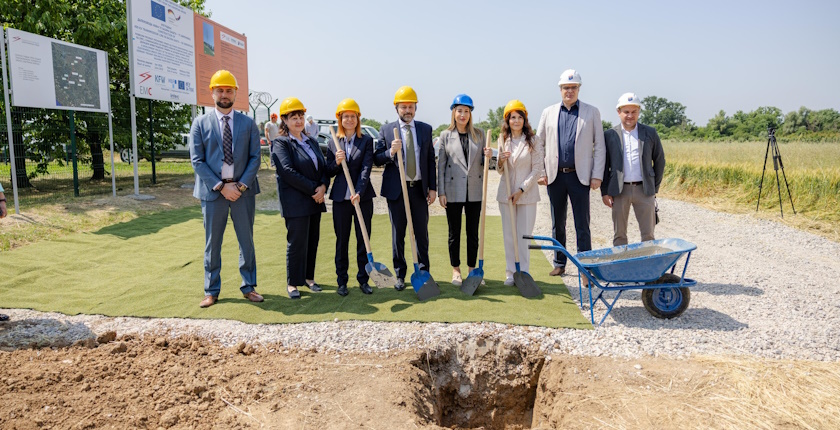
The foundation stone was laid today in Serbia for the third section of the Trans-Balkan Electricity Corridor. The investment amounts to EUR 100 million. It entails a high-voltage overhead power line of 109 kilometers between Obrenovac and Bajina Bašta, equipping two new switchyards in the Obrenovac transformer substation and upgrading the Bajina Bašta substation to 400 kV. The fourth and last section, with the interconnections with Bosnia and Herzegovina and Montenegro, is planned to be completed in 2028.

Serbian Minister of Mining and Energy Dubravka Đedović Handanović said at the groundbreaking ceremony for the third section of the Trans-Balkan Corridor that it is the most important project for the transmission system not only in the country but in Southeastern Europe.

“What highways are for transportation, high-voltage power lines are for energy, and today we are beginning the works on the new part of the most important energy highway,” she said in Obrenovac and added that the segment would enhance the security of supply for consumers in western Serbia.

The third section of the Trans-Balkan Electricity Corridor involves the construction of an overhead power line of 109 kilometers on 309 towers, equipping two new switchyards in the Obrenovac substation and lifting the voltage level in the Bajina Bašta substation to 400 kV.

The project is financed with a EUR 64.5 million loan from Germany’s KfW Development Bank, a grant from the European Union via its Western Balkans Investment Framework (WBIF) of approximately EUR 21 million, and own funds of the Serbian transmission system operator Elektromreža Srbije (EMS), according to the state-owned company’s announcement. The third section is worth EUR 100 million, of which EUR 71 million is for the overhead power line.

“With the completion of the entire project, we will additionally strengthen the links with Bosnia and Herzegovina and Montenegro and beyond, with Italy,” Đedović Handanović stated.

She recalled that significant transmission grid investments are planned in the next five years, including the construction of the Pannonian Corridor toward neighboring Hungary. The priority projects in the segment are worth EUR 500 million in total, the minister revealed.

“I expect the contractors not to be late with the works, so that the project is completed within two and a half years, as it is planned,” Đedović Handanović stressed.

Matejić: Final section to be finished in 2028

General Manager of EMS Jelena Matejić said the construction of the entire Trans-Balkan Corridor is worth more than EUR 200 million. She noted that it includes 323 kilometers of 400 kV power lines, voltage level upgrades for two transformer stations and switchyards in three of them.

The investments in the Trans-Balkan Corridor are estimated at more than EUR 200 million altogether

“Except this section, the third one, we will also have the fourth, for which the funds have been secured, and it will be finished in 2028,” Matejević asserted.

The old lines in western Serbia of 220 kV will be replaced with new, 400 kV systems, which will create possibilities for connecting the planned Bistrica pumped storage hydropower plant to the grid, according to EMS. The contractor is Kodar Energomontaža, and the works are expected to be completed by 2027.

EU donated EUR 38.3 million for Trans-Balkan Electricity Corridor

Head of the EU Delegation in Serbia Emanuele Giaufret pointed out that the funds the EU has earmarked for the current section are part of wider support.

“The EU has secured a EUR 38.3 million donation for the whole Trans-Balkan Corridor, together with KfW’s favorable loans. Over the years, the EU has earmarked more than EUR 1 billion for the energy sector in Serbia. This project is important for the rest of Europe as well, because it will contribute to the creation of a wider, integrated system, which will enable a more stable supply to consumers on the entire continent, as well as to avoid problems in the future,” he stated, as quoted by EMS.

The first section of the Trans-Balkan Corridor, from the city of Pančevo near Belgrade to the Romanian border, was finished in 2017. The second one, between Kragujevac and Kraljevo in central Serbia, is operational since 2022. It included substation upgrades in the two cities. The fourth section needs to connect Bajina Bašta with nearby Višegrad in Bosnia and Herzegovina, and with Pljevlja in Montenegro.

by in News

Weakness in Serbian energy system is no option

Serbia’s state-owned power utility Elektroprivreda Srbije (EPS) is committed to its own and the country’s goals for green energy and emission cuts, but it is sustainable only if it doesn’t jeopardize energy security, Chief Executive Officer Dušan Živković said. Weakness in the energy system is not an option, he underscored.

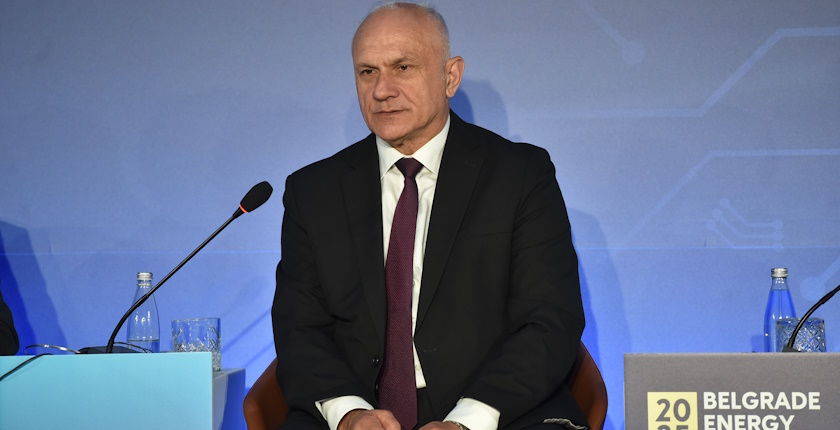
The recent blackout in entire Spain and Portugal and the one last year in the Balkans have imposed the topic of large energy storage facilities which would support the integration of renewables, CEO of EPS Dušan Živković said at Belgrade Energy Forum (BEF 2025). The company is committed to its own and the country’s goals for green energy and emission cuts, he asserted.

“We will work on that, of course, believing in these objectives, but without compromising energy security and the energy sovereignty of the state of Serbia. It was proven to be the only sustainable path and that if we don’t follow it, it can result in situations that are not a good message toward consumers, and they are not a good message toward investors either. Weakness in the energy system is certainly not an option”, Živković stated.

In its Integrated National Energy and Climate Plan (INECP or NECP), Serbia is targeting for 2030 a 45.2% share of renewable energy sources in electricity production and a decrease of greenhouse gases by 40.3% from the 1990 level.

Decarbonization is not easy without serious storage

Among its other activities, EPS is working on its small green energy projects on open cast coal mines, while the strategic partner, a consortium of UGT Renewables (UGTR) and Hyundai Engineering, is tasked with building a group of solar power plants of 1 GW in combined connection capacity alongside 200 MW of battery energy storage, and transfer them to Serbia’s government-controlled power utility, Živković noted. But the process of decarbonization with necessary renewable energy capacity won’t be easy “without serious storage,” he stressed.

Serbia hosts fossil fuel power plants of 4 GW in total

Big energy storage projects are financially challenging, only marginally cost effective, and they are not easy to build, EPS’s head claims. They are necessary to be able to draw enough baseload energy, and in Serbia they need to contribute replacing a large fossil fuel capacity – currently it amounts to 4 GW, Živković said.

Pumped storage hydropower project Bistrica, existing facility Bajina Bašta enable comfort for signing PPAs

EPS primarily focuses on the Bistrica pumped storage hydropower project and the possibility to develop the one for Đerdap 3, he added. That way conditions would be created for the facilities to provide new services in the market, so “the region feels safer, too,” Živković underscored.

Counting on Bistrica and the existing pumped storage hydropower plant, Bajina Bašta, EPS is in “a comfortable zone” for signing power purchase agreements (PPA) with companies for their green power plants, Živković explained. Bajina Bašta is undergoing the second half of reconstruction works.

Turning back to the April 28 collapse of the Iberian electricity system, Živković pointed to the adverse interest of private investors – get profit in the short term – and companies responsible for energy security. In his view, it is necessary to act “more intergenerationally responsibly” and very important to find balance in relation to profits.