Second phase of Gvozd wind farm gets green light from environment agency
The Environmental Protection Agency of Montenegro has determined there is no need for an environmental impact assessment report for the second phase of the Gvozd wind farm, and allowed the project to proceed. It is for three additional wind turbines with a total capacity of 21 MW, bringing the wind farm’s overall capacity to 75.6 MW.
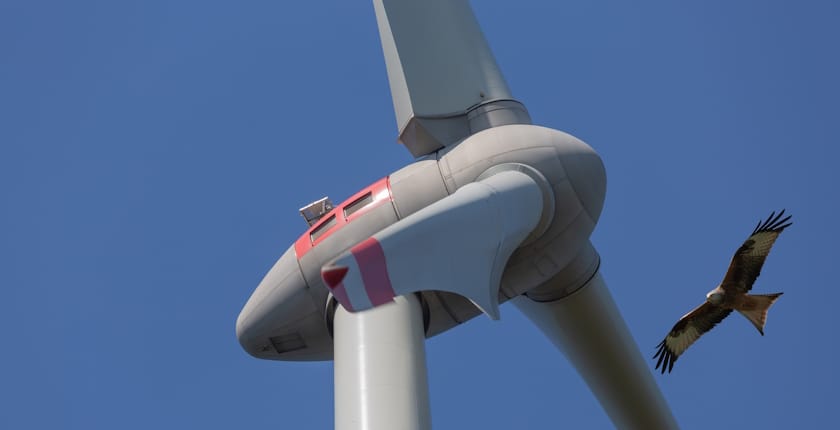
Within the same decision, the firm implementing the Gvozd 2 project is instructed to conduct a one-year survey of birds and bats at the project site by November 1, 2026, and to submit the findings to the Environmental Protection Agency, which reserves the right to order additional measures if necessary.
During construction, the project developers must take steps to reduce noise and use the existing road network to avoid the destruction of bird and bat habitats. It is also necessary to monitor bird nesting and take measures to protect nesting sites, while minimizing forest clearance and reducing the risk of vehicle collisions, according to the agency’s decision.
Special attention must be paid to bird and bat habitats
The second phase of the Gvozd wind farm project is financed by a EUR 25 million loan from the European Bank for Reconstruction and Development (EBRD), signed with Montenegro’s state-owned power utility Elektroprivreda Crne Gore (EPCG). Its subsidiary in charge of the project, Green Gvozd WPP Second Phase, is registered in Podgorica.
Once completed, Gvozd will be the largest of Montenegro’s three wind farms, with a capacity to generate over 210 GWh of electricity annually. It would be enough to supply around 36,000 households, with CO₂ emissions expected to be reduced by nearly 137,000 tons per year, EPCG said after signing the loan agreement.
The first phase should be completed by the end of this year, and the entire project before the end of 2026
The first phase of Gvozd will have eight wind turbines with a total capacity of 54.6 MW. Construction began in November 2024. EPCG expects the plant to be put into trial operation by the end of this year. Its annual electricity output is estimated at 150 GWh.
EBRD financed the first phase as well, with an EUR 82 million loan. Gvozd will be EPCG’s first large-scale power generation facility built in more than 40 years.
The EBRD previously announced that all 75.6 MW should be online before the end of 2026.