by in News

Montenegro’s landfill gas power plant entering electricity market

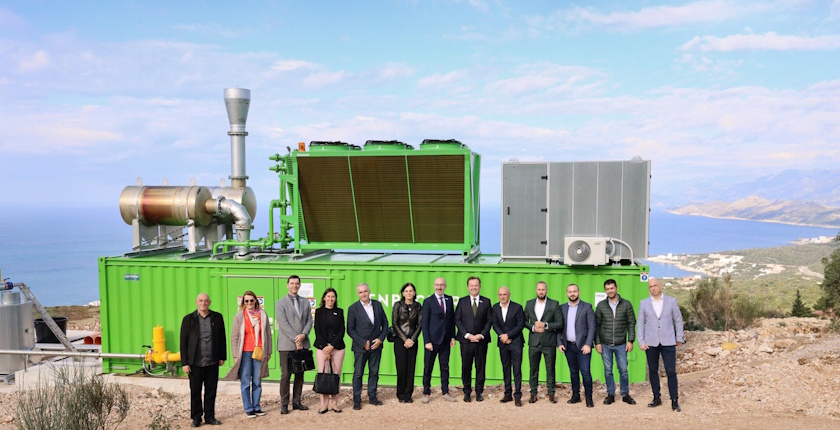
The first landfill gas power plant in the Western Balkans is in test operation, at the Možura landfill in Montenegro. The eponymous, municipally-owned operator has issued calls for maintenance and the selection of an intermediary for the sale of electricity.

The project in the Možura regional landfill for the power plant utilizing biogas from waste is worth EUR 1.8 million. Montenegro is conducting the investment in cooperation with the Centre for International Cooperation and Development (CMSR) of Slovenia. The 0.99 MW facility was built last year and put into trial operation in December. It is the first in the Western Balkans.

Municipal utility Možura has issued public calls for the maintenance of the power plant and the selection of an intermediary for the sale of electricity. The firm estimates annual output of 7.5 GWh and envisages a 95% uptime. The landfill is near the Adriatic coast in the country’s far south.

Deadline for maintenance tender expires on February 6

The maintenance tender is open until February 6. The public enterprise intends to sign a four-year framework agreement with the selected bidder. The first contract, lasting one year, is valued at EUR 149,900, with another EUR 31,479 for value-added tax. The entire allocated sum then translates to EUR 599,600 alongside EUR 125,916 in VAT.

The eligible applicant has built and commissioned at least one system for the production of electricity from landfill gas of at least 500 kW.

As for the entry into the market, the selected company will be an intermediary in the placement of the produced electricity at the organized market – the power exchange. The contract will last until the end of the year.

Every bidder must be a member of the exchange and have at least three active contracts of the same kind with renewable energy producers, according to the documentation. The conditions include a minimum income of EUR 800,000 in the previous business year. The intermediary assumes the balancing responsibility.

Bids will be received by January 26 at noon, when they will be opened, Možura said.

Slovenia covered third of expenses

The Slovenian Environmental Public Fund (Eco Fund or Eko sklad) has donated EUR 681,800 for the landfill gas power plant. The Environmental Protection Fund (Eco Fund) of Montenegro has paid EUR 50,000 for the project design and its revision.

Landfill gas is extracted from waste in so-called sanitary tubs. An earlier study showed that methane accounts for 50%. Austrian company Jenbacher supplied the equipment.

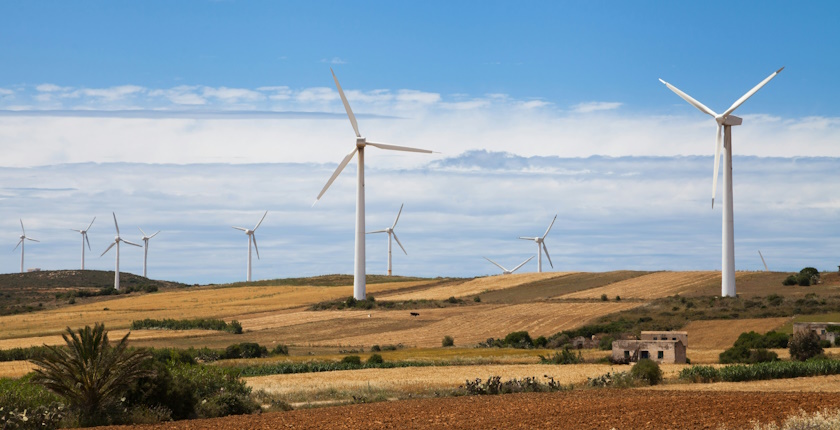
The power plant is connected to the power distribution system. Možura is the destination for municipal waste from Montenegro’s entire coastal area except for the city of Herceg Novi. Next to the landfill is an eponymous wind power plant.

Montenegrin Prime Minister Milojko Spajić said two weeks ago that Itochu from Japan was interested in the project for a municipal waste incinerator in the capital Podgorica, of up to 50 MW.

In the territory of Belgrade, the capital city of neighboring Serbia, concessionaire Beo čista energija is building a landfill gas power plant. According to the project, the facility in the Vinča complex will consist of two equal units totaling 3.2 MW in electricity capacity and 5.8 MW for thermal energy.
by in News

Romania preparing to include biomethane in gas grid

Romania has drafted a directive that would regulate the production, transportation and distribution of biomethane and its inclusion into the gas network. The change is aimed at limiting the increase in the prices of gas for household heating, expected from the upcoming introduction of the ETS 2 carbon allowance scheme in the European Union. Delaying the shift would also affect the costs of industrial production and for other non-household consumers of gas.

Biomethane produced from sustainable sources is carbon neutral under the EU Emissions Trading System (EU ETS), making it appropriate for buildings and transportation, the Romanian Ministry of Energy said in a new draft emergency ordinance. With the executive order, it intends to pave the way for utilizing the renewable fuel in the natural gas network, Profit.ro reported.

The document is set to amend several acts and regulate the production, transportation and distribution of biomethane. It would counter, to an extent, the increase in gas prices for households, which is expected from the expansion of the EU’s carbon pricing scheme to buildings and transportation, the ministry explained. Namely, ETS 2 is scheduled to be introduced in 2027.

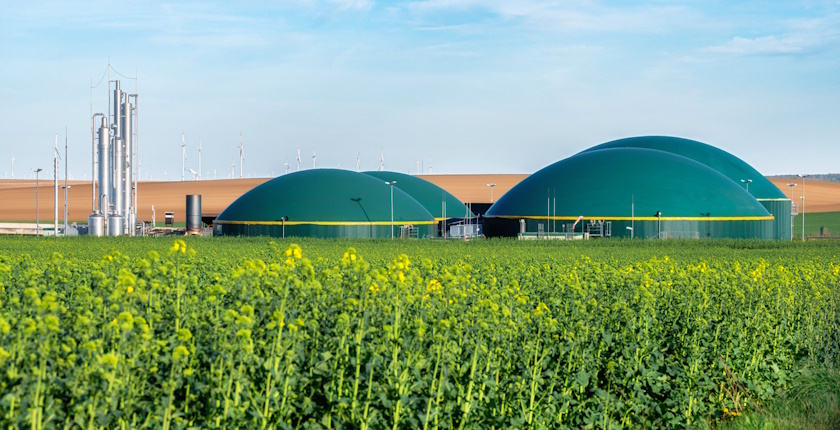
Biomethane is usually obtained by processing biogas to get methane of the same purity as in fossil gas

Any delay in allowing biomethane in the existing grid draws a risk of increasing the costs of natural gas consumption, both for non-household and household customers, the accompanying note reads.

Biomethane is usually obtained by processing biogas to get methane of the same purity as in fossil gas. The gaseous biofuel can also be produced from clean hydrogen and carbon dioxide. The EU allows incentives for biomethane facilities. Some countries in Southeastern Europe, like Greece, are developing the legal framework for embracing the technology within their energy transition.

Share in gas network planned to reach 10% by 2050

Romania is planning a 5% share of biomethane in its natural gas network in 2030 and to double it by mid-century. The sectors of waste management and agriculture can produce an estimated 501,000 tons of oil equivalent in 2050.

The EU is imposing strict requirements on the removal of biodegradable organic matter from wastewater and the reduction of food waste, the ministry noted. Together with agricultural and organic municipal waste, they are the main raw materials for the production of biogas.

According to the proposal, publicly announced business plans can secure a share of renewable gases in the grid up to 1.5%. However, without an urgent legislative intervention, the investments can’t materialize, the Ministry of Energy warned. The draft directive would update the definitions of guarantees of origin, biogas, biomethane, natural gas, renewable gases and biomethane producers.

BSOG Energy, Engie Romania at forefront of upcoming biomethane investment wave

As for other developments in the segment, BSOG Energy (BSOGE), a subsidiary of Black Sea Oil and Gas, recently hired industrial services provider Bilfinger for a biomethane facility in Alba county in Transylvania.

Earlier, BSOGE said it would invest EUR 30 million in the construction of a biomethane plant. It has signed deals with milk producer DN Agrar Group for up to 15 MW in capacity, with the possibility of exceeding 20 MW in later stages.

In April, the firm partnered with Unigrains Trading in a project for a biomethane and organic fertilizer facility. They estimated the investment at EUR 65 million, for 57 MW of biomethane capacity and over 250,000 tons of organic fertilizers per year. Parent company BSOG is controlled by controlled by investment firm Carlyle.

Engie Romania launched plans a year ago with Heineken to build a biodigester for brewery waste

Last November, French-owned Engie Romania obtained the first license in the country for biogas and biomethane supply. Earlier it established a partnership with Heineken for decarbonization projects in three breweries in Romania, including heat pumps and one biodigestion system.

The firm is the largest supplier and distributor of natural gas in the country, as well as an electricity producer and supplier.

by in News

IRENA: 91% of new renewables units are more cost-effective than fossil fuel alternatives

The fossil fuel age is crumbling, according to UN Secretary-General António Guterres. Renewables maintained their cost leadership in global power markets, the International Renewable Energy Agency said in an annual report. In 2024, onshore wind farms were the cheapest of all versus the lowest-cost fossil fuel alternatives, by 53% on average, while photovoltaic systems were 41% cheaper.

Onshore wind power was also the cheapest in levelized cost of electricity (LCOE) terms, followed by solar power. At the same time, 91% of newly commissioned utility-scale capacity was delivering power at a cost lower than for the cheapest electricity from new fossil fuel–fired units.

The Renewable Power Generation Costs in 2024 report confirmed the price advantage of renewables over fossil fuels, with cost declines driven by technological innovation, competitive supply chains and economies of scale, the International Renewable Energy Agency said. IRENA expects cost reductions to continue, but highlighted the short-term challenges.

Geopolitical shifts including trade tariffs, raw material bottlenecks, and evolving manufacturing dynamics, particularly in China, could temporarily raise costs.

Asia, Africa and South America, with stronger learning rates and high renewable potential, could see pronounced cost declines.

Higher costs are likely to persist in Europe and North America, driven by structural challenges such as permitting delays, limited grid capacity, and higher balance-of-system expenses, according to the update. In contrast, regions like Asia, Africa and South America, with stronger learning rates and high renewable potential, could see pronounced cost declines.

The organization pointed to the need for stable and predictable revenue frameworks to lower investment risk and attract capital.

“Clean energy is smart economics – and the world is following the money,” United Nations Secretary-General António Guterres stressed. In his view, the fossil fuel age is crumbling.

Capital costs inflating LCOE in developing countries

Mitigating financing risk is central to scaling renewables in both mature and emerging markets. Instruments such as power purchase agreements (PPAs) play a pivotal role in accessing affordable finance, while inconsistent policy environments and opaque procurement processes undermine investor confidence, IRENA added.

In many developing countries of the Global South, high capital costs, influenced by macroeconomic conditions and perceived investment risks, significantly inflate the levelized cost of electricity (LCOE) of renewables.

Onshore wind power production cheapest by far of all kinds of electricity

In 2024, onshore wind farms were the cheapest of all versus the lowest-cost fossil fuel alternatives, by 53% on average, while photovoltaic facilities were 41% cheaper. Of note, the cost of battery energy storage systems (BESS) declined by 93% from 2010 to 2024, to USD 192 per kWh.

Onshore wind remained the most affordable source of new renewable electricity, with a global weighted average LCOE at USD 0.034 per kWh (USD 34 per MWh), followed by new solar, at USD 0.043 per kWh, and new hydropower plants, USD 0.057 per kWh.

Again per the levelized cost of electricity, 91% of newly commissioned utility-scale renewables capacity was delivering power at a lower cost than the most affordable new fossil fuel–based units.

That said, LCOE increased slightly for solar power, by 0.6%. Onshore wind power was 3% more expensive than in 2023, compared to 4% for offshore wind and 13% for the bioenergy segment. Meanwhile, costs declined for concentrated solar power (CSP), by 46%, followed by electricity from geothermal units, 16%, and hydropower, which slipped 2%.

Solar and wind energy prices have begun to stabilize, which is a natural sign of market maturity, the authors underscored.

Photo: Renewable energy LCOE 2010-2024, in United States dollars per kilowatt-hour (IRENA)

Clear path to affordable, secure, sustainable energy

The addition of 582 GW of renewables capacity in 2024 led to significant cost savings, avoiding fossil fuel use valued at about USD 57 billion, new data shows. Looking at all renewables in operation, the avoided fossil fuel costs in 2024 reached up to USD 467 billion, IRENA’s Director-General Francesco La Camera stated.

New renewable power outcompetes fossil fuels on cost, offering a clear path to affordable, secure and sustainable energy, he pointed out.

by in News

Greece’s DEPA Commercial picks contractors for PV plants of 500 MW

Construction companies Terna and Aktor are about to start building a solar power plant of 400 MW in northern Greece and another 100 MW near Larissa, for state-owned DEPA Commercial, according to a new report. In its switch toward cleaner sources, the gas holding has also finished the construction of its biomethane plant.

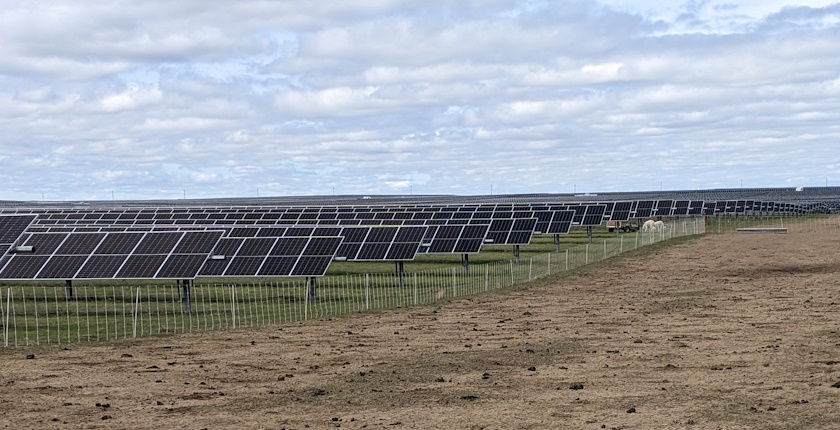
Greek state-controlled gas supplier, importer and trader DEPA Commercial has completed the tenders for photovoltaic parks of 500 MW overall, OT learned. The 400 MW facility in Kozani in the Western Macedonia province would currently be the largest in the country.

However, Lightsource bp, owned by BP, started the construction of a 560 MW solar park last summer in Central Greece and Thessaly. State-controlled Public Power Corp. (PPC or DEI) is about to finish a 550 MW photovoltaic facility in Ptolemaida, near Kozani.

DEPA Commercial is also known as DEPA Emporias (in Greek), DEPA Commerce and DEPA Trading. Both for the giant PV plant in northern Greece and another 100 MW in Farsala, Larissa, it selected the consortium of Terna, part of the GEK Terna conglomerate, and Ellaktor’s Aktor.

The turnkey deals are worth EUR 270 million in total

The turnkey agreements are worth a combined EUR 270 million. The company obtained a EUR 390 million loan in July from the European Investment Bank (EIB) for its photovoltaic projects. The portfolio amounted to 816 MW.

The projects, which are at various stages of maturity, are conducted under subsidiaries North Solar, North Solar 1 and New Spes Concept.

DEPA Commercial’s new move comes after the government bought a 35% stake from Helleniq Energy. The company is now fully owned by the Hellenic Republic Asset Development Fund (HRADF or TAIPED). The transaction was completed at the turn of the year, when the vehicle also integrated the so-called Superfund.

DEPA Commercial starts producing biomethane for its fuel stations

Within its energy transition efforts, the gas giant is entering biomethane production as well. DEPA Commercial said early this month that it produced Greece’s first quantities of the fuel.

The new pilot unit, Farma Hitas (Chitas) in Filippiada in the country’s west, makes 97% pure methane and compresses it. The bio-CNG goes to the company’s Fisikon gas stations, where it is mixed with natural (fossil) gas and sold as vehicle fuel.

Ownership stakes in Alexandroupolis gas complex, IGB pipeline

As for its conventional business operations, DEPA Commercial holds a 29% stake in special purpose firm Ilektroparagogi Alexandroupolis (Alexandroupolis Electricity Production). PPC is the majority partner, with 71%.

They are building a combined-cycle gas turbine (CCGT) of 840 MW. In addition, DEPA Commercial owns 20% of the Alexandroupolis LNG Terminal and 25% of ICGB, which operates the Interconnector Greece-Bulgaria (IGB) gas pipeline.

The company is participating in the Fier Thermoelectric project for a 174 MW gas power plant in Albania. DEPA Commercial intends to supply some of the renewable electricity that it generates to its wholly-owned subsidiary Fysiko Aerio – Hellenic Energy Co. The gas and electricity distributor has more than 530,000 customers.

Notably, DEPA Commercial already owns an aggregator license – FOSE, allowing it to trade in the wholesale power market on behalf of a group of producers.