by in News

World’s largest sand battery commissioned in Finland

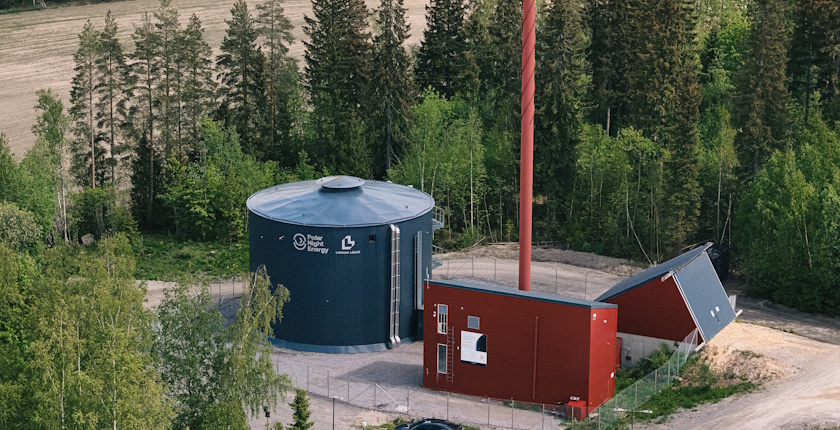
The world’s first industrial-scale sand battery has been commissioned in Pornainen, Finland. It will use surplus renewable energy to generate heat, which will then be supplied to the local district heating network.

The sand battery, which delivers one megawatt of thermal energy and has a storage capacity of 100 megawatt-hours, was installed for the district heating system in the municipality of Pornainen, operated by Loviisan Lämpö.

A sand battery is a high-temperature thermal energy storage system, first developed by the start-up Polar Night Energy.

Finding ways to store energy from variable renewable sources is one of the biggest challenges of the energy transition. In the case of the battery developed by Polar Night Energy, the storage medium is sand or alternative sand-like materials.

The battery uses renewable electricity to power a heater, which then blows hot air into the sand. The sand is heated to between 500 and 600 degrees Celsius and retains that heat. The stored energy can be used for district heating, but also for industrial processes.

A prototype of the battery was installed in 2022 at the Valkeakoski power plant in the town of Kankaanpää, Finland. The new battery in Pornainen is ten times larger than the prototype and represents the first industrial-scale implementation of this technology.

It is 13 meters high and 15 meters wide, filled with 2,000 tons of crushed soapstone, a by-product from the production of fireplaces by Finnish company Tulikivi. During winter, the battery can cover heating needs for about a week.

Emissions in the district heating sector will be reduced by 70% thanks to the battery

“The Sand Battery means a lot to Loviisan Lämpö. It allows us to drastically reduce our emissions and improve the reliability of heat production,” says Mikko Paajanen, CEO of Loviisan Lämpö.

The company aims to become climate-neutral by 2035, and the battery will help it cut emissions by 160 tons of CO₂ equivalent – a reduction of nearly 70% in the district heating sector.

Thanks to the battery, the company will stop using oil for district heating completely, while the consumption of wood chips will be reduced by about 60%. A biomass boiler will be used as a backup during periods of peak demand, the company said.

“This project is a powerful example that effective solutions for mitigating climate change do exist. Loviisan Lämpö is a great example of a company bold enough to invest in new technologies,” says Liisa Naskali, Chief Operating Officer of Polar Night Energy.

Sand battery stabilizes the power grid and contributes to the circular economy

Advancing the circular economy and energy transition requires cross-sectoral cooperation, which the sand battery clearly demonstrates. It is not just a heat storage system – it’s a tool for grid balancing, emissions reduction, smart energy management, and better resource use.

A key factor in the sand battery’s cost-effectiveness lies in optimizing its operation according to electricity prices set by Finnish grid operator Fingrid. In this way, the battery also contributes to the stability of the power grid, which is essential for the further development of wind and solar power.

Thanks to its large storage capacity, the system enables optimization of electricity use over several days, or even weeks.

The thermal storage material in sand batteries can include by-products from industrial or mining processes, avoiding the exploitation of natural resources.

Polar Night Energy is currently in talks with partners in Finland and abroad about new projects. Earlier this year, it announced a pilot project in Valkeakoski to explore the possibility of converting stored heat back into electricity.
by in News

Curtailments reach new highs in Greece ahead of first battery installations

Greek renewable energy producers are fearful of any delay in the deployment of battery energy storage systems, because of high curtailments.

The sector expects that in a hypothetical scenario without the storage, the curtailments would rise to 25% by 2030, compared to last year’s 3.3%.

So far in 2025, curtailments have risen further. According to the Renewable Energy Sources Operator and Guarantees of Origin (DAPEEP), just last week they amounted to 30 GWh. Sunday, April 6, was a particularly eventful day, as over 4 GW of renewable electricity capacity was cut for multiple consecutive hours.

It also marked the first time that grid operators curtailed photovoltaic plants in the distribution network, which were formerly left unscathed. In total, 116 GWh was consumed in Greece on Sunday. Renewables gave 88.7 GWh, but one third had to be curtailed to stabilize the system.

Many producers at the distribution level receive messages from the operator every few days to turn off their photovoltaics manually. If they do not comply, they are subject to a fine of EUR 500 per MWh.

Timely storage development is crucial

Curtailments are expected to double this year, according to Aristotle University of Thessaloniki Professor Pantelis Biskas. Both the market and the Ministry of Environment and Energy expect storage to provide a solution. By the end of 2025, the first battery projects that were selected in auctions are expected to connect to the grid. However, investors have warned that strict timeframes, red tape and uncertainty in global markets could lead to harmful delays.

Large players to gain market share

Until the storage comes online and reduces curtailments, the renewable energy sector will be subject to various effects. DAPEEP’s CEO Anastasia Riga said large vertical players would probably gain more market share in the current environment. Also, the introduction of negative pricing in the balancing market adds another layer of complexity and potentially reduces profits for producers.

by in News

PPC plans EUR 5.8 billion makeover of Western Macedonia coal region, including data centers

Public Power Corp. (PPC) presented a EUR 5.8 billion investment plan for the coal region of Western Macedonia in northern Greece. It held the ceremony in the retired Kardia 2 lignite-fired power plant.

According to PPC’s chairman and CEO George Stassis, the endeavor consists of the decommissioning of old assets and the rollout of new energy technologies.

Stassis: Western Macedonia can reinvent itself

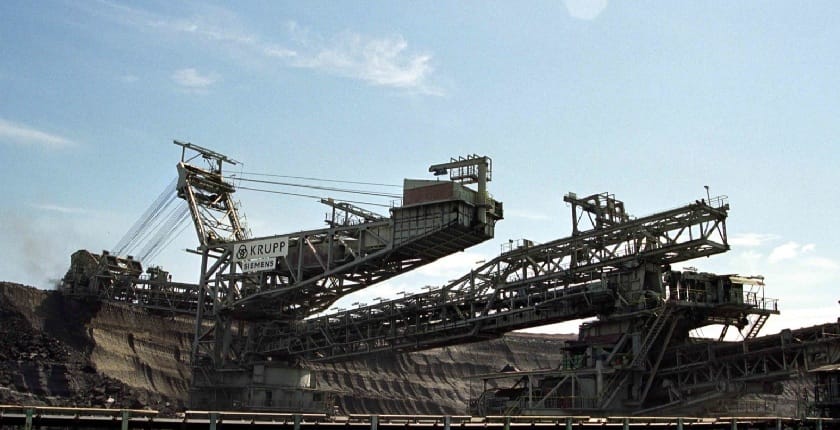
PPC, or DEI in Greek, said it would return to the government 8,000 hectares of coal land that it no longer needs, after completely restoring it. All equipment, such as 400 kilometers of lignite conveyor belts, cooling towers and excavators, are planned to be recycled up to 95%.

According to the decarbonization timeframe, Ptolemaida 5 will be the last coal plant in the country, continuing to operate until the end of 2026. It is set to be converted to a gas power plant with a capacity of 350 MW. PPC is also open to upgrading it to 500 MW or even 1 GW.

New photovoltaics, storage underway

“Western Macedonia can reinvent itself using new technology,” said the CEO.

The group aims to install a total of 2.1 GW in photovoltaics across the region. A 550 MW solar power plant in the former lignite mine of Ptolemaida is almost complete. It will be the biggest in the Balkans. Separately, a group of clusters of 940 MW is under construction within the Meton joint venture with German RWE.

Energy storage is another major segment in PPC’s investment plan. Within the next three years, it aims to funnel EUR 940 million for a total capacity of 860 MW. It includes two pumped storage hydropower projects. The one in Kardia is for 320 MW and an eight-hour storage duration, and the other in the South Lignite Field – 240 MW and a 12-hour duration. The projects are worth EUR 430 million and EUR 310 million, respectively.

Equally important, battery storage units of 300 MW altogether would be installed in Amyndaio, Akrini, Meliti and Kardia in the country’s main coal region. The other one is Megalopolis in the Peloponnese.

PPC plans a 50 MW hydrogen production facility together with Motor Oil, as Hellenic Hydrogen, and a cogeneration plant to cover district heating needs from the end of 2026.

Large 300 MW data center

Last but not least, the Greek group aims to create a 300 MW data center, as part of an investment of EUR 2.3 billion. A subsidiary in fiber optic cables would upgrade the telecommunication links with Thessaloniki and Igoumenitsa to improve data flow in Greece and abroad.

If conditions are favorable, PPC would further upgrade the data center to 1 GW, increasing its investment by EUR 5.4 billion.

Greek Prime Minister Kyriakos Mitsotakis said at the event that existing infrastructure in Western Macedonia is a great advantage.