
The Great Atomic Pivot: EU Reclaims Nuclear Power as a Strategic Pillar for Energy Security
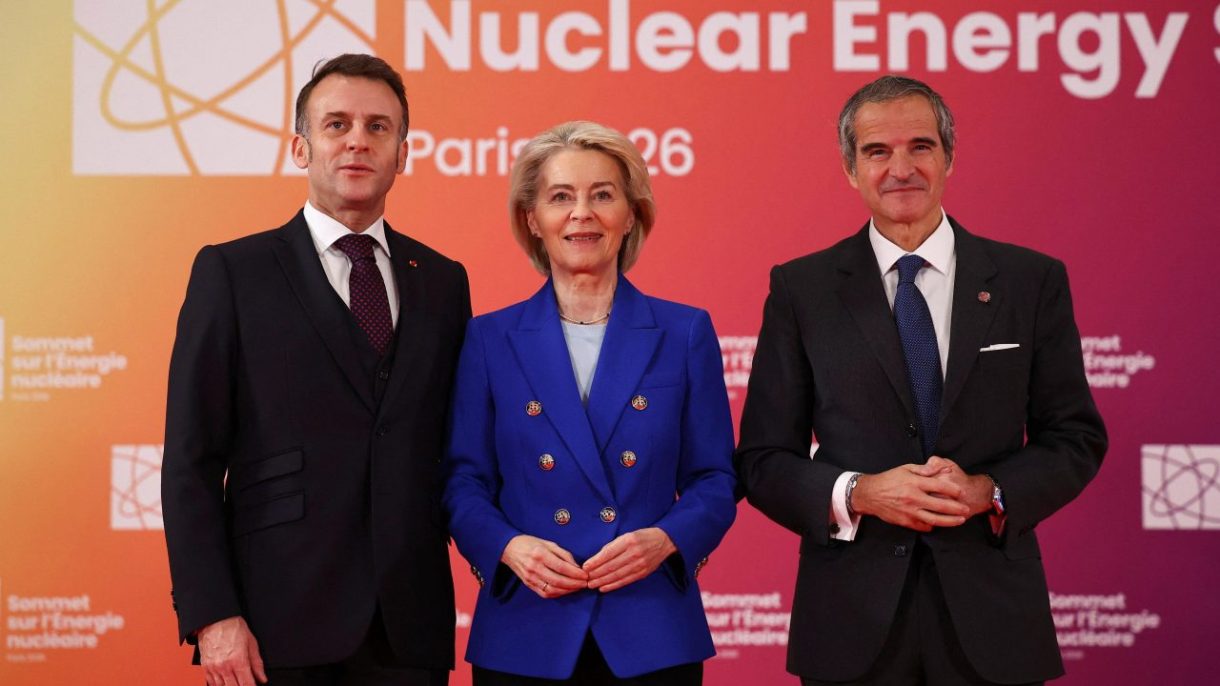
In a significant rhetorical shift for the European Union’s energy policy, Commission President Ursula von der Leyen characterized the continent’s historical move away from nuclear power as a “strategic mistake.” Speaking at the Nuclear Energy Summit in Paris, hosted by the International Atomic Energy Agency (IAEA), von der Leyen argued that turning away from the atom left Europe dangerously exposed to the volatility of global fossil fuel markets.
A Continent Re-evaluating its Baseload
The President noted a stark decline in nuclear’s contribution to the European grid, falling from one-third of total electricity generation in 1990 to approximately 15% today. This retreat, she argued, exacerbated Europe’s dependence on expensive, imported oil and gas—a vulnerability underscored by ongoing instability in the Middle East.
“I believe it was a strategic mistake for Europe to turn its back on a reliable, affordable source of low-emissions power,” von der Leyen stated.
She outlined a vision for a modernized energy system where nuclear works in tandem with renewables, supported by robust storage and smart grids.
The Rise of Small Modular Reactors (SMRs)
The EU’s strategy is increasingly focused on the next generation of nuclear technology. Key initiatives include:
-
Regulatory Reform: Recent changes to state aid rules now allow for expanded support for nuclear fission and fuel cycles.
-
Industrial Alliance: The launch of the world’s first industrial alliance dedicated to Small Modular Reactors (SMRs).
-
Financial Backing: Proposed investments of over €5 billion in fusion research and an additional €200 million in guarantees through 2028 to support the first commercial units of innovative nuclear technologies.
The goal is to have SMRs operational across Europe by the early 2030s to complement existing traditional plants.
Regional Expansion: Greece, Romania, and Serbia
The shift in sentiment at the Commission level is mirrored by renewed interest among member states and neighboring nations:
-
Greece: Prime Minister Kyriakos Mitsotakis echoed von der Leyen’s sentiments, noting that it is time for Greece to explore how SMRs could be integrated into the domestic grid. While Greece remains committed to renewables and gas as a bridge, a new committee will officially study nuclear integration.
-
Romania: Energy Minister Bogdan Ivan announced plans to triple the nation’s nuclear capacity over the next decade. This includes the modernization of the Cernavodă plant and the development of a pioneering SMR project in Doicești.
-
Serbia: Minister of Mining and Energy Dubravka Đedović Handanović signaled Serbia’s intent to join the “nuclear revival.” To support a growing economy and AI infrastructure, Serbia aims to select a technology by 2032, with the goal of bringing a plant online by approximately 2040.
As Europe seeks to reconcile its climate goals with energy security, the message from Paris was clear: the nuclear option is no longer on the sidelines—it is back at the center of the strategy.
