by in News

Coal plant Kakanj in BiH halts electricity production amid record air pollution

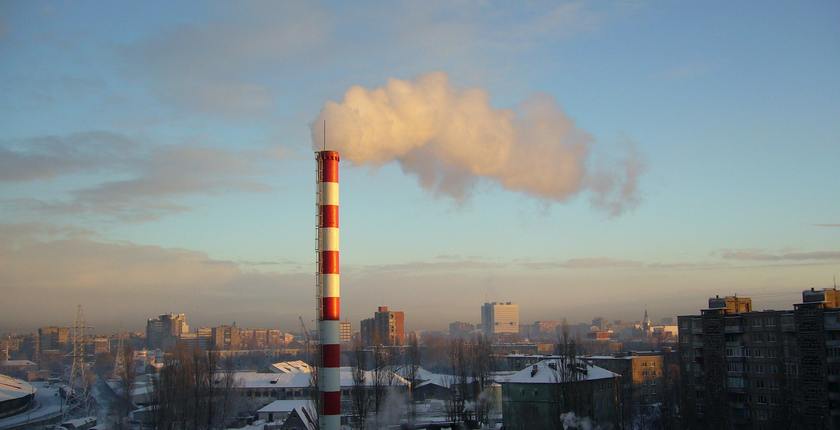
Due to record air pollution levels in recent days, the Municipality of Kakanj requested that the local coal-fired power plant’s activity be reduced to supplying thermal energy for district heating only. The thermal power plant says it has already done so.

After “unprecedented” amounts of pollutants were measured in Kakanj, Mayor Mirnes Bajtarević asked the management of the Kakanj thermal power plant and state power utility Elektroprivreda Bosne i Hercegovine (EPBiH), as well as Federation of BiH Minister of Environment and Tourism Nasiha Pozder, to ensure that the operation of the power plant is urgently reduced to a minimum, only for the needs of the district heating system in Kakanj.

The power plant said that since Sunday, the only block in operation has been Unit 6, which supplies thermal energy for district heating in Kakanj, news portal Akta reported.

Kakanj, the second-largest electricity producer in the EPBiH portfolio, has three operational units with a total capacity of 450 MW. Unit 6 has a capacity of 110 MW.

The municipal authorities said in the statement that, if necessary, it would invite residents to protest in front of the thermal power plant, which is seen as the main culprit for the alarming air pollution levels in recent months.

The local cement plant is urged to stop using alternative fuels

According to BiH media reports, recent sulfur dioxide (SO₂) levels in Kakanj have exceeded all permitted limits, posing an immediate threat to public health.

The municipality also issued a fresh request to the FBiH inspection body to inspect the operation of the thermal power plant, as well as Heidelberg Materials Cement, which has been asked to stop using alternative fuels.

The municipality will also demand a report on the desulfurization project at Kakanj

The municipality said it would demand that the thermal power plant provide a report on the progress and timeline of works on the ongoing desulfurization project, including the expected completion date.

EPBiH is implementing the desulfurization project at units 6 and 7 at Kakanj, hoping to reduce SO2 emissions by about 98.5%. SO2 emissions will be reduced to below 150 mg/Nm3, or nearly 60 times lower than current levels, EPBiH said in October.

Last year, the company was the largest power producer in BiH. Kakanj generated 1,431 GWh or 27% of EPBiH’s output.

One of the largest SO2 emitters in the region

Three years ago, the Energy Community Secretariat opened a case against Bosnia and Herzegovina for failing to shut down two units at the Kakanj and Tuzla thermal power plants despite the expiry of the 20,000 operating hours permitted after January 1, 2018, under the opt-out mechanism.

Kakanj was also mentioned in Bankwatch’s annual Comply or Close report, published in June this year.

According to the report, six power generation units in the Western Balkans exceeded their individual ceilings for SO2 emissions by more than ten times – Ugljevik, Gacko, Tuzla 6 and Kakanj 7 in Bosnia and Herzegovina; Kostolac A2 in Serbia; and Bitola B1 and B2 in North Macedonia.
by in News

Turkish oil company Tüpraş to produce sustainable aviation fuel

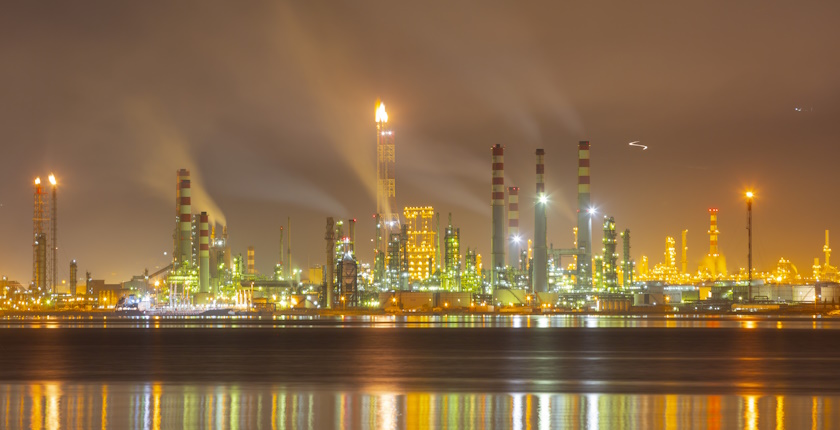
Oil refiner Tüpraş is working on a technology for biofuel from algae and yeasts, using solar energy. The Sunfusion project involves processing into sustainable aviation fuel – kerosene – and green alternatives for vessels. It received EU support and includes partners from Greece, France, Germany, Norway and Serbia.

Istanbul-based Türkiye Petrol Rafinerileri AŞ (Tüpraş) has several decarbonization projects underway, counting on the expansion of green energy markets. One of the endeavors is Sunfusion – advancing biofuel production from purified microalgae and oleaginous yeasts by utilizing state-of-the-art solar technologies.

The project, which runs until the end of 2028, received EUR 3 million through the European Union’s Horizon Europe program. Centre for Research and Technology Hellas (CERTH), known also by its Greek acronym EKETA, is the coordinator.

Ten partners include the Middle East Technical University (METU/ODTÜ), located in Ankara, Aristotle University of Thessaloniki (AUTH) and Foodscale Hub (FSH), which is in Novi Sad, Serbia. The rest are from France, Germany and Norway.

Solar-to-biocrude efficiency must top 50%

Tüpraş, the largest oil refiner in Turkey, is majority-owned by Koç Holding and its related businesses. It launched Sunfusion to develop the conversion of microalgae and oleaginous yeasts using the hydrothermal liquefaction (HTL) method. Among the goals is to minimize costs, emissions and waste and achieve a solar-to-biocrude efficiency target of more than 50%.

The company and its partners intend to cultivate high-lipid, low-nitrogen microalgae and yeasts

The initiative involves photobioreactors, open raceway ponds and a solar thermal system supplying energy for the process. The company and its partners intend to cultivate high-lipid, low-nitrogen microalgae and yeasts.

Hydrotreatment units would have fractionation capabilities, for refining the biocrude into high-value fuels such as sustainable aviation fuel – kerosene – and alternative marine fuels.

First SAF supply deal in Turkey already in scope

In June, Tüpraş signed a letter of intent with Turkish Airlines for a sustainable aviation fuel (SAF) supply arrangement. They claimed that carbon emissions would be up to 87% lower than from conventional jet fuel.

“We will begin SAF production next year at our Izmir Refinery by leveraging our existing facilities. We aim to finalize the investment decision for a new unit that will increase our SAF production capacity to 300,000 tons by the end of this year. The use of SAF is becoming a necessity under both international and local regulations for the decarbonization of the aviation sector,” General Manager of Tüpraş Ibrahim Yelmenoğlu stated.

It would be both the first production and supply operations in Turkey. The company revealed at the time that it would make the SAF from bio-based feedstocks.

Tüpraş has seven projects with support from Horizon Europe

Tüpraş said it has completed 17 projects under Horizon 2020 and that seven are ongoing through Horizon Europe. The company updated its strategic transformation plan in April, placing the focus on sustainable refining, SAF, zero-carbon electricity and green hydrogen.

In the Horizon portfolio, it is conducting the Eastern Lights project for geological storage of carbon dioxide. ICO2nic is in the same segment, with carbon capture and electrochemical conversion of CO2, while the Hermes initiative is for the separation and purification of hydrogen with innovative membranes.

Also of note, one of the oil refiner’s subsidiaries took over a major solar power project in Romania early this year.

by in News

NALED urges action to protect jobs at energy-intensive industries threatened by CBAM

The National Alliance for Local Economic Development (NALED) has called on the authorities to establish a regulatory framework that would shield Serbia’s energy-intensive industries from the impact of the European Union’s (EU) Carbon Border Adjustment Mechanism (CBAM), which threatens jobs and businesses employing about 7% of the country’s workforce and accounting for 11% of its GDP.

Once the EU starts taxing the import of high-emission products on January 1, 2026, exporters from Serbia will face an increase in the prices of their products on the EU market. Simultaneously, they will face unfair competition on the domestic market from third countries that have not introduced a national carbon pricing system, according to the National Alliance for Local Economic Development (NALED).

The entry into force of the Carbon Border Adjustment Mechanism (CBAM) means that a levy will be charged on imports of cement, iron, steel, aluminum, fertilizers, hydrogen, and electricity into the EU from countries that do not tax CO2 emissions. Although there is more and more talk about delaying the implementation of the tax, it would not make the problem of CO2 taxation disappear – it would only give the affected countries more time to prepare for the change.

NALED has completed an analysis of CBAM’s potential impacts

NALED warns that the introduction of CBAM could have a severely adverse and destabilizing impact on the competitiveness of Serbia’s energy-intensive industries, which requires an urgent and appropriate response from state institutions. NALED’s recently completed analysis of potential impacts of CBAM suggests a high risk of financial pressures and loss of competitiveness of Serbia’s energy-intensive industries, which employ about 7% of the country’s workforce and account for 11% of its GDP.

“To maintain the competitiveness of domestic industry in the initial stage of its green transition, it is necessary to provide mechanisms for reducing CO2 emissions as soon as possible through a set of national regulatory measures. After that, a national mechanism should be established that would include levying a carbon tax on domestic industry, along with a national CBAM mechanism, modeled after the EU’s, to tax goods from third countries where climate policies are less ambitious than Serbia’s,” says Slobodan Krstović, director of NALED’s Sustainable Development Department.

Revenues from CO2 taxation would be used to decarbonize Serbia’s energy-intensive industries

This would ensure a level playing field, in terms of costs related to CO2 emissions, for the sale of energy-intensive products on the Serbian market, as is the case in the EU.

Additional budget revenues that would be secured in this way would primarily be used for supporting the decarbonization of energy-intensive industries, Krstović added.

The analysis further shows that introducing a national CO2 tax at the carbon price projected for 2034 in the National Energy and Climate Plan (NECP) –about EUR 40 per ton – would cost the economy up to EUR 539 million a year, not including the electricity sector.

A domestic CBAM would bring an additional EUR 13 million in state budget revenues in 2027 and as much as EUR 128.6 million in 2034.

Serbia needs mechanisms to decarbonize energy-intensive industries

NALED believes that such a measure, which would channel revenues into Serbia’s budget instead of the EU coffers, would be sustainably justified if the state first introduced regulatory mechanisms to help industry reduce its CO2 emissions.

Given that CBAM and the Green Agenda are new regulatory factors, which have not been taken into account before when defining state aid rules, it is necessary to thoroughly review the existing regulations for granting state aid to companies, according to NALED.

Adapting the national regulatory framework to ensure mechanisms for the decarbonization of energy-intensive industries primarily involves liberalizing the import of alternative fuels and raw materials, banning the export of waste that can be processed in Serbia, and incentivizing the construction of new renewable energy capacities.

If the state fails to react, the domestic industry will face a serious threat

In the absence of state action, NALED warns, the projected decline in the cost efficiency of domestic industry would irreversibly jeopardize Serbia’s exports to the EU market, as well as its competitiveness on the domestic market due to a sharp increase in imports of CBAM goods from non-EU countries.

This would inevitably lead to the loss of a large number of jobs and the financial sustainability of the entire energy-intensive industry operating in Serbia, NALED concludes.

The authorities in Bosnia and Herzegovina recently estimated the economy’s potential loss due to CBAM at between BAM 722 million and BAM 3.17 billion (EUR 369 million to EUR 1.62 billion).

by in News

OMV opens Austria’s largest green hydrogen plant

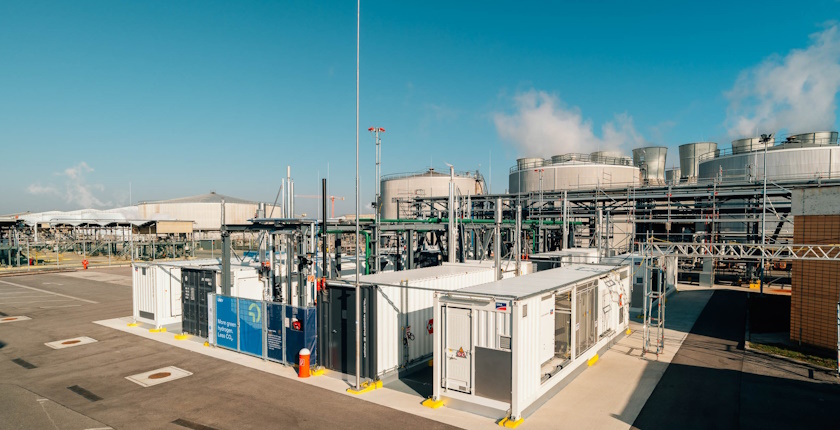
OMV put into operation its green hydrogen plant in Schwechat near Vienna. The facility can produce 1,500 tons per year.

OMV is producing green hydrogen on a commercial scale for the first time. The Vienna-based fossil fuel and petrochemicals producer started up a 10 MW plant at its Schwechat refinery near Austria’s capital. It is the largest in the country.

The investment amounts to EUR 25 million. The electrolyzer system can produce up to 1,500 tons per annum. OMV said the green hydrogen would be used to make more sustainable fuels and chemicals including sustainable aviation fuel (SAF) and renewable diesel (HVO).

PEM electrolyzer uses wind power, hydropower, photovoltaics

The new 10 MW polymer electrolyte membrane (PEM, also called proton exchange membrane) electrolyzer is powered entirely by renewable electricity. It is generated by wind power, hydropower plants and photovoltaics.

The innovation enables annual savings of up to 15,000 metric tons of carbon dioxide emissions, according to the comparator from the European Union’s Renewable Energy Directive. It is equivalent to 2,000 persons per year, based on the EU’s 2024 average of 7.5 tons of CO2 equivalent per capita.

“With the start-up of Austria’s largest electrolysis plant, we are re-inventing how essentials we use in everyday life are produced sustainably. Green hydrogen is at the heart of this transformation, serving as a critical component in producing fuels and chemicals while advancing the decarbonization of our Schwechat site,” said board member Martijn van Koten, responsible for fuels, feedstock and chemicals.

Green hydrogen project is step toward making OMV carbon neutral

The majority owner of Romanian OMV Petrom aims to cut its net emissions to zero by 2050. Its transformation is based on projects including for geothermal energy and chemical recycling. Green hydrogen can be utilized in the production process in refineries.

The green hydrogen plant is certified for producing renewable fuels of non-biological origin (RFNBOs).

Making green hydrogen through PEM electrolysis involves splitting water into hydrogen and oxygen using renewable electricity. At the anode, oxygen and positively charged hydrogen protons are generated. The protons pass through the PEM, and at the cathode, they combine with electrons to form hydrogen gas.