by in News

Major industrial polluters in Serbia continue to pollute air, soil, water without control

Around 150 companies in Serbia, potentially major polluters of water, air, and soil, have not obtained their integrated pollution prevention and control permits by December 31, 2024. It means they are violating the Law on Integrated Pollution Prevention and Control and, more importantly, that no one controls how much they pollute the environment, according to the analysis of the basic premises of the Draft Law on Integrated Pollution Prevention and Control, produced by the Renewables and Environmental Regulatory Institute (RERI).

About 220 operators are required to own an integrated pollution prevention and control (IPPC) permit for their industrial and intensive agricultural facilities, such as power plants, oil refineries, large chemical and metal facilities, as well as farms.

Ones that haven’t fulfilled their legal obligation include large and profitable companies such as power utility Elektroprivreda Srbije (EPS) and Serbia Zijin Copper.

The Law on Integrated Pollution Prevention and Control has been in force since 2004. Its aim was to introduce integrated pollution prevention and control, as well as to transpose the European Union’s Industrial Emissions Directive (IED).

The draft of the new law was recently published

The deadline for obtaining IPPC permits was initially the end of 2020, but it was then postponed to the end of 2024. The basic premises for the new law were published in February. The draft law, recently published as well, is in the public consultation phase.

Programme Director of RERI Mirko Popović stressed that citizens should be aware that there are major polluters and that they are the most profitable and wealthiest companies in Serbia. In his view, they are exempted from the application of the law, to the detriment of the citizens, because they pollute the environment – air, water, soil.

Popović: We want to protect people’s health, property, and rights

Citizens should be aware that when EPS emits 300,000 tons of sulfur dioxide (SO2), it goes into the atmosphere and partially turns into fine particulate matter that pollutes the air and enters the lungs, Popović noted. Some of it becomes acid rain that falls on the soil, making agricultural land less fertile, he added.

“Citizens are obliged to pay taxes, to obey the law, but these polluters aren’t,” Popović pointed out.

According to RERI’s programme director, citizens should know that RERI, an NGO dealing with these problems, doesn’t want to eliminate jobs, close factories, or hinder development.

“We want to protect the health, property, and rights of people,” Popović underscored.

Minić: Pollution reduces economic growth in the long term

serbia ippc permits reri report law
Photo: RERI

When a company has an IPPC permit, it means that it is obliged to implement best available techniques (BAT) while its operations are monitored for comprehensive reduction of air, water, and soil pollution and for compliance with strict emission limit values.

When a company doesn’t have one, the environment is exposed to greater, uncontrolled pollution, since the law doesn’t apply to it.
The legislation stipulates strict emission limit values, defined maximum levels of pollutants, including heavy metals, SO2 and nitrogen oxides (NOx) that a facility is allowed to emit into the air, water, or soil.

Pollution has a negative impact on GDP

According to Slobodan Minić, Senior Economist at Fiscal Council, everything regarding the IPPC law is based on the paradigm that investing in BAT, or technologies that minimize harm to the environment and human health, increases costs and slows growth.

“However, it has been overcome in the world at least a decade ago, because as data on air and environmental pollution became available, more and more research has been conducted on how it affects health. The public in Serbia now knows well what the impact is, between 10,000 and 15,000 premature deaths annually. According to economic literature, pollution also adversely affects GDP,” he stated.

We must think of this not as a cost, but as an investment

He recalled that an OECD study showed that an increase in the average concentration of PM2.5 by one microgram reduces GDP by 0.98%.

“If we want to break out of this vicious circle, we must think of this not as a cost, but as an investment. Not just in the production facility, but in human capital, because it contributes to economic growth, instead of hindering it. Otherwise, in the long term, society and the economy will suffer,” Minić concluded.

Vojvodić: The initial principles do not promise changes in the new law

serbia ippc permits reri report law popovic vojvodic minic
Slobodan Minić, Mirko Popović and Hristina Vojvodić (photo: RERI)

Public consultations on the draft law, which began on November 27, last until December 15.

Hristina Vojvodić, legal advisor in RERI, pointed out that core problems aren’t addressed.

The basic premises of the draft law should have identified the shortcomings of the existing law, based on the 20 years of its implementation, in her view. It isn’t good that these premises were defined without the participation of the members of the working group for the draft law, she explained.

This is a signal to the public, experts, members of the working group that the problems that have been identified were sidelined, Vojvodić asserted.

Of note, RERI produces reports on the implementation of IPPC law to help reduce pollution originating from industry. The organization also defines recommendations for improving the enforcement of regulations and sanctions for polluters.

According to RERI, the research for the latest analysis went beyond the scope of the basic premises. It decided to expand the report to include the issues in the implementation of the law and offer fact-based solutions.


by in News

Major industrial polluters in Serbia continue to pollute air, soil, water without control

Around 150 companies in Serbia, potentially major polluters of water, air, and soil, have not obtained their integrated pollution prevention and control permits by December 31, 2024. It means they are violating the Law on Integrated Pollution Prevention and Control and, more importantly, that no one controls how much they pollute the environment, according to the analysis of the basic premises of the Draft Law on Integrated Pollution Prevention and Control, produced by the Renewables and Environmental Regulatory Institute (RERI).

About 220 operators are required to own an integrated pollution prevention and control (IPPC) permit for their industrial and intensive agricultural facilities, such as power plants, oil refineries, large chemical and metal facilities, as well as farms.

Ones that haven’t fulfilled their legal obligation include large and profitable companies such as power utility Elektroprivreda Srbije (EPS) and Serbia Zijin Copper.

The Law on Integrated Pollution Prevention and Control has been in force since 2004. Its aim was to introduce integrated pollution prevention and control, as well as to transpose the European Union’s Industrial Emissions Directive (IED).

The draft of the new law was recently published

The deadline for obtaining IPPC permits was initially the end of 2020, but it was then postponed to the end of 2024. The basic premises for the new law were published in February. The draft law, recently published as well, is in the public consultation phase.

Programme Director of RERI Mirko Popović stressed that citizens should be aware that there are major polluters and that they are the most profitable and wealthiest companies in Serbia. In his view, they are exempted from the application of the law, to the detriment of the citizens, because they pollute the environment – air, water, soil.

Popović: We want to protect people’s health, property, and rights

Citizens should be aware that when EPS emits 300,000 tons of sulfur dioxide (SO2), it goes into the atmosphere and partially turns into fine particulate matter that pollutes the air and enters the lungs, Popović noted. Some of it becomes acid rain that falls on the soil, making agricultural land less fertile, he added.

“Citizens are obliged to pay taxes, to obey the law, but these polluters aren’t,” Popović pointed out.

According to RERI’s programme director, citizens should know that RERI, an NGO dealing with these problems, doesn’t want to eliminate jobs, close factories, or hinder development.

“We want to protect the health, property, and rights of people,” Popović underscored.

Minić: Pollution reduces economic growth in the long term

serbia ippc permits reri report law
Photo: RERI

When a company has an IPPC permit, it means that it is obliged to implement best available techniques (BAT) while its operations are monitored for comprehensive reduction of air, water, and soil pollution and for compliance with strict emission limit values.

When a company doesn’t have one, the environment is exposed to greater, uncontrolled pollution, since the law doesn’t apply to it.
The legislation stipulates strict emission limit values, defined maximum levels of pollutants, including heavy metals, SO2 and nitrogen oxides (NOx) that a facility is allowed to emit into the air, water, or soil.

Pollution has a negative impact on GDP

According to Slobodan Minić, Senior Economist at Fiscal Council, everything regarding the IPPC law is based on the paradigm that investing in BAT, or technologies that minimize harm to the environment and human health, increases costs and slows growth.

“However, it has been overcome in the world at least a decade ago, because as data on air and environmental pollution became available, more and more research has been conducted on how it affects health. The public in Serbia now knows well what the impact is, between 10,000 and 15,000 premature deaths annually. According to economic literature, pollution also adversely affects GDP,” he stated.

We must think of this not as a cost, but as an investment

He recalled that an OECD study showed that an increase in the average concentration of PM2.5 by one microgram reduces GDP by 0.98%.

“If we want to break out of this vicious circle, we must think of this not as a cost, but as an investment. Not just in the production facility, but in human capital, because it contributes to economic growth, instead of hindering it. Otherwise, in the long term, society and the economy will suffer,” Minić concluded.

Vojvodić: The initial principles do not promise changes in the new law

serbia ippc permits reri report law popovic vojvodic minic
Slobodan Minić, Mirko Popović and Hristina Vojvodić (photo: RERI)

Public consultations on the draft law, which began on November 27, last until December 15.

Hristina Vojvodić, legal advisor in RERI, pointed out that core problems aren’t addressed.

The basic premises of the draft law should have identified the shortcomings of the existing law, based on the 20 years of its implementation, in her view. It isn’t good that these premises were defined without the participation of the members of the working group for the draft law, she explained.

This is a signal to the public, experts, members of the working group that the problems that have been identified were sidelined, Vojvodić asserted.

Of note, RERI produces reports on the implementation of IPPC law to help reduce pollution originating from industry. The organization also defines recommendations for improving the enforcement of regulations and sanctions for polluters.

According to RERI, the research for the latest analysis went beyond the scope of the basic premises. It decided to expand the report to include the issues in the implementation of the law and offer fact-based solutions.

by in News

Air pollution spikes throughout Croatia

The Croatian Ministry of the Environment and Green Transition has warned of air pollution across most of the country in previous days. It expects improvement over the weekend.

“In recent days, with the arrival of colder weather and the start of the heating season, a significant increase in the concentrations of air pollutants has been recorded, especially particulate matter (PM10 and PM2.5) across most of Croatia,” the Ministry of Environmental Protection and Green Transition said.

Measuring stations of the State Network for Continuous Monitoring of Air Quality, as well as local stations in most of Croatia’s mainland, are recording a significant increase in the concentrations of air pollutants, including PM10 and PM2.5 particles.

Especially in Zagreb, Sisak, Kutina, Koprivnica, Bjelovar, and Slavonski Brod, monitoring stations registered levels as high as 100 micrograms per cubic meter at times. It is several times above the limit defined by the regulations, the update reads.

The increase in concentrations is primarily driven by emissions from household heating

Two to three times higher values than usual were also recorded at the station in the village of Desinić, on the border with Slovenia. It demonstrates that PM particulate air pollution in Croatia is not exclusively a local or urban issue, but a regional challenge, the ministry stressed.

The cause of the increase in concentrations are primarily emissions from household heating, particularly fueled by solid fuels: wood and coal, the update underlines. The situation is further aggravated by stable weather conditions, the lack of wind, and the occurrence of a temperature inversion.

An additional contribution to air pollution comes from traffic

In urban areas, especially in Zagreb, transportation enhances air pollution. Its impact has intensified in recent years due to the constant growth in the number of vehicles, according to the ministry.

Although wood heating remains the most significant source of PM, all emission sources, including traffic and industry, are amplified in such stable meteorological conditions, the ministry added.

Wind and warmer weather are expected to improve air quality

The ministry claims that current concentrations aren’t causing acute health problems. However, long-term exposure to excessive concentrations of PM increases the risk of respiratory and cardiovascular diseases and shortens life expectancy.

Particularly vulnerable are sensitive population groups such as the elderly, children, adolescents, pregnant women, and people suffering from respiratory and cardiovascular diseases.

The ministry advised citizens to monitor the air quality forecasts of the Croatian Meteorological and Hydrological Service (DHMZ) and the information on the Air Quality Portal. The portal offers an overview of the current air quality situation in the country with real-time data.

The ministry also recommended that citizens, particularly people with chronic illnesses, the elderly, and children, reduce outdoor activities during periods of such excessive concentrations.

In cooperation with the state institutions and local authorities, the ministry is implementing measures defined in air quality action plans to reduce emissions. DHMZ is currently implementing several projects on air protection and is preparing new ones.

An improvement in air quality is expected over the weekend, when temperatures will rise and the southwesterly wind will strengthen, the ministry said.

by in News

Federation of BiH to upgrade air quality monitoring with EUR 1.1 million

The Federation of Bosnia and Herzegovina is investing BAM 2.2 million to upgrade the air quality monitoring system.

Federal Minister of Environment and Tourism Nasiha Pozder has signed contracts worth BAM 2.19 million (EUR 1.1 million) for the procurement of up-to-date equipment to upgrade the measurement program of the stations in the Federal Air Quality Monitoring Network.

The units are managed by the Federal Hydrometeorological Institute (FHMZ).

The procurement of the equipment is financed by a loan from the International Bank for Reconstruction and Development (IBRD), as part of the Air Quality Improvement Project in Bosnia and Herzegovina. It is being implemented with the support of the World Bank.

The equipment will be supplied by two firms

The contracts envisage the purchase of air quality equipment worth BAM 1.8 million KM (about EUR 920,000) to be supplied by Sarajevo-based firm E3, and laboratory equipment worth BAM 142.422 KM (about EUR 73,000), to be delivered by Altium International, registered in Sarajevo. The third one – worth BAM 218,040 KM (EUR 111,500) – is for spare parts, and the supplier is also E3.

The equipment will enable the full implementation of the measurement program at all stations of the federal network, including all key parameters for assessing air quality, according to the Ministry of Environment and Tourism.

Mostar and Tuzla will get two stations

The system has been further expanded with the installation of two fixed stations in Mostar and Tuzla. FHMZ also received one mobile station for emergency field measurements in case of accidents.

The FHMZ laboratory has also been improved. Now it has the capacity to conduct analyses of polycyclic aromatic hydrocarbons (PAHs), important indicators of pollution and health risks to the population.

The equipment represents a significant step toward a more comprehensive, reliable, and modern air quality monitoring system in FBiH, the ministry underlined.

Pozder: Faster response to increases in air pollution

Minister Pozder stressed it is one of the most concrete steps toward strengthening the infrastructure for air quality monitoring.

She recalled that the public has the right to accurate information about the air it breathes and that institutions are obligated to provide reliable data and modern systems.

“Today, we are entering a new phase of modernization that will enable better planning and faster responses to increased air pollution,” Pozder said.

Almir Bijedić, director of FHMZ, pointed out that the new equipment and information system would significantly improve the accuracy and reliability of the institution’s work. It is the largest investment to date, he added.

Bijedić: It is very important that now we have the ability to analyze the concentration of PAHs

“FHMZ will be able to provide higher quality and faster information to citizens and institutions. It is very important that the new system enables the analysis of PAHs, allowing us for the first time to fully monitor the parameters critical for assessing health risks. This is a major step forward for the institute and the Federation of BiH,” Bijedić said.

The ministry noted it is completing the procurement of a new air quality information system, estimated at BAM 150,000 (EUR 77,000). It will significantly improve the digital capabilities of the monitoring system.

The new software will enable faster and more reliable validation and verification of data, real-time data display, centralized management, and more secure data storage, as well as more detailed trend analyses and automated reporting to the European Environment Agency (EEA), the Ministry of Environment and Tourism explained.

by in News

Kragujevac heating plant begins ash removal from disposal site in city center

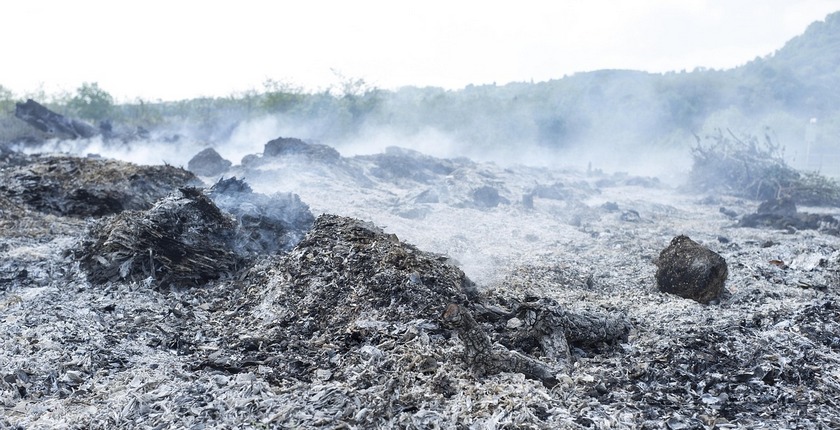
District heating plant Energetika has begun removing coal ash from an uncovered disposal site that has been polluting air and soil for years in the heart of Kragujevac, Serbia’s fourth-largest city. The effort is part of a project financed by an EUR 18 million loan from the European Bank for Reconstruction and Development (EBRD), to decarbonize the local district heating system.

The ash from Kragujevac is transported to cement plants in Kosjerić and Popovac to be used in the production of cement and construction materials, in line with circular economy principles, according to Serbian Minister of Environmental Protection Sara Pavkov.

On the first day, about 75 tons of ash was removed from the site, with plans to transport a total of 60,000 tons over 24 months.

The ash will be used in cement production in Kosjerić and Popovac

Ash removal is the second phase of the district heating decarbonization project in Kragujevac. In the first phase, old boilers were replaced with gas-fired units, significantly reducing air pollution, according to Dejan Ružić, deputy mayor of Kragujevac. This marked the end of coal use in the city’s district heating system.

The EBRD approved the loan for the project in 2021. Of the total amount, EUR 14 million was earmarked for boiler replacement, together with up to EUR 4 million for ash removal.

In the first phase, coal-fired boilers were replaced with gas-fired units

The bank said at the time that gas-fired boilers would have a capacity of 110 MW and that CO2 emissions from district heating would be cut by an estimated 66%, with sulfur dioxide and particulate matter (PM) emissions eliminated.

The Ministry of Environmental Protection has hired Novi Sad-based engineering and consultancy firm AG Institut to monitor the ash disposal services under a EUR 73.900 contract. The works are targeted for completion by July 15, 2027.

Aleksandar Lazović, general manager of the district heating plant, said the works would be carried out in line with the highest environmental standards, in a covered area, to prevent ash from dispersing into the environment.

District heating decarbonization in several Serbian cities

In June this year, Serbia and the EBRD signed a EUR 50 million loan to finance a series of air quality projects in Belgrade, Niš, Valjevo, Zaječar, Novi Pazar, and Smederevo, which had been mapped as cities with the largest excesses of harmful emissions.

The planned projects include replacing outdated boilers running on fuel oil, coal, and other air-polluting fuels with modern and sustainable heat energy sources, such as heat pumps, biomass, and industrial waste heat.