by in News

Šahmanović: Masdar ready for new investments in Montenegro’s energy sector

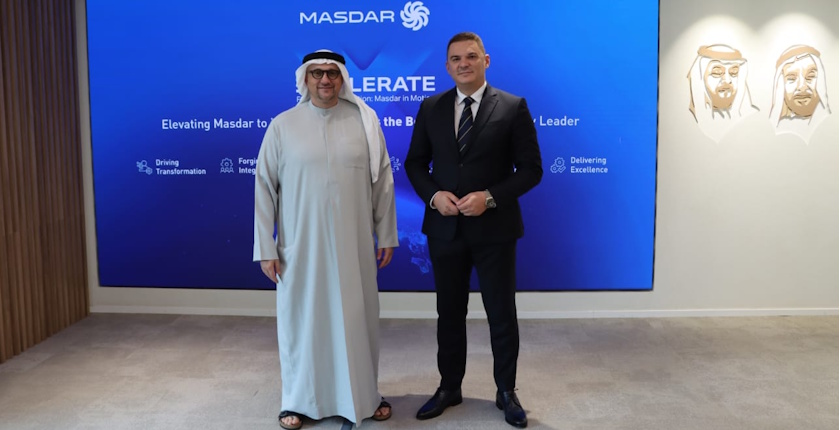
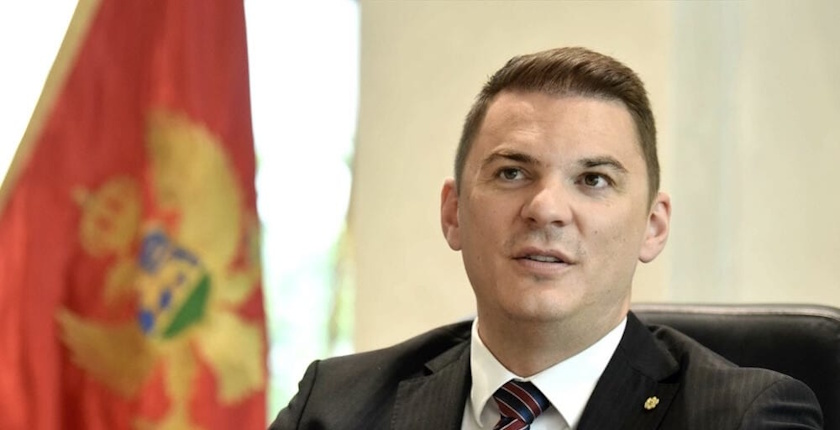
Montenegrin Minister of Energy and Mining Admir Šahmanović has met with Mohamed Jamel al-Ramahi, CEO of Masdar, a United Arab Emirates state-owned renewable energy company. During the meeting in Abu Dhabi, Šahmanović highlighted the energy sector as Montenegro’s biggest development opportunity, while Masdar’s top man confirmed the company’s readiness to expand its operations in Southeast Europe.

As part of his visit to the United Arab Emirates (UAE), Minister Admir Šahmanović held talks with representatives of Masdar, one of the global leaders in renewable energy.

“Montenegro undeniably has the potential and natural resources, but we are equally aware of our financial limitations. Investments in capital energy infrastructure projects are measured in hundreds of millions of euros, which requires strong partnerships and the pooling of resources,” Šahmanović said at the meeting.

Šahmanović: Energy is Montenegro’s greatest development opportunity

According to him, Montenegro sees the energy sector as the greatest development opportunity, which can trigger economic growth, create new jobs, and ensure long-term stability.

“To achieve this, we choose strategic partners carefully – those who share our vision and are ready to invest in a sustainable and strong energy sector,” he said.

The Montenegrin minister and Masdar representatives discussed opportunities to further strengthen cooperation and develop new projects. Šahmanović stressed that cooperation with Masdar so far – on the Krnovo wind farm – provides a solid foundation for even more ambitious projects.

Masdar is looking to expand its business in Eastern Europe

Masdar’s CEO confirmed that the company has the capital, know-how, and interest for significant business expansion in Eastern Europe, with Montenegro taking priority in its investment plans.

Šahmanović emphasized that the Government of Montenegro is committed to creating a favorable business environment – through clear procedures, a stable regulatory framework, and more efficient administration – to ensure security and predictability for investors.

That, he noted, is not only a prerequisite for attracting new investments but also a guarantee that the energy sector will become a pillar of the country’s economic growth and energy independence.
by in News

Montenegro’s power utility gets EUR 25 million loan to expand Gvozd wind farm

Montenegrin state-owned power utility Elektroprivreda Crne Gore (EPCG) said it signed a EUR 25 million loan contract with the European Bank for Reconstruction and Development (EBRD) for expanding the Gvozd wind farm to 75.6 MW. Once fully operational, it will be the largest wind farm in Montenegro.

The Gvozd 2 project involves the installation of three additional wind turbines, with a combined capacity of 21 MW. It will increase the wind farm’s total projected annual production to over 210 GWh, enough to cover the needs of about 36,000 households and reduce CO2 emissions by almost 137,000 tons a year, EPCG said following the signing of the loan agreement.

The expansion project involves three additional wind turbines with a combined capacity of 21 MW

An EUR 82 million loan for the first, 54.6 MW phase of the wind farm, including the grid connection infrastructure, was signed with the EBRD in June 2023. Gvozd will be EPCG’s first large-scale power generation facility built in more than 40 years.

Construction on the first phase, featuring eight turbines, began in November 2024. EPCG expects the power plant to enter trial operation by the end of this year, with a projected annual electricity output of 150 GWh.

Construction on the first, 54.6 MW phase of wind farm Gvozd was launched in late 2024

Commissioning of the full 75 MW capacity is expected by the end of 2026, according to a press release from the EBRD.

A key step in Montenegro’s energy transition

Milutin Đukanović, President of EPCG’s Board of Directors, described the expansion of Gvozd as a key step in Montenegro’s energy transition. In the press release, EPCG stated that the wind park would significantly contribute to achieving the European goal to produce electricity exclusively from clean sources by 2050 at the latest.

Minister of Energy and Mining Admir Šahmanović noted that the Gvozd project would strengthen Montenegro’s energy security, reduce CO2 emissions, and pave the way for sustainable development.

Francesco Corbo, the EBRD’s Regional Head of Energy for the Western Balkans and Croatia, recalled that the bank, through its Renewable Energy Market Accelerator (REMA) program, helped the Montenegrin authorities organize the country’s first renewable energy auction, for solar projects totaling 250 MW.

by in News

Šahmanović: Montenegro expects first large private wind and solar plants to be online in 2026

Over the past year, Montenegro has adopted two reform laws – on energy and on renewable energy sources – and scheduled its first auctions for market premiums. Admir Šahmanović, Minister of Energy and Mining, told Balkan Green Energy News that the new regulations fully align the sector with the European Union acquis, sending a clear signal to investors that Montenegro now has a stable regulatory framework and market-based prices that safeguard citizens’ interests. Becoming part of the European energy space, he added, is not only a political goal but also the path Montenegro should follow to ensure cleaner and more secure energy for future generations.

Admir Šahmanović served as Minister of Mining, Oil and Gas in the government of Prime Minister Milojko Spajić. In February this year, he became the coordinator of the Ministry of Energy, and since April, he has served as Montenegro’s Minister of Energy and Mining. In an interview with Balkan Green Energy News, Šahmanović discusses his plans to mobilize larger investments, Montenegro’s timeframe for coupling its electricity market with Italy and the EU, the ministry’s steps to prepare the country for the EU’s carbon border tax, and plans for investments in the natural gas sector.

What are the key innovations introduced by Montenegro’s law on renewable energy sources?

The law on renewable energy sources introduced, for the first time, a clear, competitive and fully transparent support mechanism for green energy production – an auction scheme.

Over the past months, we have worked hard to ensure the law really takes hold. We have prepared about 15 by-laws that enabled us to launch the first auctions. I believe this is one of the most important contributions of the new law, as it sends a clear message to investors that Montenegro has a stable framework and market-based prices that safeguard citizens’ interests.

In this way, we are laying a solid foundation for a rapid energy transition, which is both our strategic choice and our responsibility to future generations.

Montenegro has also adopted a new law on energy. What does this regulation bring?

The Law on Energy is our umbrella regulation, providing a framework that fully aligns the sector with the EU acquis. It introduces stricter standards, greater protection of end consumers, better competition, and stronger institutional oversight.

It also opens Montenegro’s energy sector to the European market and creates a stable, predictable environment. This is important not only for investors but also for all consumers, as people are ultimately the ones affected by any change in the system.

You stated that these reforms set a clear strategic path for Montenegro, which sees its energy future within the European market. What will this future bring to Montenegro, its economy, and its citizens?

Our ambition is to make Montenegro a country with clean energy and a stable system. Being part of the European energy space ensures greater security of supply, lower costs in the long term, and a strong inflow of investments. Our economy will have access to a larger market, and our citizens will benefit from safe, sustainable, and environmentally friendly energy.

It is not just a political goal – it is a path I want us to follow in our development, so that we leave our children a country with cleaner and more secure energy.

Admir Šahmanović visiting northern Montenegro with EPCG Director Ivan Bulatović

Applications have been invited for Montenegro’s first auctions for market premiums. What benefits do you expect from auctions?

The auction mechanism allows us to select the most favorable and serious investors through a fair and competitive process. Projects are implemented without budget subsidies and with minimal risk to the state.

We expect auctions to ensure new capacities, create jobs, improve the use of our natural resources, and strengthen overall energy stability. These are the benefits citizens will feel, both on their electricity bills and through new opportunities that will open up in local communities.

Investor interest in wind and solar is strong, with requests to build power plants totaling around 5.5 GW. When do you expect these projects to be realized?

Such strong interest is the best proof that the reforms are yielding results. We expect the first large projects to be online in 2026, with significant capacities ready by 2030. Transparent procedures, good cooperation with local communities, and improved grid infrastructure will be key to making these investments a reality.

What are the main obstacles to these projects? How to remove them?

The biggest challenges are administrative procedures, transmission network limitations, and spatial planning documents. We are working to address them through interdepartmental cooperation, digitalization of processes, and the state’s commitment.

We are strengthening capacities, speeding up permitting, and modernizing regulations. I want to ensure that investors coming to Montenegro know they can work in a clear, predictable, and fair environment.

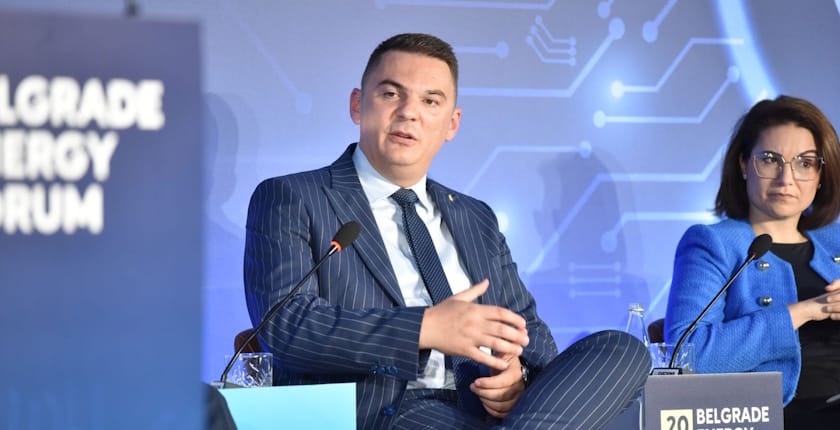
Admir Šahmanović at the ministerial panel at Belgrade Energy Forum 2025 in May

Preparations are underway to link Montenegro’s electricity market with the EU via Italy, with 2027 featuring as the target year.

Yes, we are working diligently on institutional and market integration. This involves harmonizing the rules, passing the remaining by-laws, and preparing the market operator. With the support of the EU and the Energy Community, I am confident that 2027 will remain the year when we will fully open our market to Europe.

All countries in the region are facing CBAM. How prepared is Montenegro?

CBAM will change the rules for electricity exports to the EU, bringing new costs as well as opportunities. We are aware that it will be a financial burden on our economy, but that is precisely why we view it as an additional incentive to accelerate the implementation of renewable energy projects and increase our own production of green electricity.

We are working on adjusting the regulatory framework, harmonizing economic activities, and ensuring the largest possible share of clean energy to remain competitive and maintain full access to the European market while reducing emissions.

Montenegro also has ambitious plans in the natural gas sector – a gas pipeline, a terminal for liquefied natural gas (LNG), and gas-fired power plants. How far along are these projects?

I see gas as a development opportunity – to ensure greater security of supply, diversification, and new opportunities for the economy. But I also believe that such strategic projects must be developed through dialogue with local communities, with full respect for their views.

We are currently preparing and developing the Ionian Adriatic Pipeline (IAP) project and assessing the potential for an LNG terminal. We are doing this responsibly, one step at a time, and in line with the EU’s energy transition goals.

by in News

Montenegro preparing first renewable energy auction to accelerate green transition

A model for Montenegro’s first auction for market premiums for solar power was outlined at an event in the capital Podgorica. The new legal framework for the green energy transition includes guarantees of origin, citizen energy communities and streamlined permitting. Stakeholders will be able to participate with their comments and suggestions in the renewables auction design.

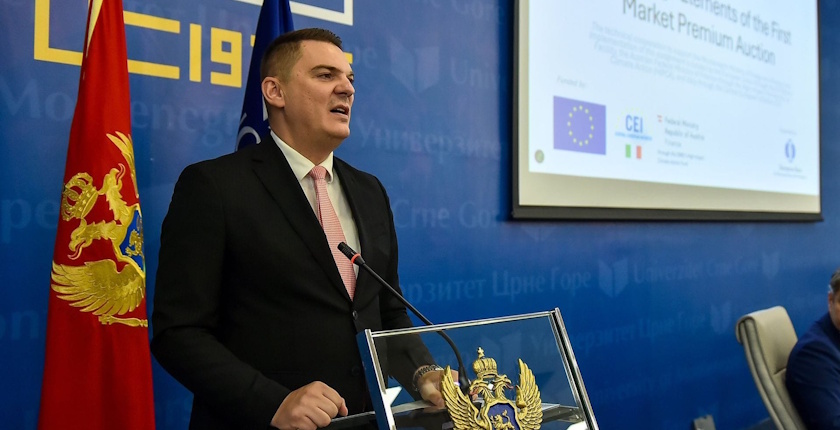
The Ministry of Energy and Mining of Montenegro organized a conference today to present the key design elements of the first market premium auction for renewables. The competitive bidding process for wind and solar power is part of the reform agenda within the European Union’s Growth Plan for the Western Balkans.

The country’s new legal framework includes guarantees of origin, citizen energy communities and simplified permitting aimed at facilitating investment. They were defined with the new laws on energy and renewables.

The ministry said the first auction would be for photovoltaics. Solar power is the segment with the greatest potential and the lowest share in domestic electricity production, it explained.

EBRD’s Zakaria: First auction should match market needs

The Head of Montenegro in the European Bank for Reconstruction and Development (EBRD) Remon Zakaria urged stakeholders to send their comments and suggestions. The design of the first auction should match the needs of the market as much as possible, he argued.

EBRD participated in drafting the model. The ministry also thanked the Ministry of Finance of Austria, Central European Initiative (CEI) and other partners for their assistance.

At the event in Podgorica, a team of experts presented the technical matters concerning the upcoming auction.

Montenegro to boost renewables’ share in electricity output to 70% by 2030

This is not just the beginning of a technical process – it is a strategic leap, according to Minister of Energy and Mining Admir Šahmanović. He pointed out that Montenegro is transitioning from state incentives to a market-based support model, saying it aligns with the best European practices.

“We know our ambitions and goals for 2030 – a 50% share of renewable energy sources in final consumption and 70% of electricity to be produced from renewable sources. They are indeed demanding targets, but reachable – especially with support from international partners and the private sector,” Šahmanović added.

Montenegro has demanding, but achievable green energy targets, Minister Admir Šahmanović said

Montenegro doesn’t see itself isolated in its energy future but as an integral part of the European market, the minister asserted. With the forthcoming auction, the country is sending a clear message that it is ready for the next steps in the green transition, in his view.

The government is committed to decarbonization, digitalization and preparations for the European Union’s instruments like the emissions trading system (ETS) and Carbon Border Adjustment Mechanism (CBAM), Šahmanović underscored.

“We don’t see this process as a political goal – but as an economic opportunity and social imperative,” the minister said.

by in News

BEF 2025: Regional cooperation can facilitate energy transition, energy security

Montenegro, Serbia, and the Republic of Srpska don’t have a problem attracting investments in electricity production, but they do have issues when it comes to investments in transmission networks. If the introduction of CBAM is not postponed, it will greatly burden their economies. Hungary is interested in strengthening energy ties with them as well as the rest of the Western Balkans, which would bolster energy security for the whole region. Croatia could also assist it in strengthening employment in the green technologies sector, to counter the loss of jobs due to decarbonization. These are the main messages from the High-ministerial panel on SEE regional cooperation and energy transition strategies.

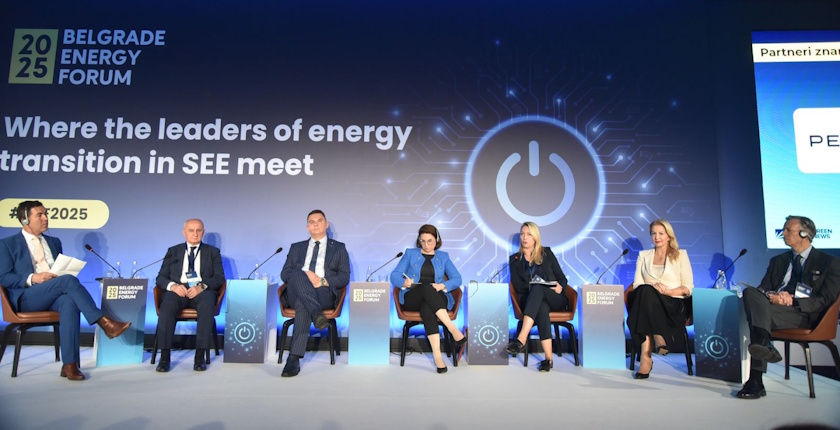
The ministerial panel was the first of eight at this year’s Belgrade Energy Forum 2025 (BEF 2025). The conference, organized by Balkan Green Energy News, welcomed four hundred participants from more than 30 countries from the region, Europe, and beyond.

The panel featured representatives of the governments of Montenegro, Croatia, Hungary, the Republic of Srpska – one of the two political entities in Bosnia and Herzegovina – Serbia, and the United Nations Economic Commission for Europe (UNECE). The moderator of the panel was Dirk Buschle, who until recently was a key figure in the Energy Community Secretariat, and now is a partner at law firm Becker Büttner Held.

He noted it is a mistake to say that the contracting parties of the Energy Community are lagging behind EU countries in the energy transition. They all face the same issues, which are energy accessibility, supply security, and sustainability, Buschle added.

Additional proof, in his words, are the similar issues faced by investors – in grid connections and permitting.

Investments in production are coming, the issues are grids, CBAM

Dirk Buschle, Petar Đokić and Admir Šahmanović

According to Minister of Energy and Mining of the Republic of Srpska Petar Đokić, the entity has made significant progress in defining a regulatory framework that aligns with the rules of the Energy Community and the European Union.

He noted that with the help of the Energy Community Secretariat, the two entities of BiH recently reached an agreement on adopting a law on the electricity regulator, transmission, and market. It is one of the cornerstones for establishing an organized electricity market.

The Republic of Srpska was successful in attracting investments in green energy in recent years, Đokić added. It established concessions and partnerships for the construction of 2,200 MW of renewable energy power plants – wind, solar, and hydropower.

However, large investments in transmission networks are also necessary, he pointed out and said he expects assistance from the European Union’s financial institutions such as the European Bank for Reconstruction and Development (EBRD) and the European Investment Bank (EIB), as well as the World Bank.

Đokić: CBAM to hit hard BiH’s economy

The minister called on them to set up such partnerships.

Regarding the EU’s Carbon Border Adjustment Mechanism (CBAM), he said that measures have been taken to change the domestic energy mix. Until recently, the share of fossil fuels was 62%, but it has now dropped to 54%, he recalled.

By 2028, the Republic of Srpska will have two new hydropower plants, of 159 MW and 36 MW, and new solar power plants with a total capacity of 250 MW, the minister asserted. It would additionally green the energy mix, Đokić said.

CBAM, in his words, could harm the economy of the Republic of Srpska and BiH.

If it is applied the way it is apparently envisaged, it would result in a significant increase in costs, with a severe negative impact, he underlined. Đoković expressed hope that the rollout would be separately discussed in the case of BiH.

Šahmanović: Montenegro is finishing its NECP

Montenegro also enjoys great interest from investors. It has received applications for building solar power plants and wind farms with a total capacity of 5.5 GW, said Admir Šahmanović, Minister of Energy and Mining.

The country’s current capacity is slightly over 1 GW.

It is, in his words, the result of improving the regulatory framework including the adoption of laws on renewable energy sources and energy. However, investment in the transmission grid is also necessary. The government plans to discuss with Italy the possibility of installing another subsea cable for electricity transmission, while the national energy and climate plan (NECP) will be completed by the end of next month, the minister revealed.

Montenegro is requesting a postponement of CBAM until 2030

In addition, renewable energy auctions are being prepared with the EBRD, and a memorandum on market coupling with Italy will be signed, he added.

As for CBAM, the minister stressed that Montenegro doesn’t believe the EU wants to harm its economy, but argued that the country isn’t ready for the mechanism’s implementation.

“Perhaps we are now in a situation similar to where our EU partners were 20 years ago. So, we need to invest a lot in our production capacities, grid, storage. It will take years, so if we don’t receive an exemption by 2030, I believe we won’t be able to handle this challenge,” Šahmanović stressed.

Secure supply of the national market is the highest priority

Boglárka Illés, Admir Šahmanović and Jovana Joksimović

Jovana Joksimović, Serbian assistant minister of mining and energy for international cooperation, European integration, and project management, expressed the opinion that the energy transition is a long and intensive process, technically, operationally, and financially.

Since October 2022, renewable energy in the energy mix has increased by 83%, which demonstrates the progress of the energy transition in Serbia, Joksimović asserted.

“We need to be realistic, as well as socially aware, because a fair and sustainable transition is something that should be carefully considered when changing the energy mix, where coal accounts for 60%,” she noted.

Joksimović: The priority is to ensure a sufficient supply of electricity at the most affordable prices for citizens and the economy

It is necessary, in her words, to be ambitious and dedicated to the energy transition goals, but she is convinced that there is a higher objective.

At the country level, it is to ensure enough electricity at the most affordable prices for both citizens and the economy, she underlined. “That’s what our top priority is,” Joksimović underscored.

Guided by the said goal, Serbia is also considering the use of nuclear energy and a study on possible options is currently being prepared.

Boglárka Illés, State Secretary for Bilateral Relations at Hungary’s Ministry of Foreign Affairs and Trade, also stressed that the government’s primary duty is to ensure not only climate neutrality and sustainable energy but also affordable energy with a stable supply for households and businesses.

She pointed out that diversifying energy imports and the energy mix plays a key role in securing energy sovereignty. It is the reason why cooperation with the Western Balkans, and especially Serbia, is important to Hungary, Illés asserted.

Illés: Europe’s energy security has been demolished

A few days before, Hungary’s Prime Minister Viktor Orbán said the EU has abandoned a successful economic strategy, based on cheap Russian gas and advanced German technology.

“And now we don’t see any other strategy within the EU,” she stated.

Due to ideologically driven sanctions against Russia, and the European Green Deal, the energy security of Europe is demolished, in Illés’s opinion. The region is located at the intersection of essential energy routes, connecting the East and the West, and also South and North, she underlined.

“We, as an EU member country, can act as a bridge between non-EU member countries and also the EU,” the state secretary stressed.

As an example of good cooperation with Serbia, she highlighted the supply of gas through the TurkStream pipeline and the Pannonian Corridor project for doubling the capacity for power exchange between the two countries.

The energy transition is an opportunity

Jovana Joksimović, Marija Pujo Tadić and Dario Liguti

In one respect, Marija Pujo Tadić, Special Envoy for Climate Action from the Government of Croatia, doesn’t share the opinion of the Hungarian official. She argued it isn’t true that Europe lacks a plan.

The EU has a clear plan and a well-defined strategy – it is the Clean Industrial Deal, she stressed.

She highlighted two important strategies relevant to the region: the Paris Agreement and the Green Agenda for the Western Balkans.

As a member of the scientific advisory board for the COP 29 presidency, she recalled that this year a review of nationally determined contributions (NDCs) would be conducted. It is an assessment of how countries are meeting their plans for lowering CO2 emissions.

Pujo Tadić: Education and workforce specialization are essential

She underlined the Green Agenda for the Western Balkans also envisages reducing net greenhouse gas emissions to zero by 2050, which is essentially the shared goal of the EU.

However, Pujo Tadić expressed the belief that policies and laws alone are not enough. Public education and workforce specialization are also necessary because the transition will create many new jobs, she added.

Croatia could be of great support to the Western Balkans, having launched such educational programs five years ago, according to Pujo Tadić.

The link between the energy transition and the creation of new jobs was also stressed by Dario Liguti, Director of Sustainable Energy at UNECE. In his view, the region has a huge opportunity to become part of the supply chains for green technologies by greening the domestic power generation and by leaning on the EU’s energy transition.

He sees the main factors for it in the region’s geographic proximity to the large European market, and the large, skilled workforce that can be educated for other tasks. Liguti drew a connection with the expected job loss from decarbonization measures and the related need for a just transition.

Liguti: There is great potential for energy efficiency in the region

Liguti praised the forthcoming investments in renewable energy production, but warned it is only one side of the story, arguing that the other one is energy efficiency. He reminded the audience that the region’s energy intensity is high, saying there is room for savings.

The installation of big solar plants and wind farms, in his words, is great because it’s very visible.

“It’s a great investment and makes a lot of sense. The harder part is making energy efficiency investments, whether in buildings or the industrial processes in large, small, or medium enterprises,” Liguti stated.

As an example, he recalled that UNECE is running a project with the EBRD in North Macedonia to support households and small and medium enterprises to lower the costs of liquid fuels and electricity.

by in News

Investors seek to install 5.5 GW of renewables in Montenegro – minister

Montenegro has received applications for building solar power plants and wind farms with a total capacity of 5.5 GW, Admir Šahmanović, the Minister of Energy and Mining, said at Belgrade Energy Forum 2025.

Montenegrin Minister of Energy and Mining Admir Šahmanović said the country has made significant progress in shaping its regulatory framework.

Montenegro has passed new laws on energy and renewable energy sources, while a draft law on the exchange of electricity and natural gas has been prepared.

“We are currently drafting a national energy and climate plan, which will be finalized by the end of next month,” Šahmanović stressed.

Montenegro currently has about 1,000 MW of renewable energy capacity

He also recalled that the government is preparing renewable energy auctions in collaboration with the European Bank for Reconstruction and Development (EBRD). The minister expects these auctions will significantly boost investments in renewables.

According to Šahmanović, the country has made considerable efforts to improve the investment climate.

“As a result, we have received 45 applications for the construction of renewable power plants with a combined capacity of 5.5 GW. For comparison, the country’s current capacity is slightly over 1 GW, which demonstrates our success,” he explained.

A memorandum on market coupling with Italy would be signed very soon

He said that a memorandum on market coupling with Italy would be signed next month. “We will also discuss the installation of another subsea cable for electricity transmission between Montenegro and Italy,” Šahmanović noted.

Montenegro plans to couple its day-ahead electricity market with Italy, linking it to the single European market. It previously considered two options for its first market coupling: with Serbia and with Albania, Kosovo*, North Macedonia, and Greece.

The third Belgrade Energy Forum 2025 (BEF 2025), started today welcoming four hundred participants from more than 30 countries from the region, Europe and beyond. The two-day conference is organized by Balkan Green Energy News.

by in News

Belgrade Energy Forum 2025 – top delegations coming from EU, Southeast European countries

Final preparations are underway for the third Belgrade Energy Forum, BEF 2025. Energy Community Secretariat Director Artur Lorkowski and Serbian Minister of Mining and Energy Dubravka Đedović Handanović will open the event. One of the key speakers is Director Christian Zinglersen of the EU Agency for the Cooperation of Energy Regulators (ACER). The ministerial panel consists of ministers and representatives of the governments of Montenegro, Croatia, Hungary, Serbia and the Republic of Srpska, which is one of the two entities making up Bosnia and Herzegovina.

Senior delegations from the European Union and five countries in the region, eight panel discussions and more than 50 distinguished speakers – energy experts and representatives of energy companies – all prove that the third Belgrade Energy Forum (BEF 2025) will host key stakeholders in Southeast Europe’s energy transition on May 14 and 15.

The conference, organized by the region’s leading energy portal Balkan Green Energy News, will be the meeting point of the representatives of regional and international institutions and organizations as well as the representatives of the business community from the region, Europe and the world. Register in time via this link.

The participants in the first panel at BEF 2025, called ‘High-ministerial panel on SEE regional cooperation and energy transition strategies’, are:

  • Petar Đokić, Minister of Energy and Mining, Government of Republic of Srpska
  • Admir Šahmanović, Minister of Energy and Mining, Government of Montenegro
  • Dr. Illés Boglárka, State Secretary for Bilateral Relations, Ministry of Foreign Affairs and Trade, Government of Hungary
  • Jovana Joksimović, Assistant Minister, Ministry of Mining and Energy, Republic of Serbia
  • Marija Pujo Tadić, Special Envoy for Climate Action, Government of the Republic of Croatia
  • Dario Liguti, Director, Sustainable Energy, UNECE

Director of EU Agency for the Cooperation of Energy Regulators (ACER) Christian Zinglersen will deliver one of the keynote speeches. It is one of the European Union’s most important institutions in the energy sector. He is coming to BEF 2025 at a very important moment for the Energy Community contracting parties and the transposition of the EU’s energy regulations into national law.

Đedović Handanović: The energy transition knows no borders

Ahead of her participation at BEF 2025, Minister Dubravka Đedović Handanović stressed that the energy transition knows no borders and that it is why regional cooperation is of key importance.

“I am glad that energy experts from the entire region will convene in Belgrade, as only through a coordinated approach we can secure a more stable energy market, faster decarbonization and greater investments in renewable energy sources,” Đedović Handanović stated.

In addition to participating in the high-ministerial panel, Montenegrin Minister of Energy and Mining Admir Šahmanović will hold several bilateral meetings in Belgrade.

Šahmanović: The goal is not only clean energy, but just transition as well

“The energy transition is not just a technical challenge – it is a development opportunity and a civilizational leap. For the Western Balkans it is a chance for us to build an economy based on sustainability, connectivity and responsibility toward future generations. Montenegro believes that a successful transition depends on our capability to act together – through the planning of joint capacities, exchanging green energy surpluses and a coordinated approach toward partners and investors”, he said.

Šahmanović underscored that the goal is not only clean energy, but also a just transition – one that creates jobs, lowers poverty and brings growth to every part of the region. “We are ready to be a reliable partner in that joint future,” he added.

Đokić: Through joint efforts to an energy future that is economically stable, environmentally acceptable and socially responsible

The Ministry of Energy and Mining of the Republic of Srpska is again an institutional partner of BEF 2025, which, in the words of Minister Petar Đokić, represents proof of the ministry’s dedication to promoting energy sustainability, improvement of regional cooperation and attracting investments in the energy sector.

“The ministry and I have been actively contributing from the start to the work and discussions of this significant event, which gathers the most important players in the energy sector – institutions, investors, experts and other stakeholders. The forum stands out as a platform bolstering the exchange of ideas and experiences, and the results of these discussions contribute to identifying concrete solutions for challenges in energy,” Đokić pointed out.

He expressed confidence that joint efforts can result in the creation of an energy future that is economically stable, environmentally acceptable and socially responsible.

by in News

Minister Admir Šahmanović formally assumes energy, mining portfolio in Montenegro

Prime Minister of Milojko Spajić has merged two ministries, so Minister of Mining, Oil and Gas and Coordinator of the Ministry of Energy Admir Šahmanović took the helm at the joint energy and mining portfolio. Among his primary responsibilities are the completion of the domestic part of the Trans-Balkan Electricity Corridor, the installation of the second line of the Monita submarine interconnector with Italy and power market coupling with the European Union.

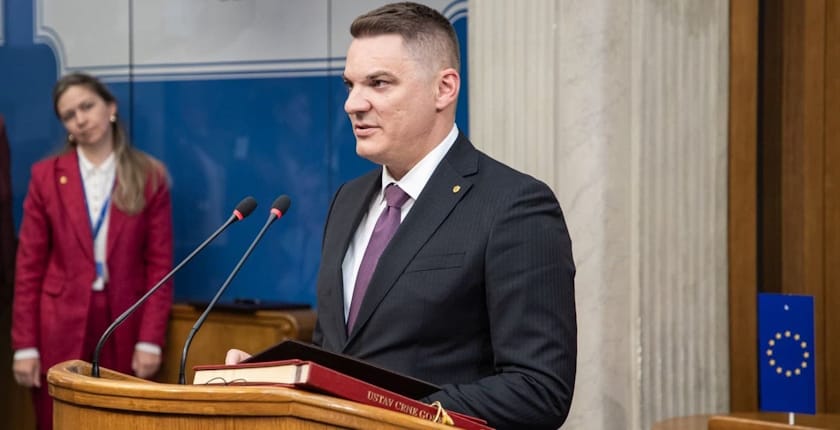
The Parliament of Montenegro elected Minister of Energy and Mining Admir Šahmanović. He led the Ministry of Mining, Oil and Gas in  since July. As Minister of Energy Saša Mujović was elected mayor of the capital Podgorica, Šahmanović recently took over as coordinator,

Prime Minister Milojko Spajić now formally merged the two ministries again. “If we complete the Trans-Balkan Corridor – only a few kilometers are left, the second line of the underwater cable toward Italy, Montenegro is becoming the cooperation bridge between the Balkans and the EU,” he said in the national assembly, promoting Šahmanović.

The list of priority energy infrastructure, adopted in December, also includes the Komarnica and Kruševo hydropower projects, the Ionian-Adriatic Pipeline (IAP), a subsidy scheme for rooftop solar power plants, energy efficiency measures and a floating solar power unit.

The Trans-Balkans Electricity Corridor is a project for upgrading transmission systems in Serbia, Bosnia and Herzegovina and Montenegro. The proposed lines run from Romania to the Monita subsea interconnector with Italy.

Admir Šahmanović will participate in the first panel discussion within Belgrade Energy Forum (BEF 2025), organized by Balkan Green Energy News. The two-day conference in Serbia, starting on May 14, is the central meeting point for representatives of regional and international institutions, organizations and the business community from the region, Europe, and beyond.

Minister has master’s degree in financial management

The minister said earlier this month that current photovoltaic and wind power projects would boost Montenegro’s electricity capacity fivefold, to 5 GW. Admir Šahmanović, born in 1985, has a master’s degree in financial management. He is in the leadership of the Bosniak Party.

Early in his career, he worked in PricewaterhouseCoopers in both Montenegro in Serbia, in Montenegro’s ministries of sustainable development and tourism and public administration, and the British Council in Podgorica. The current minister has experience in managing funds received from the European Union.

Šahmanović entered energy policy sphere in 2022

Three years ago, Šahmanović was named state secretary in the Ministry of Capital Investments, which included the energy portfolio. He participated in the negotiations on the EU accession and on obtaining loans from international financial institutions.

According to his official biography, the minister has promoted sustainable energy and transportation and environmental protection and worked on the country’s strategic documents and action plans.

Additionally, Šahmanović has managed EU-funded projects for wastewater purification and green energy.

Last month he oversaw the adoption of the new Law on Energy.

by in News

4 GW of solar, wind projects in pipeline in Montenegro – minister

Montenegro has solar and wind projects in the pipeline with a total capacity of 4,000 MW, according to Admir Šahmanović, Minister of Mining, Oil and Gas and the Coordinator of the Ministry of Energy.

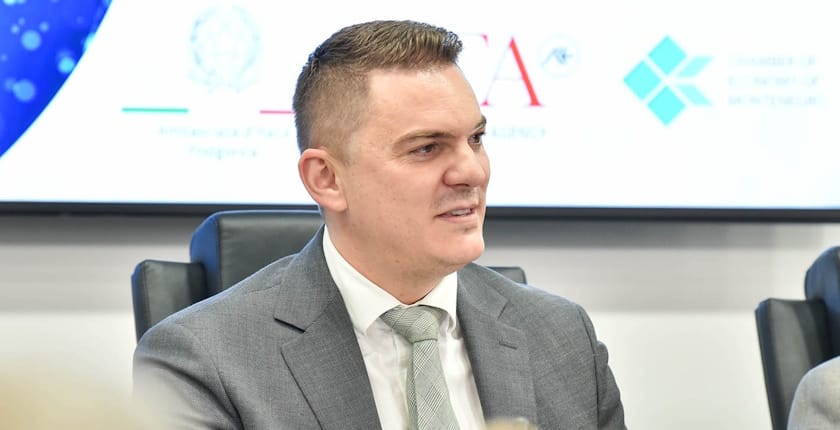
Speaking at the Economic Dialogue Montenegro-Italy round table, minister Admir Šahmanović called for stronger cooperation between the two countries in the energy sector.

Montenegro offers exceptional opportunities for investors, especially in the field of renewable energy sources, Šahmanović added. Of note, he will be one of the key speakers at the Belgrade Energy Forum conference on May 14 and 15.

The planned solar power plants and wind farms would increase the country’s production capacity from the current 1 GW to 5 GW, representing a huge potential for the energy transition and long-term supply stability, he pointed out.

A second line within the underwater power link with Italy would further increase energy security

The minister also stressed the importance of expanding the power interconnection with Italy with a second line of the subsea link. The project would further increase the transmission capacity and ensure even greater energy security, he underlined.

Since 2019, the underwater cable has been enabling stable transmission of electricity between the Balkans and the European Union. In the minister’s words, the second line would further strengthen energy security and increase the use of renewable energy sources in the region.

Photo: Government of Montenegro

In addition to renewables, Šahmanović sees the mining sector as another opportunity for cooperation. A more detailed analysis of existing resources is needed, he said and added that Montenegro has valuable mineral resources that must be used with the implementation of sustainability standards.

The country needs strategic partners to modernize the sector while implementing the highest environmental standards, Šahmanović pointed out.

The round table was organized by the Embassy of Italy and the Italian Trade Agency (ICE), in cooperation with the Chamber of Commerce of Montenegro.

Ambassador of Italy Andreana Marcella said the event was a result of earlier talks between the governments of the two countries. She expects the final B2B and B2G meetings to bring concrete results in the energy, agriculture, and infrastructure sections.

According to ICE manager Antonio Ventresca, the round table marks the beginning of long-term cooperation. The event was also attended by the Montenegrin ministers of ecology and tourism Damjan Ćulafić and Simonida Kordić, respectively.

  • 1
  • 2