AEA-Albania Energy Association
  • Main
  • About Us
  • Services
  • Sectors
  • News
  • EventsEvents
  • PublicationPublication
  • Contact Us
AEA-Albania Energy Association
  • Main
  • About Us
  • Services
  • Sectors
  • News
  • EventsEvents
  • PublicationPublication
  • Contact Us
AEA-Albania Energy Association
  • Home Page
  • About Us
  • Sectors
  • Our Services
  • News
  • Contact Us
May 22, 2025
by AEA in News

2-in-1: carbon footprint as a quality criterion in the NZIA – solving sustainability and resilience together

By Heike Winkler,EUSEW’s digital ambassador on how fair tendering and sustainability in offshore wind can drive competitiveness and a just energy transition.

We are transitioning from an economy based on fossil energy to an economy based on renewable resources. What could be more obvious than for us to support this development and strengthen our renewable industries, the maritime industry, the circular economy, and the green steel industry? The motto of EUSEW 2025, ‘Powering a fair and competitive green transition’, fits perfectly with the European offshore wind industry.

The motto of this year’s WindEurope Annual Event 2025, which has just taken place in Copenhagen, was ‘Scale up, Electrify, Deliver – Putting wind at the heart of Europe’s competitiveness.’ At the recent WindEurope conference, the offshore wind industry jointly proposed a new Offshore Wind Deal to European governments in order to achieve Europe’s ambitious expansion targets. Resilience and sustainability require close cooperation between business and politics to successfully meet the challenges of the ongoing transformation. Sufficient volume and stable supply chain expansion paths are crucial.

Sustainability requires resilience

For more than two decades, the offshore wind industry has been characterised by an impressively fast-growing know-how, a strong resilience, remarkable innovative power and harmonious synergies from various European industries.

A considerable reduction in the levelised cost of energy (LCOE) of offshore wind energy has been achieved to date, more than the fossil industry has ever had to achieve. This development resulted in permanent cost pressure, which harms the sector.

Decarbonisation of the offshore wind industry itself has been part of the industrialisation process from the very beginning. A current example is the Nordlicht 1 and 2 project in the German North Sea, where a major reduction in CO2 steel emissions is expected to be realised (i.e. by using steel towers).

Level playing field and competitiveness

The level playing field has been repeatedly called into question in recent years due to competitive distortions and discontinuities, e.g. with the thread break (‘Fadenriss’) in Germany starting in 2016, when no more new offshore wind projects were put out to tender, or more recently with the construction stop in the USA. In Germany, many companies went out of business, a lot of experience was lost, thousands of employees lost their jobs and their experience was also lost to the industry. With the current geopolitical uncertainties, particularly regarding energy supply, the sector’s resilience is crucial.

With a level playing field and a robust expansion path, the wind industry would have grown significantly faster.

Net Zero Industry Act and qualitative criteria in tendering processes

At the same time, in line with the Draghi Report on EU competitiveness, the Clean Industrial Deal, together with the Net Zero Industry Act, European competitiveness requires accelerating re-industrialisation and the transformation of energy-intensive companies.

Industrial resilience and sustainability require close cooperation between business and policy, where better procurement practices can advance European interests in the wind sector. For example, the carbon footprint tender criterion should be applied in more than 50% of the coming renewable energy tenders. This is critically important, as it could increase the likelihood of realisation, resilience, while at the same time enhancing the market readiness of European renewable energy industries and thus Europe’s competitiveness.

Every long transport route increases the carbon footprint and reduces the added value of the project in general and where it is to be installed. The EU developed a consultation process to strengthen the net-zero industries, which includes auctions for renewable energies and an implementing law on non-price criteria. The results are currently eagerly awaited.

‘In order to reach a sustainable energy transition that creates added value for European industry, there is no alternative to a sustainable, resilient (2in1) domestic offshore wind supply chain. The carbon footprint criterion in offshore wind tenders is crucial if the transformation of the energy-intensive industry is to deliver climate protection, energy sovereignty and industrial growth at the same time.’ There will be no cost-efficient sustainable energy system in Europe without offshore wind energy.

This opinion editorial is produced in co-operation with the European Sustainable Energy Week (EUSEW) 2025. See ec.europa.eu/eusew for more details.
Post Views:21
May 22, 2025
by AEA in News

North Macedonia aims for market coupling with EU by first quarter of 2027

North Macedonia plans to finish market coupling with Greece and the European Union in the fourth quarter of 2026 or in the first quarter of 2027, according to Minister of Energy, Mining and Mineral Resources Sanja Božinovska.

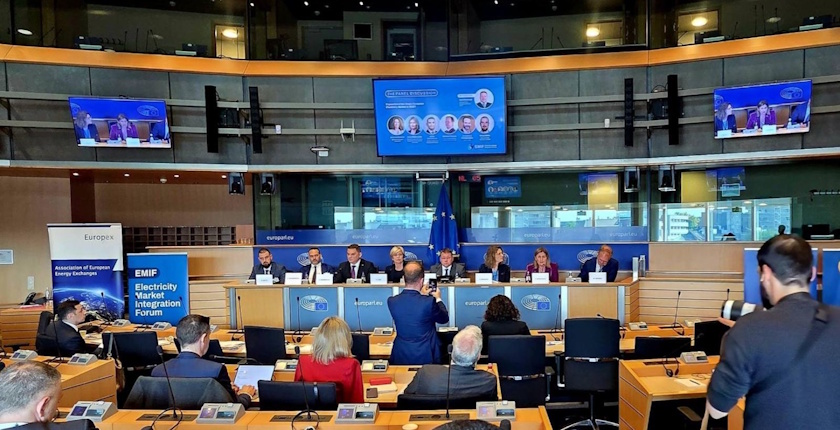
“The integration of the North Macedonian organized electricity market into the Single European Market is of strategic importance for the country,” Sanja Božinovska stressed during the second edition of the Electricity Market Integration Forum – Taking Implicit Electricity Market Coupling Beyond EU Borders, held at the European Parliament in Brussels.

The coupling, in her words, would increase market liquidity and secure competitive prices and greater security of supply. It will directly impact economic stability and predictability, Božinovska added.

Additionally, the minister noted that integration with the European market could provide protection from the financial effects of the EU’s Carbon Border Adjustment Mechanism (CBAM), which would bring significant economic benefits for North Macedonian companies.

The market coupling process began in 2017-2018

She recalled that the market coupling process began back in 2017-2018, adding it is now in a delicate phase, focusing on the transposition of EU legislation and the implementation of the market coupling operator implementation plan (MCO IP) under the jurisdiction of the European Union Agency for the Cooperation of Energy Regulators (ACER).

“Due to uncertainties surrounding the impact of CBAM, it was imperative for market coupling to occur before 2026. Although we are now beyond that timeframe, it is realistic to aim for coupling between the fourth quarter of 2026 and the first quarter of 2027,” Božinovska noted.

During the panel session dedicated to the expansion of the European electricity market by 2026, Božinovska engaged in discussions with high-level representatives from the European Parliament, ACER, regional power exchanges, and institutions from the Western Balkans.

Of note, a week ago North Macedonia adopted the Law on Energy.

It will bring numerous benefits including a liberalized electricity market ensuring fairer prices and more choice for consumers, the introduction of smart meters for more accurate consumption measurement, and daily insight for consumers into their electricity usage, according to the Government of North Macedonia.

Artur Lorkowski, director of the Energy Commnunity Secreatariat , Sanja Božinovska i Zoran Gjorgievski, MEMO CEO
Post Views:18
May 21, 2025
by AEA in News

SANY Renewable Energy makes successful breakthrough in European market

SANY Renewable Energy, one of the world’s top five onshore wind turbine manufacturers, made its debut at Belgrade Energy Forum 2025 (BEF 2025) on May 14-15, showcasing its cutting-edge wind power technology and integrated solutions to the European market.

At BEF 2025, SANY attracted significant interest from various stakeholders thanks to the Alibunar 1 and Alibunar 2 wind farm projects, the company’s first investments in Serbia, which is one of the key markets for SANY in Europe.

SANY’s attendance at BEF 2025 not only demonstrates its competitiveness in the global clean energy industry but also lays a solid foundation for further expansion in the European market.

Innovative technology attracts attention as SANY gains broad interest from developers

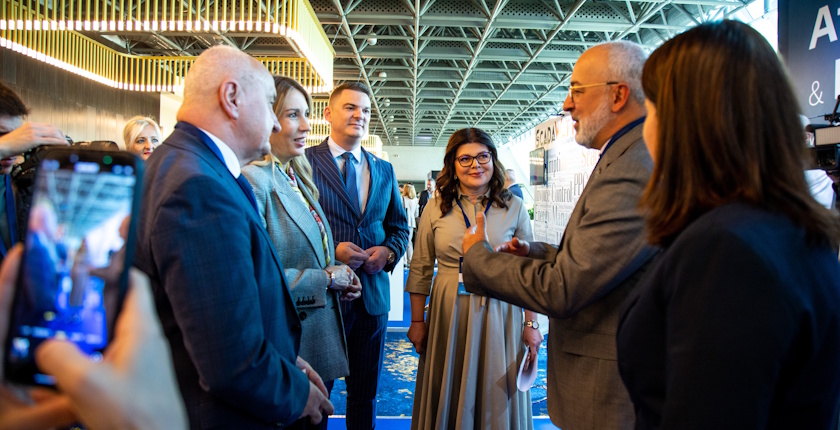
As the most influential energy event in Serbia and the Balkans, BEF 2025 brought together government agencies, energy companies, and industry experts to discuss Europe’s energy transformation and sustainable development. At the event’s exhibition area, SANY focused on showcasing its large-megawatt smart wind turbines, smart wind farm management systems, and energy storage solutions. Its high power generation efficiency, low levelized cost of electricity (LCOE), and intelligent operation and maintenance drew the attention of numerous participants.

Serbian Minister of Mining and Energy Dubravka Đedović Handanović said during her visit to the SANY booth that the company’s wind power technology is impressive and highly consistent with Serbia’s renewable energy development goals.

“We look forward to working with such leading international companies to accelerate the country’s green energy transformation,” stated Đedović Handanović.

Deepening European presence and supporting carbon-neutrality goals

In recent years, SANY has continued to increase its development and growth in the European market. This high-profile appearance at BEF 2025 sends a clear signal of strengthening regional cooperation. During the forum, company representatives held multiple rounds of negotiations with energy companies and investment institutions in Serbia and neighboring countries to discuss planning and possible project and technical cooperation.

“Europe is a key market for the development of renewable energy. SANY Renewable Energy’s goal is to help customers achieve economic feasibility while increasing efficiency with its high-quality products and customized services,” said Paulo Soares, Managing Director of SANY Renewable Energy Europe.

“We are looking forward to working with all stakeholders in Serbia to jointly promote the global carbon neutrality concept,” he stressed.

Industry analysts believe that as the demand for renewable energy in Europe continues to grow, SANY is expected to capture a larger market share in Europe with its high-reliability wind turbines, intelligent operation and maintenance, and localization strategy, and become an important promoter of the global green energy transformation.

Post Views:60
May 21, 2025
by AEA in News

GGF’s Kostadinov: Western Balkans responded to energy crisis with innovation, ambition (video)

The past three to four years have been nothing short of transformational when it comes to the energy transition in the Western Balkans, said Borislav Kostadinov, Finance in Motion’s Fund Director for the Green for Growth Fund, in a keynote address at Belgrade Energy Forum. The region has responded to the energy crisis with innovation, ambition and resilience, he pointed out. The challenge in the energy transition is understood and so is the solution, Kostadinov stressed.

Borislav Kostadinov, a Fund Director at Finance in Motion, gave a keynote speech at Belgrade Energy Forum (BEF 2025). He leads the Green for Growth Fund, or GGF, the company’s flagship green finance fund.

Finance in Motion is an impact asset manager based in Frankfurt with over 20 years of experience and more than EUR 4 billion in assets under management (AUM). It specializes in blended finance vehicles that deliver positive social and environmental impact. GGF has delivered over EUR 500 million in green finance to almost 50,000 beneficiaries in the Balkans. As of the end of last year, it was above EUR 1 billion in size.

Renewables have become mainstream investments

The breadth and flexibility of the fund’s model allow it to support a wide spectrum of the energy transition, which has enabled it to expand to over 19 markets along the European Union’s borders, Kostadinov explained.

The past three to four years have been nothing short of transformational when it comes to the energy transition in the Western Balkans, he underscored.

“I would not be the first to say that we are at a key juncture in the energy transition. At this stage, the challenge is understood and so is the solution. Renewables have become mainstream investments, championed by the public and private sectors, and are the foundation of a future that is not only sustainable but cost-efficient, competitive, and secure. The question now becomes how quickly and how completely we can deliver on this vision over the next five, fifteen and 25 years,” Kostadinov stated. In terms of energy systems and climate change, it is not much time, he pointed out.

[wpcc-iframe title=”Belgrade Energy Forum 2025 Borislav Kostadinov, Fund Director Green for Growth Fund, Finance in Moti” width=”500″ height=”281″ src=”https://www.youtube.com/embed/TJFTOD-1keQ?feature=oembed” frameborder=”0″ allow=”accelerometer; autoplay; clipboard-write; encrypted-media; gyroscope; picture-in-picture; web-share” referrerpolicy=”strict-origin-when-cross-origin” allowfullscreen=””]

Western Balkans are broad-based renewables growth story

For several years now, there has been a broad-based renewables growth story across the region: from utility-scale project finance transactions, to large installations for captive use by industry and manufacturing, to photovoltaics on the roofs of households, Kostadinov recalled.

“What is driving this shift? Certainly, the energy crisis jolted all of Europe, and the Western Balkans have responded with innovation, ambition, and resilience. In a short time, we have improved policy, strengthened regulatory frameworks and prioritized the sector with clearer strategies and market mechanisms,” he said.

GGF’s director praised the countries in the region for embracing transparent, competitive auctions as a foundation for market-based deployment of renewables.

Kostadinov particularly highlighted Serbia for leading the way. “Its recent auctions for wind and solar have been consistent, well-communicated, credible and investor friendly, drawing broad investor participation. Most importantly, they’ve been successful, and we are proud to have contributed to this achievement alongside our longstanding partner UniCredit Bank, through its investment in the landmark Čibuk 2 wind farm,” he told the audience at BEF 2025.

Corporate PPAs, guarantees of origin deepen markets while also expanding them

The public sector must continue strengthening markets and frameworks and develop and roll out mechanisms such as corporate power purchase agreements (PPAs) and guarantees of origin, which deepen and expand markets, Kostadinov said.

“We need more purely private projects, such as the GGF-backed 50 MW Project Blue solar plant in Albania. As the largest non-subsidized solar project in the Western Balkans, and developed without a long-term PPA from the utility, it is the type of investment that we hope to increasingly catalyse in the region,” he asserted.

The three principles for the next five years are speed, integration, and resilience, Kostadinov says

In Kostadinov’s view, the three principles for the next five years are speed, integration, and resilience.

“We must continue to improve the speed, transparency and bureaucratic process when it comes to permitting, approving and bringing projects online. This is true in the EU, and it is true in the Western Balkans, in particular for construction permitting and grid connections,” he said.

The necessary investments in the integration of energy markets in the EU and the region will create scale, meaning larger markets, deeper spot markets, and more varied offtake, Kostadinov added. His message to energy producers in the Balkans is that they would be able to diversify and address a larger market by supplying Europe’s industrial base.

The recent blackout in Spain is a cautionary tale, but the story is not a failure of renewables but rather a failure of grid resilience, Kostadinov said.

Post Views:69
May 21, 2025
by AEA in News

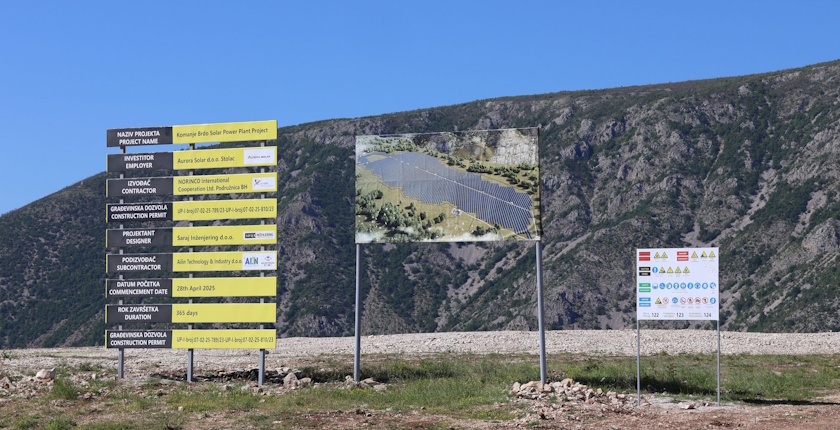
Construction of largest solar power plant in Bosnia and Herzegovina begins

The construction of Bosnia and Herzegovina’s largest solar power plant has officially commenced. The location for the facility with a peak capacity of 125 MW is in the municipality of Stolac, near the village of Komanje Brdo. The project has caused discontent among some residents.

The investment is valued at EUR 100 million. According to the investor’s estimates, the power plant is expected to generate around 200 GWh of electricity annually over the next three decades.

The cornerstone was laid by Mayor of Stolac Stjepan Bošković, along with the representatives Aurora Solar, which developed the project, and Chinese company Norinco International, the contractor.

In recent years, the City of Stolac has actively promoted solar initiatives, with a particular focus on Komanje Brdo, according to the local authority’s website. It expects to collect between EUR 1.53 and EUR 2.05 million per year through the concession and utility fees.

 The project has faced public criticism

Despite its scale and potential, the project has faced criticism from a part of the public. Citizens gathered in an informal initiative called Za Komanje Brdo (For Komanje Brdo) have repeatedly raised concerns about a lack of transparency, the absence of public consultation, and alleged non-compliance with environmental protection laws. They claim the permitting process wasn’t transparent and that the local community was not adequately involved in decisions that directly affect its environment and quality of life.

“We are not against renewable energy sources, but we are against arbitrariness, the disregard for the law, and the neglect of residents’ interests. This project was launched against the will of the people,” residents said at a protest held on the same day that construction began, local media outlet Glas Stoca reported.

On the other hand, the investors claim the project is of strategic importance, promising new jobs and long-term benefits for the local community. They also maintain that all necessary permits were obtained in accordance with the law.

Despite public opposition and official complaints submitted to relevant institutions, construction works began on April 28. The plant is expected to be completed within a year and is set to become the largest photovoltaic park in Bosnia and Herzegovina. Currently, the largest solar power plant in the country is Hodovo, operated by Eco-Wat.

Post Views:48
May 21, 2025
by AEA in News

Wind farms turn Greece into net exporter of electricity

Wind energy played a crucial role in turning Greece into a net electricity exporter last year, for the first time since 2000.

The country used to import a significant part of its electricity in previous years. Back in 2019, net imports amounted to 10 TWh or 18% of total consumption, according to Minister of Environment and Energy Nikos Tsafos. The situation changed and Greece became a net exporter in 2024 with 307 GWh.

The economic benefits are important. The balance was a negative EUR 400 million in 2019, compared to EUR 122 million on the upside last year.

The change is also evident in wholesale electricity prices. Greece used to be 34% more expensive than Bulgaria six years ago. Now the price is about 2% lower.

Tsafos added that wind energy has been the secret behind the trend. Greece has different wind characteristics compared to the rest of Southeastern Europe. At times, wind farms produce large quantities while in neighboring markets their output is low.

Offshore wind to further increase exports

Indeed, Greece aims to utilize its advantage even further by developing offshore wind farms. The National Energy and Climate Plan (NECP) foresees the installation of 1.9 GW by 2030 and 6.2 GW by 2035.

So far, progress has been slow apart from a few pilot projects currently underway. Initial offshore development zones have been identified and the national plan has been updated. However, a presidential decree has yet to be signed to define the exact terms for offshore projects.

Stefatos: Benefits from balancing renewable energy through offshore wind

After the latest geopolitical and trade developments, the global offshore wind power market faces issues regarding increased costs and uncertainty. However, the head of the Hellenic Hydrocarbons and Energy Resources Management Company (HEREMA), Aristofanis Stefatos, believes the potential benefits in Greece outweigh such concerns. “We should include in our calculation the benefit of balancing renewable energy in our energy mix through offshore wind,” he said recently.

Given their large capacity factor, offshore wind parks are expected to operate more as base capacity power plants than the traditional intermittent renewable energy units. A large part could go to exports.

Post Views:42
May 21, 2025
by AEA in News

Low consumption causes grid failure, power outage in North Macedonia

A grid failure caused a brief power outage in North Macedonia in the early hours on Sunday, May 18. Disruptions at the affected 400/110 kV transformer stations were triggered by high voltage levels in the grid, caused by low consumption, typical for nighttime hours and weekends at this time of year, according to a statement by the country’s transmission system operator, MEPSO.

MEPSO said its teams restored normal electricity supply in about an hour and were working to fully normalize the stability of the power system.

According to the update, grid instability caused by low consumption at nighttime and on weekends is a problem shared by almost all transmission system operators in the region and around Europe.

Bulgaria’s energy minister: Bulgaria played the crucial role in stabilizing North Macedonia’s grid

At the same time, Bulgarian Minister of Energy Zhecho Stankov said that a grid failure had affected several countries in Southeast Europe, though not Bulgaria. He added that his country’s balancing facilities were crucial in stabilizing North Macedonia’s grid, restoring supply, and preventing the crisis from spreading further. In Bulgaria, the Electricity System Operator (ESO) is responsible for the transmission network.

He claimed Serbia and Croatia have also experienced problems due to a lack of balancing facilities. “The colleagues from Serbia also had certain difficulties in the morning hours, and we managed to balance them out,” Stankov stated.

EMS has denied that any disruptions or outages occurred in Serbia

However, Serbia’s transmission system operator Elektromreža Srbije (EMS) told Balkan Green Energy news that the country’s grid did not experience any disruptions or outages and that there was no need for assistance from Bulgaria. EMS said it would not specifically comment on the Bulgarian minister’s statement because it was unclear what it was referring to.

In its reply to Balkan Green Energy News, EMS underscores that there were no consequences for the transmission system of the Republic of Serbia, explaining that EMS, at the request of MEPSO, to facilitate the repairs in North Macedonia, temporarily shut down the 400 kV transmission line between the Vranje 4 transformer station and the North Macedonian border.

Renewables had no share in the problem, according to Stankov

Stankov also stressed that solar power plants did not play a role in the crisis, unlike in Portugal and Spain in late April. The grid failure occurred in the early morning hours and amid low renewable energy generation, he said, adding that “renewable energy had no share in the problem.”

Bulgaria plans to build three new pumped storage hydropower plants

Bulgaria’s system remained stable thanks to its generating and balancing capacities, in Stankov’s view. He told the press that the country possesses 90% of all the reactive energy compensation capabilities in Southeast Europe.

Bulgaria is working with the European Investment Bank (EIB) to build at least three pumped storage hydropower plants in the Rhodope region, aimed at further enhancing regional grid resilience, Stankov pointed out. The minister vowed to keep the country’s grid on standby to support other regional networks in need of stabilization.

Stankov revealed that one such project is being developed for the Vacha dam. The other two pumped storage hydropower plants are planned to be built on the Dospat and Batak dams.

Post Views:71
May 20, 2025
by AEA in News

PPC starts building two battery storage systems in northern Greece

Public Power Corp. (PPC Group) is launching construction on two battery energy storage systems (BESS) in northern Greece, of 48 MW / 96 MWh and 50 MW / 100 MWh. There is currently no larger BESS in Southeastern Europe, but the Oslomej solar park in North Macedonia is expected to get a battery system of 62 MW in operating power by the end of the year.

PPC’s Melitis 1 battery system will be located in the vicinity of its future photovoltaic plants in the Western Macedonia region, and Ptolemaida 4 will be built in the area of the former Ptolemaida coal mines. The energy storage units are intended to support the operation of adjacent photovoltaic plants.

The battery systems are targeted for completion within the year

The systems will use liquid-cooled batteries with the lithium iron phosphate (LFP) technology, maximizing both energy utilization and safety during operation, according to a statement from the Greek company, controlled by the government through a minority stake. It expects to complete the construction within the year.

PPC Group’s investment plan for the 2025-2027 period envisages BESS projects totaling 600 MW, which are currently at various stages of implementation in Greece and elsewhere in Southeastern Europe.

Konstantinos Mavros, the group’s deputy CEO responsible for renewable energy sources, said PPC is a leader in investing in energy storage systems. “In the coming years it will significantly increase investments in all flexible generation systems through energy storage,” he stated.

PPC plans 600 MW of battery projects in Southeastern Europe

PPC Group recently started building a battery system in neighboring Bulgaria with 25 MW in operating power and a capacity of 55 MWh. The facility would support the operation of a new solar power plant with a total capacity of 165 MW.

The company runs renewable energy systems with a total capacity of 6.2 GW in Greece, Romania, Italy, and Bulgaria. Its investment plan envisages increasing the capacity from renewables to 11.8 GW by 2027. PPC’s strategic goal is to expand into new renewable energy technologies, such as offshore wind farms and floating solar parks.

Post Views:36
May 20, 2025
by AEA in News

Cities are driving the transition to climate neutral and fair housing

Author: Anna Iafisco, policy adviser for housing at Eurocities, EUSEW’s partner organisation

City governments are ready to lead the transition to climate-neutral buildings by 2050, but they cannot do it alone. To ensure a fair transition, they need EU and national support to help low- and middle-income households access renovation support. With better funding, aligned policies, and tools like one-stop shops, cities can deliver warmer homes, lower bills, and a liveable future for everyone.

The road to climate neutrality runs through our homes – and cities are taking the lead. Buildings account for 40% of Europe’s energy use and 36% of emissions, making the decarbonisation of our built environment both a major challenge and a vital opportunity.

By improving energy efficiency, particularly in the residential housing stock, cities are not only cutting emissions and boosting energy security, but they are also improving people’s quality of life. Crucially, this transformation offers a chance to tackle energy poverty, which still leaves too many households without adequate heating, cooling or lighting, while also addressing the question of equitable access to green and healthy living spaces.

For the transition to succeed, it must be fair. At Eurocities, we believe no one should be left behind, especially vulnerable and low- to middle-income households, often exposed to high energy bills and inadequate living conditions.

Reaching a climate-neutral building stock by 2050 will depend on inclusive, well-funded renovation policies that reflect the realities of Europe’s diverse housing systems, and on empowering cities to lead the way.

A diversity of housing systems, a common challenge

Europe’s housing systems are highly diverse, from strong social and cooperative housing sectors in some countries to more privatised or market-driven systems in others. Any EU-wide building policy must allow for flexibility, enabling local, regional and national governments to tailor solutions to their specific situations.

A one-size-fits-all approach to financing renovation risks excluding those who fall outside strict income thresholds or tenancy rules, particularly in private rental markets, where incentives often do not reach either landlords or tenants. Elsewhere, outdated ownership structures or limited municipal control over social housing create further obstacles.

This diversity must be explicitly acknowledged in EU policy frameworks. We need adaptable rules that empower local authorities to reach those most in need, protect tenants from the risk of displacement, and ensure that EU funding tools match the real conditions on the ground.

One-stop shops: making renovation simple and inclusive

One of the most effective ways cities can support households through the transition to energy-efficient and sustainable homes is by setting up one-stop shops. These local services provide clear, accessible information about renovation options, available grants and loans, technical support, and trusted contractors – all in one place.

In Milan, the ‘Sportello Energia’ (Energy Desk) helps residents navigate energy efficiency improvements, with a special focus on reaching low-income and energy-poor households. The city combines this advisory service with targeted financial support, enabling families to carry out renovations they otherwise could not afford.

Similarly, in Rotterdam, the ‘WoonWijzerWinkel’ offers a physical and digital one-stop-shop, where residents can get free independent advice tailored to their homes. The shop has become a trusted go-to point for citizens who may otherwise be excluded from renovation schemes.

These examples show how local services, when designed with people’s needs in mind, can build trust and boost the renovation rate, especially among the most vulnerable.

Targeting support where it matters most

We know that comprehensive renovations are costly, and many households cannot afford them. That is why targeted public investment is vital. Renovation efforts must focus first on the worst-performing buildings, which are often home to people at risk of energy poverty. This is where we can achieve the greatest impact, both for the climate and for residents’ wellbeing.

In Vienna, a long-standing commitment to affordable housing has positioned the city as a leader in socially inclusive climate action. The city is implementing a large-scale renovation programme for its social housing stock, combining energy efficiency improvements with tenant protection measures and cost control.

Meanwhile, in Ghent, Belgium, the city has partnered with social organisations to reach vulnerable households and co-develop tailored renovation plans. This collaborative model ensures that support reaches those who need it most, while building long-term capacity within communities.

These experiences offer valuable lessons for the implementation of the EU’s revised Energy Performance of Buildings Directive. Cities are ready to roll out building upgrades, but they need clear standards, funding and flexibility to adapt to their local realities.

Decarbonising heating, improving lives

Renovating buildings is only part of the solution. Most homes in Europe are still heated with fossil fuels, particularly natural gas. To meet the EU’s 2050 climate targets, we must rapidly phase out fossil fuel boilers and invest in renewable, efficient heating and cooling systems. This is a crucial step to reduce emissions and protect residents from rising fuel costs and energy insecurity.

Cities are already taking action. In Paris, the city is expanding its district heating network based on renewable energy sources, prioritising connections for social housing and public buildings. This approach not only cuts emissions but also shields residents from volatile energy prices, demonstrating the power of public infrastructure to deliver a just transition.

A vision for truly affordable climate-neutral homes

To fully realise the transformation of the built environment, Europe must also advance a shared agenda for affordable, inclusive, and healthy housing. The upcoming European Affordable Housing Plan presents an opportunity to address the affordability crisis by supporting investment in affordable housing, improving existing stock through deep renovation, and aligning climate, environment and social objectives.

Cities are implementing change, but they need greater support to deliver renovation programmes for social and affordable housing, to develop new housing construction that meets climate neutrality and environmental objectives, affordability and accessibility standards. At the same time, EU funding instruments must be better coordinated and easier to access, so they reflect local priorities and realities.

By embedding the principle of housing as a human right into the green transition, the EU can drive a shift towards housing systems that are not only sustainable, but also fair, resilient and inclusive.

A call to action

If we want to reach climate neutrality by 2050, there is no time to lose. A swift, ambitious implementation of the Energy Performance of Buildings Directive, in alignment with the EU Nature Restoration Law, is essential to meet the 2030 targets and to lay the foundation for a fair, sustainable future.

Despite political pressure, the EU should remain focused on putting the recently adopted directive and regulation into practice, rather than adding further uncertainty to an already complex political landscape.

Cities stand ready to lead this transformation. But they cannot do it alone. We call on the EU and Member States to work closely with city governments, empower them through direct access to funding, and ensure that climate, environment and housing policies support the same goal: better homes, healthier lives, and a liveable planet for all.

The building transition must be about more than cutting emissions. It must ensure that everyone, regardless of income or housing tenure, can live in a decent, energy-efficient and quality home.

If we get this right, we will not just reduce carbon and help restore nature, we will ensure a better future for the people of Europe.

This opinion editorial is produced in co-operation with the European Sustainable Energy Week (EUSEW) 2025. See ec.europa.eu/eusew for more details.

Post Views:19
May 20, 2025
by AEA in News

Alarming rise in unpaid bills from electricity consumers in Greece

A steep rise in arrears was recorded last year in the Greek electricity supply market.

According to the latest report from the Regulatory Authority for Energy, Waste and Water (RAAEY or RAEWW), total debt for electricity rose by EUR 1 billion to EUR 3.4 billion in 2024.

It occurred despite a 10% reduction in retail electricity prices last year in the country.

Out of the total sum, existing customers owe EUR 1.74 billion to their suppliers. Another EUR 1.65 billion is debt by customers that have switched suppliers, leaving unpaid bills behind.

As for the EUR 1 billion of new debt, consumers in the mid-voltage account for EUR 400 million. They are large businesses and small industries. Another EUR 440 million is owed by various water utilities.

In December 2024, the Ministry of Environment and Energy passed a regulation subsidizing water utilities for EUR 200 million of their total debt. It means actual arrears in the segment were smaller, at EUR 240 million, but still sizeable.

Measures to reduce power theft

On top of increasing debt, the Greek market is also faced with a rise in electricity theft. In recent years, the phenomenon has worsened and is estimated to cost law-abiding consumers EUR 400 million per year.

The government and the regulator recently enacted strict fines to reduce theft. Offenders pay more than 100% over the normal power price for stolen quantities. The gradual installation of smart meters starting this year is also expected to help.

Suppliers warn of consequences

Power utilities must handle all the said liabilities. The Greek Energy Suppliers Association (ESPEN) has said that the issues indirectly increase power prices, as companies need to balance their budget through additional hedging and careful positioning.

ESPEN: Suffocating pressure as a result of high arrears

“The accumulation of large arrears causes suffocating pressure to the supply sector, raising prices and leading to negative effects for consumers,” it said.

Furthermore, suppliers asked the Hellenic Electricity Distribution Network Operator (HEDNO or DEDDIE) to waste no time in disconnecting consumers who owe money, in line with guidelines from the network code.

Post Views:48
  • 1
  • …
  • 92
  • 93
  • 94
  • 95
  • 96
  • …
  • 140

AEA – Albania Energy Association is a industry association dedicated to representing the interests of Albanian and West Balkan for energy producers and consumers. AEA works to advance the development and adoption of sustainable energy solutions in Albania and the Western Balkans, supporting the region’s transition toward a cleaner, more secure, and more competitive energy future. AEA is registered by decision of the Court of Tirana, DECISION NO. 3032, (VAT:L11827451K).

[email protected]

Address
Blv Zogu 1
Tirana
1057
ALBANIA

LinkedIn  |  Facebook
Events
May 25, 2022 Connecting Green Hydrogen Europe 2022
May 25, 2022 Energy Week Western Balkans 2022
Copyright © Albania Energy Association